
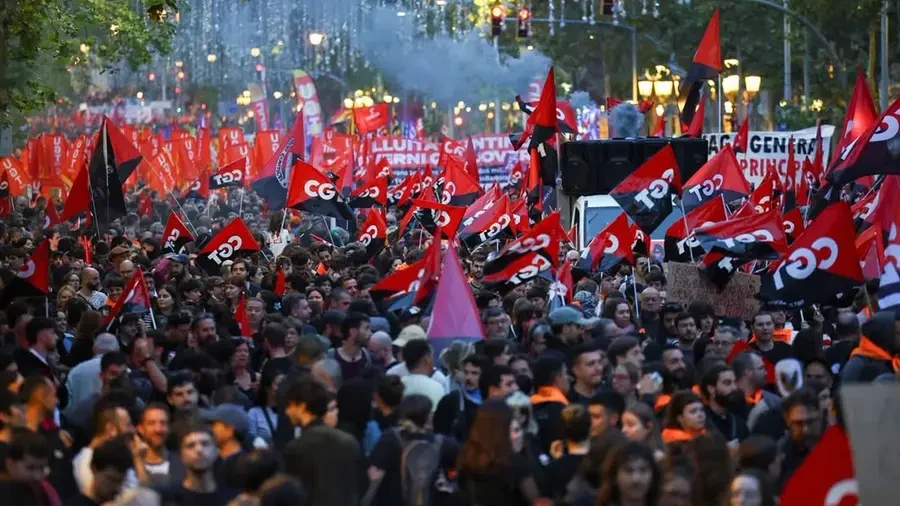
For months, the historic streets of Spain have echoed with a unified, resounding cry: housing is a fundamental human right, not a luxury commodity. Across vibrant urban centers from Madrid to Barcelona, Valencia to Málaga, hundreds of thousands of citizens have taken to the avenues, transforming public plazas into tent cities and staging historic nationwide walkouts.
What began as localized frustration over soaring urban rents has snowballed into a massive national movement. Driven by soaring living costs, aggressive property speculation, and the rapid, unregulated proliferation of short-term tourist rentals, Spain’s housing crunch has erupted into a profound social and political crisis—culminating in some of the country’s most disruptive general strikes in over a decade.
The Boiling Point: Anatomy of a National Emergency
The roots of Spain’s current emergency are deep, structural, and multifaceted. For generations, Spanish society leaned heavily on a cultural preference for property ownership, leaving the country with a remarkably thin safety net of public rental housing. Government-owned rental stock currently accounts for less than two percent of total available housing, trailing far behind the wider European Union average and leaving low-income families exposed to market volatility.
At the same time, the supply of new residential properties has lagged drastically behind demand. Central bank figures indicate that Spain faces an immediate shortage of hundreds of thousands of homes, a deficit projected to worsen significantly over the coming years. With homeownership increasingly slipping out of reach due to stringent mortgage conditions and inflated purchase prices, a massive wave of hopeful buyers has flooded the rental market, driving competition to brutal heights.
According to data from Spain's Youth Council, average monthly rents in major economic hubs have climbed so aggressively that they consume upwards of 95% of a typical young worker's monthly income. For millions of citizens with full-time jobs, simply keeping a roof overhead has become a nightly exercise in financial impossibility, triggering unprecedented levels of stress and anxiety across an entire generation.
Overtourism and the Short-Term Rental Boom
Adding fuel to an already volatile fire is the unstoppable, commercialized boom of international tourism. As Spain continues to shatter records welcoming tens of millions of global visitors annually, property owners in prime urban areas and coastal hotspots have increasingly converted long-term residential apartments into lucrative tourist accommodations and short-term digital nomad rentals.
This shifting landscape has gutted traditional neighborhoods. Long-term residents find themselves displaced from the communities their families have inhabited for decades, pushed further into suburban peripheries or priced out of the rental market entirely. The stark juxtaposition of luxury holiday apartments operating right next door to struggling local families has acted as a daily catalyst for civil unrest, fueling anti-tourism sentiment and turning real estate reform into an urgent political battleground that lawmakers can no longer afford to ignore.
Tragedy, Protest, and Political Upheaval
Public anger reached an absolute tipping point following a series of harrowing eviction cases that captured intense national media attention. The nationally televised eviction and subsequent tragic death of an 87-year-old Madrid resident—widely known simply as "Maricarmen"—served as an emotional lightning rod for national grief and fury. Her plight crystallized the extreme vulnerability of elderly tenants facing aggressive landlord practices and corporate speculation, sending shockwaves through the country and uniting diverse demographic groups in solidarity.
Protest camps swiftly sprang up across iconic spaces, most notably in Madrid’s historic Puerta del Sol, where thousands of demonstrators erected tents and held continuous public assemblies. Tenant unions, grassroots activists, and major labor organizations joined forces to demand immediate, enforceable government intervention.
The mounting pressure spilled over into the political arena, triggering fierce gridlock in the national parliament. When opposition conservative parties blocked comprehensive housing reform packages—arguing that heavy-handed market regulations could stifle construction and violate private property rights—public indignation boiled over into a massive 24-hour general strike. Entire industrial and service sectors ground to a halt as workers walked off the job to demand strict rent caps, severe limits on corporate property buyers, and rigorous legal protections against arbitrary evictions.
FAQs: Understanding Spain's Housing Crisis
What are the primary causes of Spain's housing crisis?
The crisis is driven by a severe shortage of new residential construction, an extremely small public rental sector, intense property speculation, and the rapid conversion of long-term homes into short-term tourist apartments.
How has the general public responded to the crisis?
Citizens have responded through widespread civil mobilization, including massive street demonstrations in major cities like Madrid and Barcelona, tent encampments in central plazas, and general strikes organized by major labor unions.
What measures are activists and unions demanding from the government?
Key demands include stricter controls and regulations on rental prices, a crackdown on speculative real estate funds, the elimination or heavy restriction of tourist rentals in residential zones, and robust legal safeguards protecting vulnerable tenants from eviction.
How does the crisis impact younger generations in Spain?
Young workers are disproportionately affected. With average rental costs consuming nearly all of an entry-level salary, financial independence, saving for the future, and traditional milestones like moving out or buying a home have become virtually unattainable for Generation Z and millennials.
The Road Ahead
Spain's housing crisis has fundamentally transformed the nation’s political and social landscape. As legislative battles continue and citizens demand systemic structural overhauls, the message from the streets is unequivocal. Resolving the crisis will require more than temporary stopgap measures; it demands a complete rethinking of how housing is valued, regulated, and provided for the working class. Until sustainable, affordable solutions take root, the heartbeat of Spain's civic movement will continue to demand that the right to a home takes precedence over market speculation.







Comments
Leave a Comment
Your email address will not be published. Required fields are marked *