
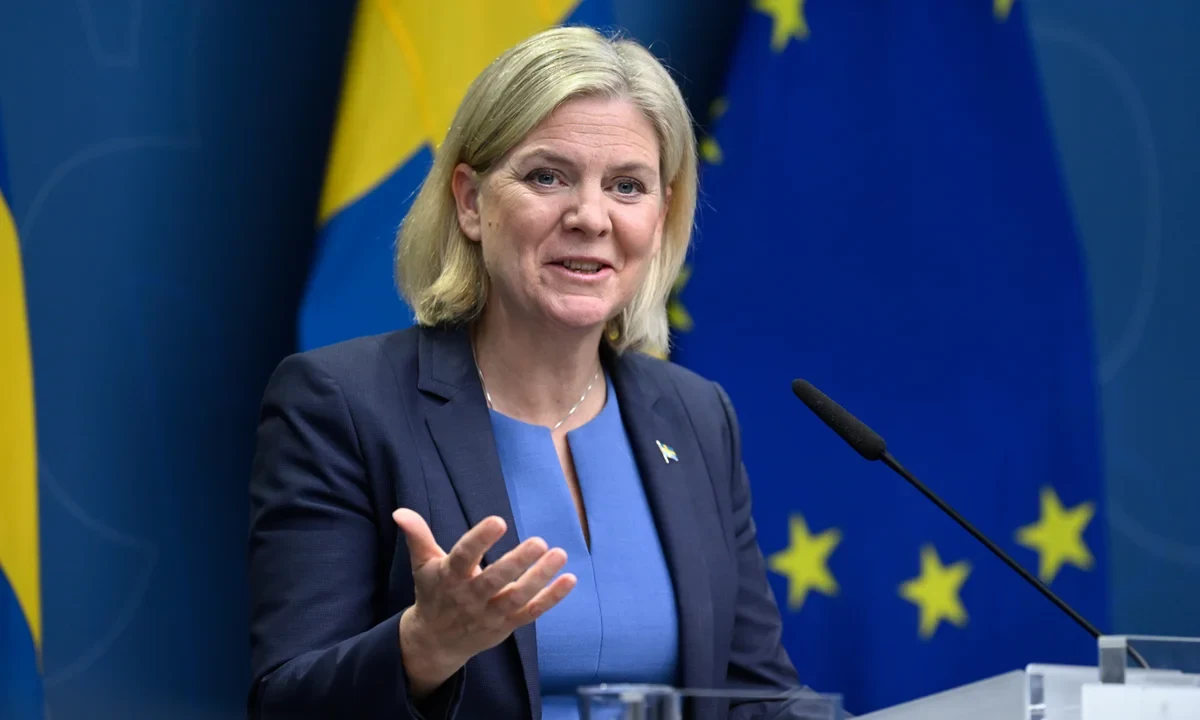
In Sweden's September 13, 2026 election, the left-leaning opposition bloc won 176 of 349 parliamentary seats to the outgoing right-wing bloc's 173. But on September 28, Social Democratic leader Magdalena Andersson gave up her attempt to form a government, after a split between the Left Party and the Centre Party. Prime Minister Ulf Kristersson could get another chance.
What happened in the election?
Voters produced one of the closest results in modern Swedish politics. The four-party opposition bloc, made up of the Social Democrats, the Left Party, the Centre Party and the Greens, won 176 seats. The right-wing Tidö bloc led by Kristersson's Moderates won 173. The gap in the popular vote was only about 50,000, and turnout was 84.9 percent.
The Social Democrats were the largest single party with 99 seats. The far-right Sweden Democrats lost 11 seats, which analysts read as a setback for Kristersson's hope of bringing that party into a formal coalition. The Left Party gained six seats, ending with 30.
Why didn't the winning bloc form a government?
Because a majority of seats doesn't automatically mean a majority that agrees. The two parties Andersson needs stand on opposite sides of a dispute.
The Left Party wanted ministers in the cabinet and wouldn't simply prop up a Social Democratic government from the outside. The Centre Party, led by Elisabeth Thand Ringqvist, said it wouldn't sit in or support a government that gave influence to the far left or the far right. Without the Centre, Andersson's other partners have only 151 seats, well short of a majority.
Then things got worse. When parliament voted on its Speaker, the Left Party backed the Moderate incumbent, Andreas Norlén, instead of the Social Democrats' candidate. The Left's explanation was that it wanted an experienced Speaker to manage what could be a long process. Andersson described it as the creation of a "new constellation," and she handed her mandate back to Norlén on Monday.
What is the Speaker's role?
In Sweden, the Speaker of the Riksdag runs the government-formation process. After an election, the outgoing prime minister resigns, and the Speaker asks party leaders to explore who could lead a government. Kristersson resigned after the election so that process could start, and his cabinet became a caretaker government.
Norlén first gave the task to Andersson on September 18. Now that she has returned it, he can hand it to Kristersson or someone else.
Can Kristersson form a government?
That's the big question. His bloc has 173 seats, three fewer than the opposition, so he'd need help. Analysts point to the Centre Party as the key. It would have to accept either the Left Party or the Sweden Democrats, and it has ruled out both. Kristersson has called for constructive openness across party lines, but the arithmetic is difficult.
A Swedish government doesn't need a majority in favor. It needs to avoid a majority voting against it. That's why minority governments are common. Still, whoever tries has to find a path that isn't blocked by 175 votes.
What happens if no one succeeds?
The Riksdag votes on prime ministerial candidates. If four such votes fail, Sweden must hold a fresh election. That's a rare outcome, and no one wants it, but the rule shapes the negotiations by putting a clock on them.
How long could this take?
Long. After the 2022 election, forming a government took more than a month. After 2018, it took a record 144 days. Swedish politics has a habit of slow, stubborn bargaining.
What does this mean for Sweden?
In the short term, a caretaker government has limited powers. It can run the country day to day, but it generally avoids big new policies. Budget decisions, immigration rules and other pending issues could get pushed back.
In the longer term, the episode shows how fragile bloc politics has become in Sweden. The traditional left-right split now contains internal fault lines, and the rise of the Sweden Democrats has made alliance-building harder for everyone.
Why should people outside Sweden care?
Sweden is an EU member and a NATO member, and a long political stalemate can affect budgets and foreign policy timing. It's also a case study in how proportional systems handle close results: the winner of the seat count isn't necessarily the one who governs.
What should I watch next?
Whether Norlén asks Kristersson to try forming a government.
Any move by the Centre Party, which holds the balance.
Whether the Left Party and the Social Democrats repair relations.
The vote count on any prime ministerial ballot.
FAQ
Who won Sweden's 2026 election? The left-leaning opposition bloc won 176 seats to 173, but hasn't formed a government.
Why did Andersson fail? The Centre Party and the Left Party couldn't agree on the terms of cooperation, and the Left broke ranks over the Speaker vote.
Who is Sweden's prime minister now? Ulf Kristersson leads a caretaker government after resigning post-election.
What if no government forms? After four failed prime ministerial votes, Sweden must hold a new election.




Comments
Leave a Comment
Your email address will not be published. Required fields are marked *