
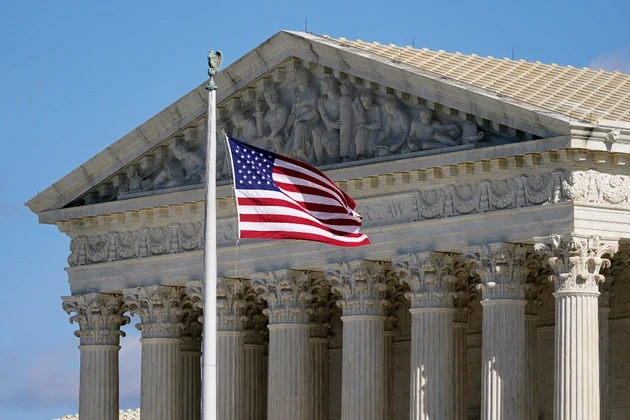
Recently, the U.S Supreme Court paused a lower-court order that had blocked the administration from deporting migrants to countries not named in their removal orders. The order is temporary. The justices will hear full arguments in December, and a final ruling is unlikely before next year.
What did the Supreme Court decide?
In a short, unsigned order, the Court granted the administration's emergency request and set aside a ruling from U.S. District Judge Brian Murphy in Boston. His ruling had struck down the government's third-country removal policy. The three liberal justices dissented, according to NBC News. The Court gave no explanation for its reasoning, which is common with emergency orders.
The practical effect: the government can go back to sending certain immigrants to countries that aren't the ones listed in their removal orders, at least until the case is decided on the merits.
What are third-country deportations?
Normally, a removal order names the country a person will be sent to, usually their home country. A third-country removal sends someone somewhere else. The administration says it needs the option for people whose home countries won't take them back, or who could face danger there.
According to court records cited by Roll Call, the government has used the policy to send thousands of people to countries such as El Salvador, Libya, and South Sudan. The Migration Policy Institute estimated about 15,000 people were deported to third countries in 2025, with Mexico receiving most of them.
What's the legal fight about?
Federal law requires the government to make sure a person won't face torture or persecution at the destination. Judge Murphy ruled that the administration hadn't given people enough notice or a real chance to raise fears about where they were being sent. The First Circuit Court of Appeals agreed the law demanded more process than the government offered.
The challengers put it plainly in their filing: refusing the stay wouldn't have stopped third-country removals. It would only have required the government to carry them out lawfully.
The administration's position, laid out by Solicitor General John Sauer, is that the policy is an essential tool for removing people, including some it describes as serious criminals, and that delays help those trying to stall removal but hurt the country.
What questions will the Court decide?
When it takes the case, the Court will consider three issues, according to UPI:
Did the Boston district court have jurisdiction?
Could it rule on behalf of a whole class of affected people?
Is the third-country removal policy itself lawful?
The first two are procedural, and they matter more than they sound. If the Court says the lower court lacked authority to issue a class-wide order, the policy could survive without the justices ever deciding whether it's fair to the people affected.
Is this the first time the Court has sided with the administration here?
No. The Court stepped in on this same litigation in June 2025, when it also paused Murphy's earlier order, which had required at least 15 days' notice before deportation to a third country. Coverage differs on how to count the rounds since then. The safe summary is that this is a repeat pattern: the Court has more than once let the policy proceed while the legal questions stay open.
How are people reacting?
Reaction split along familiar lines. The Department of Homeland Security has previously described these removals as targeting the worst of the worst. Immigration advocates say the order puts people at immediate risk of being sent somewhere with no meaningful chance to ask for protection. Trina Realmuto of the National Immigration Litigation Alliance, whose group represents the plaintiffs, made that point to NBC.
Both sides can be describing real things. The government does have legitimate cases where a person can't be returned home. Critics are also right that notice and a hearing are what make the anti-torture protections mean anything in practice.
What happens next?
Oral arguments are set for December. Until then:
Removals can resume. Expect more third-country flights.
Lawsuits will continue on individual cases, especially where someone claims a credible fear.
A final ruling probably lands in 2027, and it could reshape how much process the government owes before it sends people abroad.
If you're following this as a news consumer, the key detail to remember is that Tuesday's order was about what happens in the meantime. It didn't declare the policy lawful.
FAQ
What did the Supreme Court rule on September 29, 2026? It temporarily allowed the administration to resume deporting migrants to countries not named in their removal orders while the case continues.
Is the policy now officially legal? Not yet. The Court hasn't ruled on the merits. It will hear arguments in December.
How many people have been affected? The Migration Policy Institute estimated roughly 15,000 people were deported to third countries in 2025.
Who dissented? The Court's three liberal justices, according to NBC News.







Comments
Leave a Comment
Your email address will not be published. Required fields are marked *