
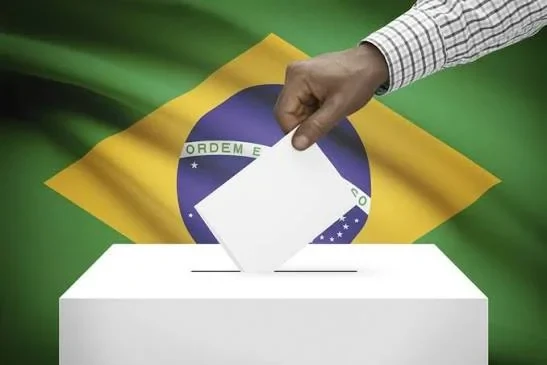
Brazil holds its first-round presidential vote on Sunday, October 4, 2026. Polls show President Luiz Inácio Lula da Silva ahead in round one but essentially tied with Senator Flávio Bolsonaro in a likely October 25 runoff. Nobody is expected to clear the 50 percent needed to win outright.
When is the election?
The first round is Sunday, October 4. If no candidate wins more than 50 percent of valid votes, the top two go to a runoff on October 25. Brazil also elects governors, senators and members of Congress at the same time.
Every Brazilian presidential election since 2002 has needed a second round, so a runoff is the safe expectation this time too.
Who are the main candidates?
Luiz Inácio Lula da Silva (PT), the incumbent, is 80 and seeking a fourth term overall. He held office from 2003 to 2011 and again since 2023. His running mate is Geraldo Alckmin.
Flávio Bolsonaro (PL), a senator and the eldest son of former President Jair Bolsonaro. His father is barred from running after being convicted over a plot to overturn the 2022 election, so Flávio carries the family's political movement.
Also in the race: Augusto Cury, Ronaldo Caiado, Renan Santos and Romeu Zema, among 13 candidates in total. Only a few polled above single digits.
What do the polls say?
The best-known in-person poll, Datafolha (September 22 to 24), showed:
First round: Lula 40 percent, Flávio Bolsonaro 36, Cury 5, Caiado 4, Santos 3.
Runoff: Lula 47 percent, Bolsonaro 45, inside the poll's margin of error of about two points.
Other pollsters vary. Quaest showed Bolsonaro narrowly ahead in a runoff, 42 to 41. BTG Pactual/Nexus had Lula at 46 to 45. Al Jazeera described the race as deadlocked. One aggregator summed up the mood this way: Lula likely wins round one, and the runoff is anyone's game.
Why is the race so close?
Polarization. Brazil is deeply divided between supporters of Lula and supporters of the Bolsonaro movement, and few voters seem movable. AS/COA's poll tracker describes calcified polarization and mistrust in candidates.
Lula narrowly beat Jair Bolsonaro in 2022, and the same split has hung over the country since.
What issues are driving the vote?
Coverage points to corruption, security and economic worries. A major financial scandal involving banker Daniel Vorcaro has reportedly touched people around both campaigns and has also drawn in members of the Supreme Court, according to AS/COA. That has left both camps with some exposure, and some voters cynical about everyone.
Cost of living and public safety are the everyday concerns, as they are in many countries.
What role is the United States playing?
International attention has been intense. Former President Jair Bolsonaro is an ally of U.S. President Donald Trump, and Lula has cast himself as a defender of Brazilian sovereignty against outside pressure. He warned Trump in June not to interfere in the race. How much foreign influence matters to voters is hard to measure, but it's part of the campaign's tone.
Who might decide the outcome?
Two groups stand out. First, women voters, who helped elect Lula in the past and who, analysts say, Flávio Bolsonaro needs to win over. Second, voters backing minor candidates in round one, whose second-round choices could tip a tight race. Cury, Caiado, Zema and Santos together picked up a meaningful slice in the polls, and where those votes go could be decisive.
Could the polls be wrong?
Yes. Poll margins in this race are small, and different methods give different results. Online pollsters have been friendlier to Bolsonaro than in-person ones, with one, Veritá, showing him ahead in both rounds. Polling misses of a few points are common in Latin America, and even a small one could flip a runoff.
Why does this matter globally?
Brazil is the largest economy in Latin America, a major farm and commodity exporter, and home to most of the Amazon. Its policies on trade, forests and foreign alignment affect markets and climate goals well beyond its borders. Investors and governments are watching closely.
What should You watch on election night?
The round-one margin. A big Lula lead would give him momentum. A narrow one signals a nail-biter.
Congress and governor races, which will shape how much any winner can actually do.
Turnout, especially among groups that could lean one way.
Any disputes about the count. Brazil's electronic voting produces fast results, so the first-round outcome should be clear the same night.
FAQ
When is Brazil's presidential election? The first round is October 4, 2026, with a possible runoff on October 25.
Who is running? Mainly President Lula (PT) and Senator Flávio Bolsonaro (PL), plus several smaller candidates.
Why can't Jair Bolsonaro run? He was convicted over a plot to overturn his 2022 loss and is ineligible.
Who is winning? Lula leads round one in most polls, while the runoff is statistically tied.






Comments
Leave a Comment
Your email address will not be published. Required fields are marked *