
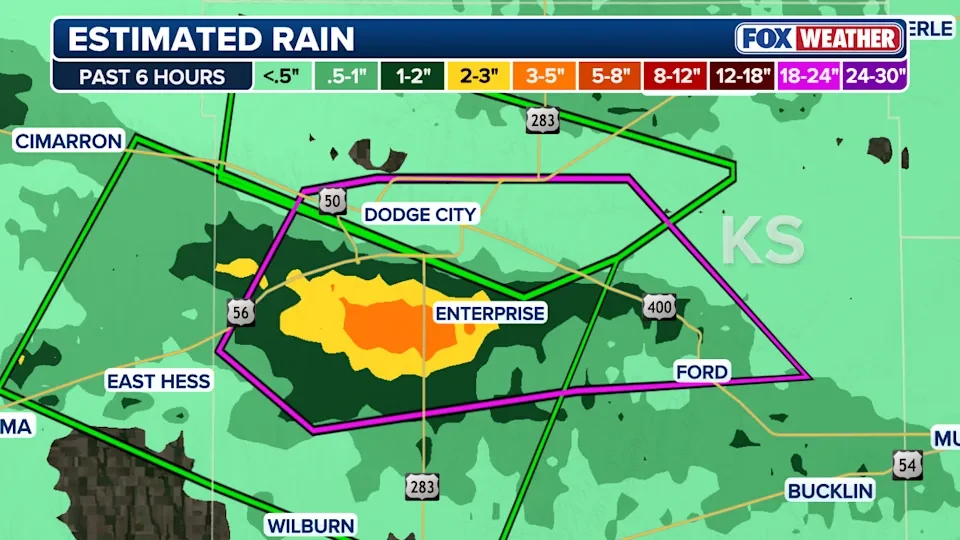
The rain started in the Pacific, crossed Mexico, and is now parking itself over the middle of the United States. For most of this week, a flood threat has been stretching across a corridor that touches Dallas, Austin, San Antonio, Kansas City, and Chicago, and more than 80 million people live inside it.
Moisture from the remnants of Hurricane Polo and Hurricane Rachel is fueling a weeklong flood threat across the Southwest, Plains, and Midwest. More than 80 million people sit along a corridor from Texas to Chicago, with some areas expecting 6 to 8 inches of rain.
Where the danger is
Forecasters at the FOX Forecast Center say the threat has shifted into a band from the major Texas metros northward through Oklahoma, Kansas, Iowa, and into northern Illinois. Flood Watches cover multiple states, and the wider week-long event could touch more than 150 million people.
Earlier this week, three flash flood emergencies were issued in New Mexico amid concerns about dams. Forecasters estimated that nearly 80 trillion gallons of water could fall during the week, enough to fill over 122 million Olympic swimming pools. That figure is an estimate and is meant to show scale rather than predict exact totals.
Why the Midwest is especially vulnerable
The big problem is not only the amount of rain. It is where it falls. Soil across much of the region has been wet for a month, so it cannot absorb more. When the ground is saturated, water runs off instead of soaking in, and creeks rise quickly. Central Iowa and northern Illinois are flagged as particular concerns, with a Level 2 of 4 flash flood risk from Chicago to Kansas City on Thursday.
Texas Hill Country carries a memory
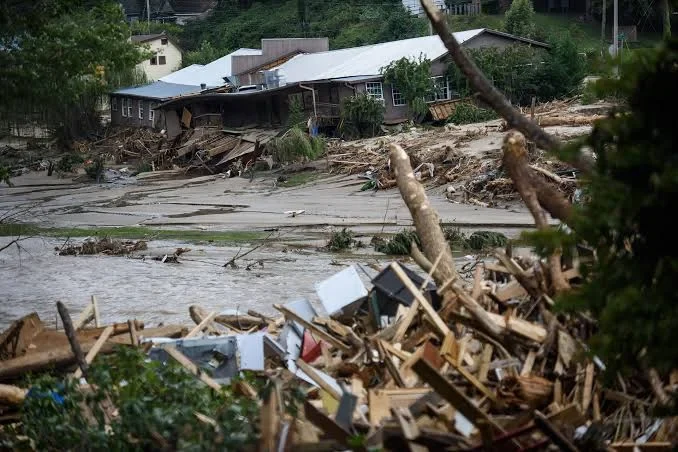
Central Texas faces repeated rounds of storms, including the Hill Country, which suffered deadly flooding on July 4, 2025. During that disaster the Guadalupe River near Kerrville rose more than 20 feet in about 90 minutes, and more than 100 people died. Residents there know how fast a quiet creek can turn lethal. Local officials in flood-prone areas are likely to be cautious, and people should take their warnings seriously.
How tropical systems feed inland floods
When a hurricane makes landfall and weakens, it can still carry a huge load of water vapor. Polo made landfall in Baja California on Monday. Its moisture, along with Rachel's, is being pulled northward by the jet stream and interacting with other weather systems. The result is a long-lasting pattern of thunderstorms that keep training over the same places. Meteorologists describe that as the recipe for flash flooding: not one big storm, but many storms over the same ground.
What to do if you live in the zone
Know your alerts. A Flood Watch means conditions are favorable. A Flood Warning means flooding is happening or is imminent. A Flash Flood Emergency means a life-threatening event is underway.
Never drive through water. Six inches can stall a car, and a foot can carry it away. Turn around.
Move to higher ground early. If you live near a creek, low-water crossing, or in a basement apartment, don't wait for the water to arrive.
Keep a go-bag ready. Include medications, documents, a charger, water, and a flashlight.
Check on neighbors. Older people and people with disabilities are often hit hardest.
Travel and daily life
Expect road closures, delayed flights, and flooded underpasses in cities along the corridor. Commuters in Chicago, Kansas City, and the Texas metros should check local transport updates before leaving, and allow extra time. Farmers across the Plains and Midwest will also be watching for harvest delays, since fields that stay waterlogged are hard to work.
How long will it last?
The threat is expected to peak around Wednesday and Thursday and linger through the week as more moisture arrives. Forecasts shift, so the safest approach is to follow the National Weather Service for your county rather than relying on a single national headline.
Frequently asked questions
Which cities are most at risk? Dallas, Austin, San Antonio, Oklahoma City, Kansas City, Omaha, Des Moines, and Chicago are among the cities named in forecasts.
How much rain could fall? Many areas could see 6 to 8 inches over the week, with some spots higher.
What is the difference between a flood watch and a warning? A watch means flooding is possible. A warning means it is happening or about to happen.
Is this connected to hurricanes? Yes. Tropical moisture from the remnants of Polo and from Hurricane Rachel is feeding the storms.
Where can I get official updates? The National Weather Service, local emergency management, and your phone's wireless emergency alerts.




Comments
Leave a Comment
Your email address will not be published. Required fields are marked *