
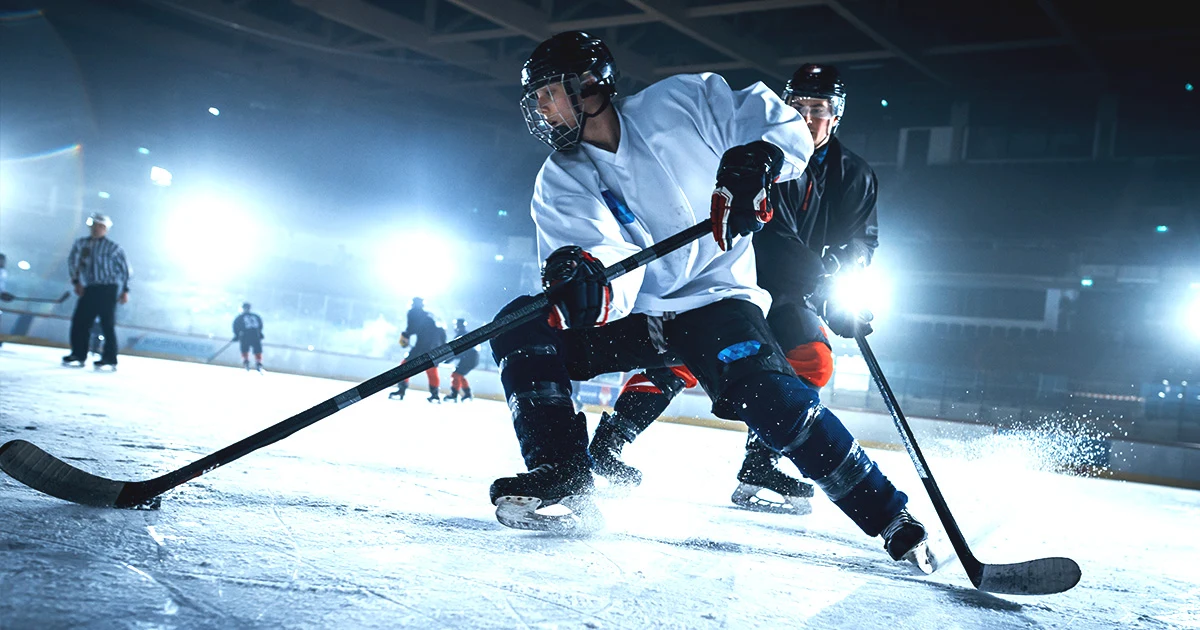
Ice hockey is a team sport played on an ice rink in which players use sticks to move a puck and try to score in the opposing team's goal.
Players and positions
A team normally has six players on the ice at full strength: one goaltender, two defensemen and three forwards. Players substitute frequently because shifts are usually short and physically demanding.
The rink
The rink is divided into defensive, neutral and attacking zones. Blue lines separate the zones, while the centre red line divides the rink. Faceoff circles and dots identify locations where play can restart.
Scoring
A goal is scored when the puck legally crosses the goal line between the posts and under the crossbar. The team with more goals at the end of the game wins, subject to the competition's overtime or shootout rules when scores are tied.
Important rules
Offside generally prevents attacking players from entering the offensive zone ahead of the puck. Icing concerns shooting the puck across specified lines without it being touched, although exact applications can vary by league.
Penalties
Infractions such as tripping, hooking and certain forms of illegal contact can result in penalties. A penalised player's team may have to play temporarily with fewer skaters, creating a power play for the opponent.
Equipment
Players use skates, sticks, helmets and protective equipment. Goaltenders wear specialised equipment designed for their position.
Major competitions
The National Hockey League is the leading professional league in North America. International ice hockey includes the IIHF World Championship and Winter Olympic competition.
Rules differ somewhat between organisations, so official competition rules should be consulted when precise technical requirements matter.





Comments
Leave a Comment
Your email address will not be published. Required fields are marked *