
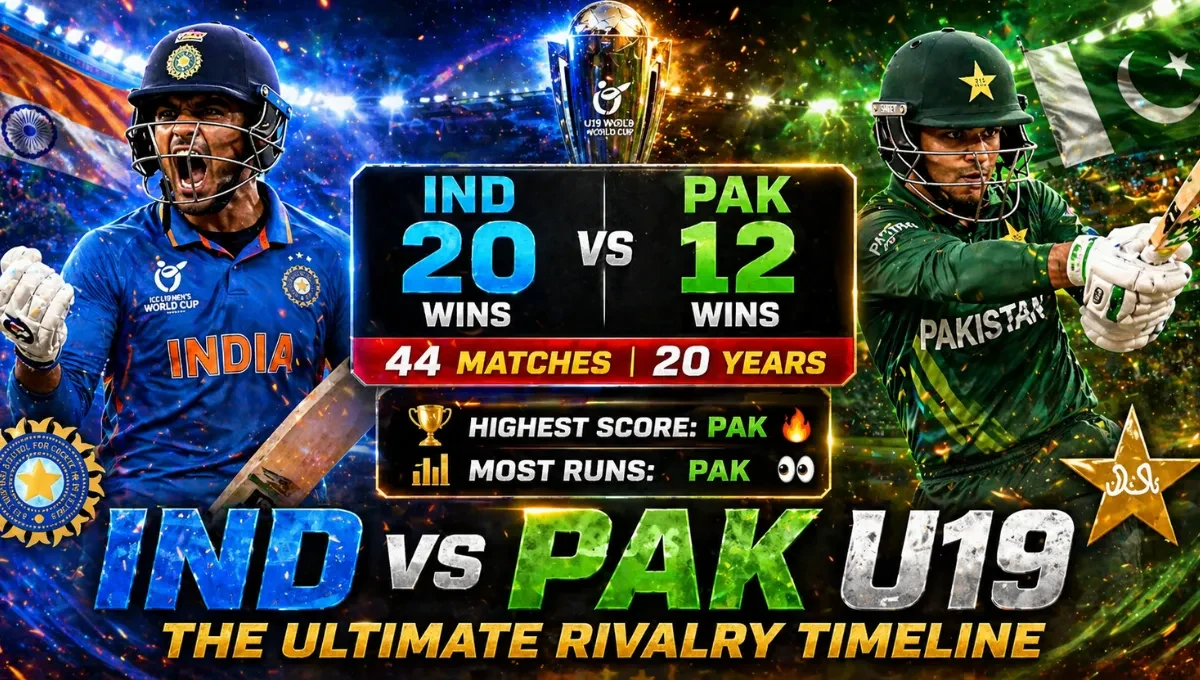
For decades, the epic clash of blue and green on a cricket pitch has reliably brought nations to a standstill. From the iconic Sharjah desert battles of the 1980s to modern-day World Cup spectacles, senior India-Pakistan fixtures are cultural milestones. Yet, behind the sprawling stadiums and packed television broadcasts, a raw, fiercely competitive crucible has quietly evolved in the shadows: the Under-19 rivalry.
Far from being a mere junior-grade warmup, the youth fixture between India U19 and Pakistan U19 has transformed into a high-stakes battleground. It is where future legends are forged, tactical boundaries are pushed, and a fresh chapter of cricket’s greatest enmity writes itself.
The Evolutionary Shift: From Fixture to Phenomenon
Historically, junior bilateral and multi-nation fixtures were viewed primarily as developmental pathways—chances for coaches to test bench strength and blood youngsters into international environments. However, the commercial explosion of youth tournaments, broadcast coverage, and the ACC Under-19 Asia Cup and ICC U19 World Cups changed everything.
When these teenage prodigies pull on their respective national jerseys, they carry the weight of billion-person expectations. Matches are no longer quiet affairs played before empty stands; they draw roaring crowds, intense digital scrutiny, and global media attention.
In recent years, the rivalry has shifted dramatically in flavor. While India's youth setup has historically relied on structural depth, domestic academies, and tactical discipline, Pakistan's junior teams have frequently countered with unbridled aggressive flair, express pace, and fearless batting approaches. This clash of philosophies has injected fresh oxygen into the matchup.
Defining Battles: Recent Flashpoints That Shaped the Era
The modern rivalry is best defined by a series of titanic momentum swings on the international stage.
The ACC Asia Cup Finals and Encounters: Pakistan has repeatedly delivered masterclasses in white-ball batting on the junior circuit. Explosive centuries and record-shattering partnerships from standout young prospects have frequently posted mammoth totals, forcing India's bowling attack to discover new depths of discipline under immense pressure.
The ICC U19 World Cup Super Six Encounters: Meeting in high-pressure global tournaments, India has regularly answered back with tactical maturity. Defending competitive totals through disciplined spin bowling and economical pace spells has underlined India's resilience and kept their championship dreams alive.
Group Stage Thrillers: Whether in the United Arab Emirates, Oman, or Sri Lanka, group stage fixtures routinely lock the two powerhouses in tense, down-to-the-wire chases. Anchoring innings under pressure and defending narrow totals have become hallmarks of these encounters, setting the stage for unforgettable knockout drama.
FAQs (Frequently asked questions):
Who leads the head-to-head record in youth ODIs?
India holds a narrow historical advantage in overall Youth ODI encounters, though Pakistan has fiercely dominated several recent multi-nation tournament stretches, making every new fixture an unpredictable contest.
Why is the U19 rivalry so critical for senior international cricket?
Because it serves as the ultimate litmus test. Players who star in these high-pressure Under-19 matches—such as Virat Kohli or Shubman Gill in past eras—frequently make a direct, seamless leap to senior national selection.
Where do these teams usually meet?
Due to bilateral scheduling constraints at the senior level, India U19 and Pakistan U19 almost exclusively face off during marquee ACC Under-19 Asia Cups and ICC Under-19 Men's Cricket World Cups.
The Future of the Contest
As cricket continues to evolve with explosive batting styles and innovative bowling variations, the India U19 vs. Pakistan U19 fixture stands at the forefront of the sport's youth revolution. It is no longer just a prequel to the senior rivalry; it is a standalone spectacle of passion, youthful exuberance, and elite competitive spirit. Every time these teenagers step onto the turf, they aren't just playing for a trophy—they are writing the prologue for the next decade of international cricket.


Comments
Leave a Comment
Your email address will not be published. Required fields are marked *