
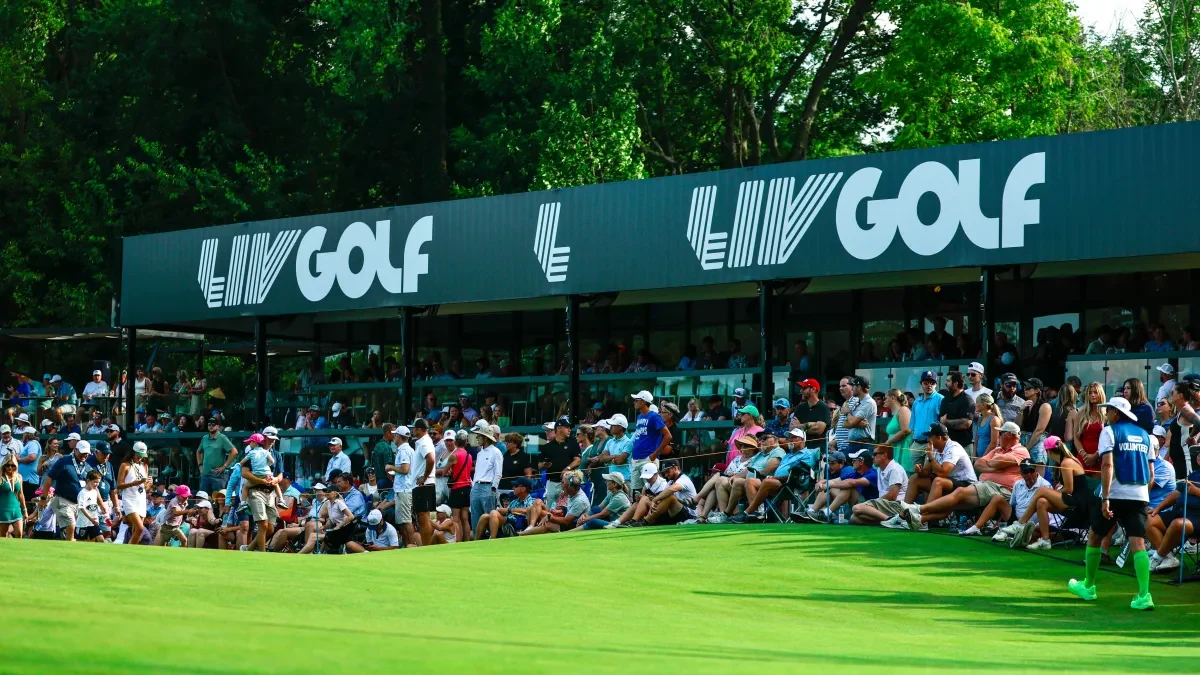
Professional sports have witnessed few commercial upheavals as dramatic, expensive, and polarizing as the rise and sudden fall of LIV Golf. Backed by the immense financial weight of Saudi Arabia's Public Investment Fund (PIF), the breakaway league entered the global sporting ecosystem with an aggressive mandate: to upend the traditional golf establishment, attract the game's biggest international superstars with astronomical guaranteed contracts, and fundamentally rewrite the rules of professional competition.
Yet, beneath the glittering exterior of shotgun starts, high-stakes team formats, and hundreds of millions spent on player acquisitions, a sobering economic reality caught up with the enterprise. Following years of staggering financial burn, legal scrutiny, and shifting corporate strategies, the ambitious venture faced a stunning financial collapse, signaling a monumental and historic turning point for modern sport.
The Genesis of an Expensive Rebellion
When LIV Golf officially teed off its inaugural series, it promised to revolutionize a sport that critics argued had grown stale, rigid, and disconnected from younger audiences. By offering unprecedented guaranteed purses, lighter individual and team schedules, and a festival-like atmosphere, the league successfully lured multiple major champions, Ryder Cup legends, and fan favorites away from the PGA Tour and the DP World Tour.
For the participating players, the financial windfall was unprecedented in golf history. Hundreds of millions of dollars were funneled into signing bonuses designed to secure immediate global legitimacy and fracture the traditional monopoly of golf governance. However, this aggressive market disruption came at an astronomical cost. Operating expenses ballooned rapidly as the organization subsidized private travel, hosted lavish events across multiple continents, and attempted to build a self-sustaining commercial ecosystem from scratch in a matter of months.
Internal documents, corporate disclosures, and subsequent legal filings revealed that the primary backers poured billions into the project. Estimates tracking the total capital injection indicated that over $7 billion was spent in the relentless pursuit of reshaping global golf. Despite securing various broadcast partnerships over the years—ranging from digital streaming platforms to secondary television networks—the league struggled to capture the organic, broadcast-driven advertising revenue, merchandising sales, and ticket revenue required to offset its massive liabilities.
Cracks in the Foundation: The Turning Tides
The entire financial model of LIV Golf relied heavily on continuous, high-level capital infusion and the underlying assumption that traditional golf governance would eventually buckle under financial pressure into a permanent merger or joint commercial partnership. However, as protracted, high-level negotiations between major golf bodies dragged on month after month without a definitive resolution, financial patience among key stakeholders began to wear thin.
The critical turning point arrived when primary backers reassessed the long-term viability and return on investment of sustaining a multi-billion-dollar annual operating deficit. When initial plans for major corporate restructuring, secondary investment injections, and outside credit partnerships failed to materialize or collapsed due to withdrawn backing, the structural integrity of the league fractured rapidly.
Without guaranteed continuous funding to cover enormous player contracts, massive operational overhead, and high-end tournament production costs, the business model hit an immovable economic wall. Legal proceedings, debt restructurings, and subsequent court filings eventually laid bare the true extent of the liabilities, revealing immense debts owed to creditors, logistics vendors, and participating athletes. The grand vision of a permanent, parallel golfing empire ultimately succumbed to basic economic realities and unsustainable cash burn.
The Aftermath: Where Does Professional Golf Go From Here?
The winding down of operations leaves a massive vacuum in professional golf. Major champions and high-profile athletes who hitched their professional wagons to the breakaway circuit find themselves facing an uncertain, complicated future regarding their competitive homes, contract payouts, and direct pathways back into traditional international majors and team events.
For the broader sporting ecosystem, the collapse serves as a profound and historic cautionary tale about the strict limits of financial disruption in legacy sports. While the initiative succeeded in forcing traditional tours to drastically increase prize purses, overhaul tournament structures, and rethink player compensation, it also proved that fan loyalty, historic tournament prestige, and broadcasting economics cannot simply be bought overnight.
As the dust settles on one of the most expensive and ambitious experiments in modern sports history, the landscape of professional golf is left to rebuild, picking up the pieces of a fractured community while pondering whether another corporate challenger will ever dare to mount such a colossal crusade again.
Frequently Asked Questions (FAQ)
1. What caused the financial collapse of LIV Golf?
The collapse was primarily driven by unsustainable operating costs exceeding billions in total expenditures, combined with the eventual withdrawal of major financial backing and an inability to generate enough organic broadcast and commercial revenue to cover massive ongoing liabilities.
2. How much money was invested into the venture?
Financial reports, corporate disclosures, and industry estimates indicate that the primary backers poured upwards of $7 billion into launching, operating, and sustaining the league, its events, and its player contracts over its operational lifespan.
3. What happened to the players' contracts following the shutdown?
With the organization initiating proceedings to wind down operations and address mounting liabilities, many participating golfers faced substantial unpaid financial claims and unsecured liabilities, forcing athletes and legal representatives to navigate complex corporate restructuring outcomes.
4. How did this impact the traditional golf tours?
While the breakaway circuit ultimately failed to sustain itself, its aggressive push permanently altered professional golf by forcing traditional bodies like the PGA Tour to increase prize money, overhaul tournament structures, and create pathways to retain top talent.



Comments
Leave a Comment
Your email address will not be published. Required fields are marked *