
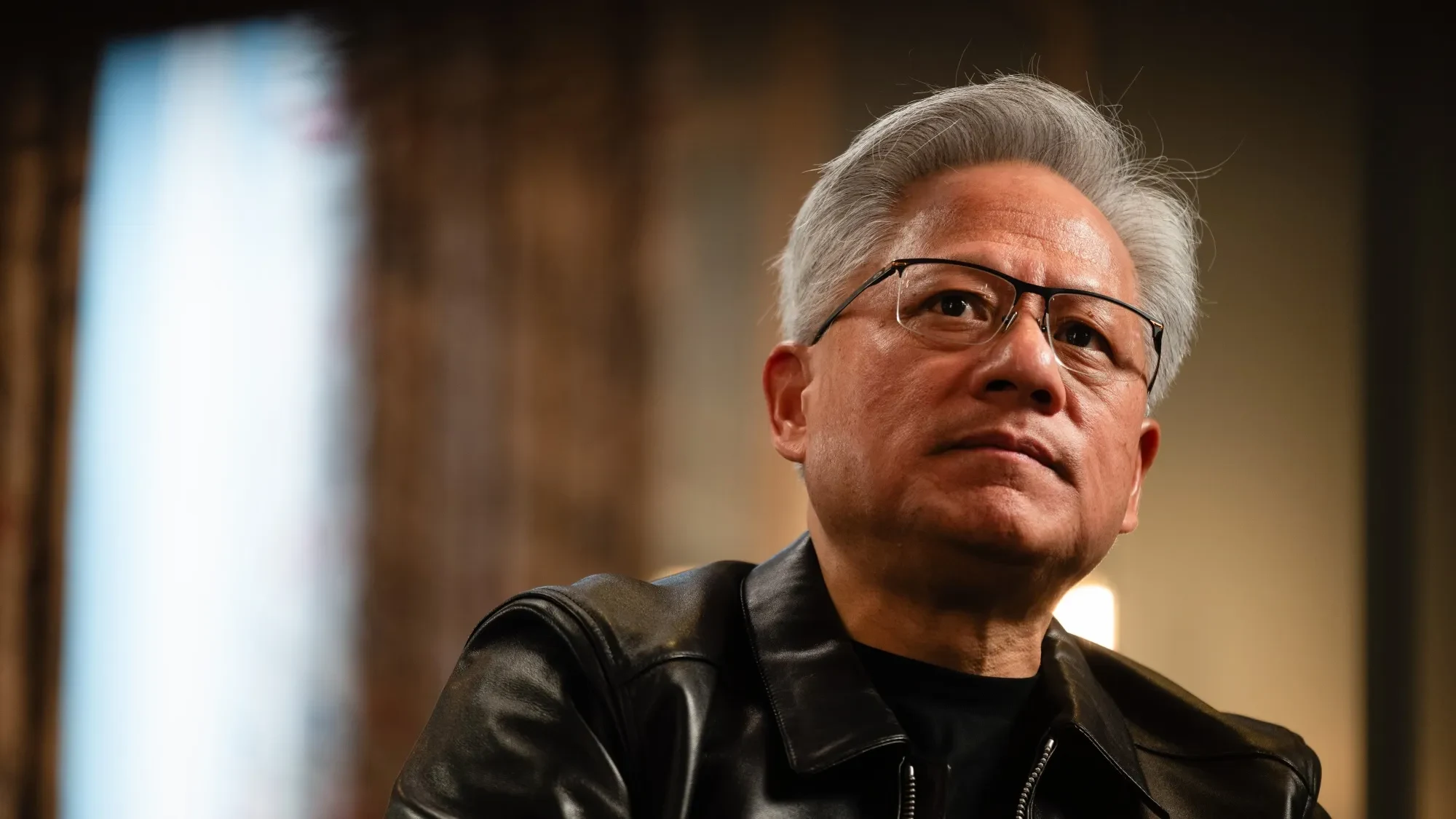
The technology world rarely witnesses a tectonic shift as abrupt as the departure of Jensen Huang from Nvidia. After leading the company he co-founded for thirty-three years, Huang stepped down as chief executive, president, and board member. For over three decades, Huang was not merely a corporate executive; he was the unmistakable, leather-jacketed face of the artificial intelligence revolution. His charismatic keynote speeches and relentless evangelism turned a niche graphics card manufacturer into a multi-trillion-dollar titan that built the foundational infrastructure for the modern AI gold rush.
With Huang exiting the stage amid intense scrutiny over personal conduct and geopolitical pressures regarding chip exports, the critical question confronting Wall Street, Silicon Valley, and global policymakers is simple: What comes next for Nvidia and the broader trajectory of artificial intelligence?
The Immediate Shockwave and Market Reality
The announcement sent immediate tremors through global financial markets, erasing billions in market value as investors grappled with the sudden removal of a visionary founder who had become synonymous with accelerated computing. Nvidia’s success was never built on hardware alone; it was anchored in Huang's unique ability to anticipate shifts in computing paradigms years before they materialized. He forced the industry to adopt parallel processing, birthed CUDA when software developers thought GPUs were strictly for video games, and single-handedly convinced sovereign nations and venture-backed startups alike that generative AI was the future.
When a corporate titan of Huang's magnitude steps down under a cloud of controversy—touching on international cloud partnerships and regulatory scrutiny from Washington—the psychological blow to investors is profound. Yet, the machinery of modern AI infrastructure does not simply grind to a halt. Instead, Nvidia has been forced into an unprecedented transitional phase that tests whether the company's institutional foundation can endure without its chief architect.
Entering the Era of Colette Kress: Financial Scaffolding and Continuity
To steady the ship, Nvidia’s board appointed Chief Financial Officer Colette Kress as interim CEO. Kress is widely respected on Wall Street for her financial stewardship through the explosive boom years. Her appointment signals an immediate, pragmatic pivot: rather than looking for an eccentric visionary to immediately fill Huang's shoes, Nvidia is prioritizing financial discipline, operational continuity, and stakeholder reassurance.
Industry analysts note that Nvidia’s modern business model has evolved far beyond selling silicon. It functions increasingly as a financial architect of the AI economy, backing neo-clouds, extending credit lines to emerging AI players, and treating high-end accelerators as high-stakes collateral. Having a seasoned financial mind like Kress at the helm ensures that these complex monetary scaffolds remain stable while the board conducts a global search for a permanent successor. Whether that successor comes from technical engineering ranks or corporate leadership will dictate Nvidia’s long-term product philosophy.
Technology Roadmaps: Can Nvidia Maintain Its Moat?
The core operational challenge for Nvidia moving forward is maintaining its formidable technological moat without its chief strategist. Competitors like AMD, Intel, and custom silicon initiatives from major hyperscalers (such as Google, Microsoft, and Amazon) have been hungrily eyeing Nvidia's dominant market share.
Nvidia’s upcoming architectures—spanning advanced GPU iterations and deeply integrated data center systems—are already deeply embedded in development pipelines. However, hardware supremacy is a moving target. Huang's genius lay in creating software ecosystems like CUDA that locked developers into Nvidia's hardware. Preserving that developer loyalty while navigating potential supply chain shifts and stricter U.S. export controls will be the ultimate test for the interim and future leadership teams.
The Geopolitical Crossfire and the Semiconductor Cold War
Huang’s departure also unfolds against the backdrop of an escalating semiconductor cold war between the United States and China. With Washington tightening restrictions on advanced AI chip shipments and regulatory bodies scrutinizing international distribution channels, Nvidia finds itself caught directly in geopolitical crosshairs.
The political pressure from Capitol Hill regarding compliance and export enforcement will not ease with a new CEO. In fact, whoever steers Nvidia next must navigate a much more hostile regulatory landscape. If China accelerates its domestic semiconductor independence or if neighboring Asian markets seek alternative suppliers due to frozen diplomatic talks, Nvidia’s international footprint could face lasting fragmentation.
Frequently Asked Questions (FAQ)
Q: Who replaced Jensen Huang as CEO of Nvidia?
A: Following Jensen Huang's resignation, Nvidia's Chief Financial Officer, Colette Kress, was appointed as the interim CEO while the board searches for a permanent successor.
Q: Why did Jensen Huang leave Nvidia?
A: Jensen Huang resigned from his roles as president, CEO, and board member following an internal board investigation into personal conduct and mounting scrutiny related to international cloud partnerships and U.S. export compliance.
Q: Will Nvidia's product roadmap and customer commitments change?
A: Nvidia has stated that operations, ongoing product roadmaps, and customer commitments will continue without interruption. The company's underlying engineering teams and financial infrastructure remain robust under interim leadership.
Q: How has the market reacted to Huang's exit?
A: Financial markets experienced immediate volatility, with Nvidia’s stock dipping significantly following the announcement as investors reassessed the company's valuation in the absence of its founding visionary.
Conclusion:
Nvidia is no longer just a scrappy gaming hardware startup or a high-risk bet on deep learning; it is the fundamental economic engine of the digital world. While Jensen Huang's exit marks the end of an era defined by charismatic founder-led dominance, it also forces Nvidia to mature into an institution larger than any single individual. Whether the company can successfully navigate this high-stakes transition will determine not just its own market valuation, but the speed and security of the global artificial intelligence revolution for years to come.







Comments
Leave a Comment
Your email address will not be published. Required fields are marked *