Create stronger autumn road photographs by controlling viewpoint, color, scale, timing, and the relationship between road and landscape.
Decide what the road contributes
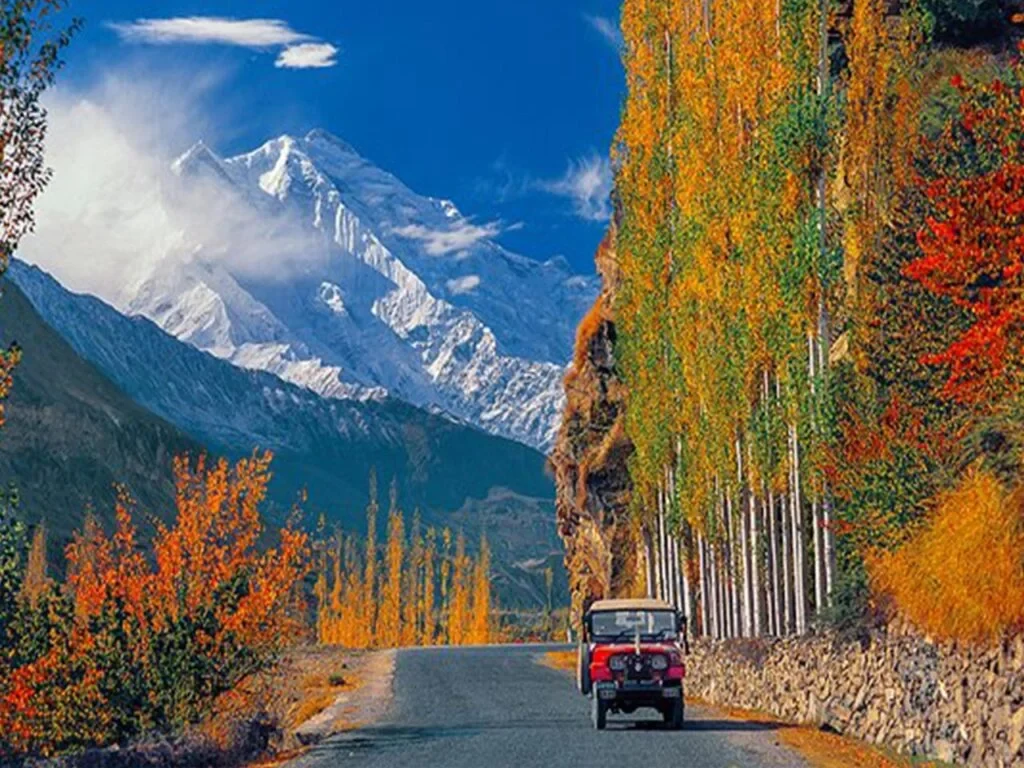
A road can lead the eye into a valley, show scale, or introduce a human journey into a natural scene. Before taking the photograph, decide whether it is the main subject or a supporting line. This choice influences where you stand and how much foreground you include.
Use color with restraint
Autumn foliage already provides strong contrast. Expose carefully to retain detail in bright leaves and pale sky, and avoid processing every color to maximum saturation. A limited palette often makes the seasonal character feel more convincing.
Wait for separation
Vehicles, trees, and mountain edges can merge into visual clutter. A small change in position or a patient pause may create cleaner spacing between elements. If a vehicle is part of the frame, consider whether it adds scale and direction rather than simply blocking the view.
Balance the near and far landscape
Foreground texture gives the viewer an entry point, while distant peaks establish scale. Use a moderate focal length or careful framing to keep both readable. Extremely wide views can make the mountains feel smaller than they appeared in person.
Work safely beside a road
Use legal stopping places and remain completely outside traffic lanes. Do not stand on bends or direct other people into unsafe positions for a composition. The strongest viewpoint is always one that can be used without creating risk for travellers or local residents.
A practical next step
Use these ideas as a starting framework, then verify the details that depend on location, access, products, weather, regulations, or personal circumstances. A useful plan stays specific to the real setting and changes when better information becomes available.