Plan a clear crescent-moon photograph by choosing an open horizon, arriving early, stabilizing the camera, and preserving the natural twilight.
Plan around the horizon
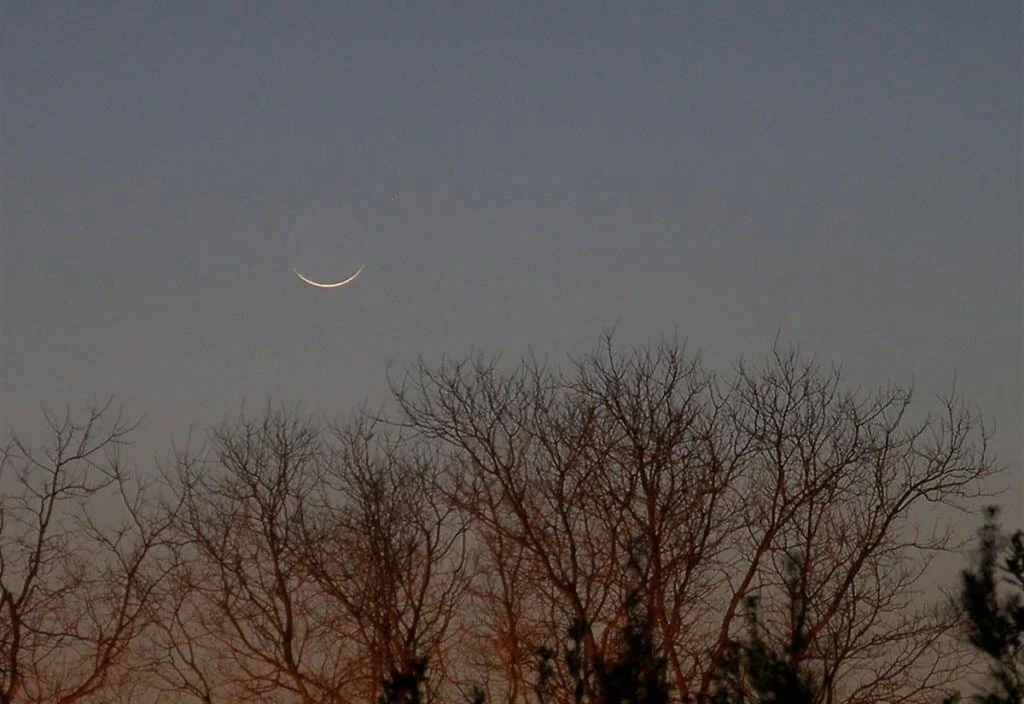
A thin crescent is easiest to compose when the horizon is open and the foreground has a simple shape. Visit the location in daylight, confirm that access is permitted, and identify trees, buildings, or ridges that can provide scale without hiding the moon.
Arrive before the light changes
Twilight color changes quickly. Set up early enough to frame the scene and test focus while the landscape remains visible. The moon may occupy only a small part of the frame, so a deliberate composition matters more than chasing it after it appears.
Expose for the complete scene
The bright crescent and dim foreground create a wide contrast range. Check highlights, make small exposure adjustments, and decide whether the foreground should retain detail or become a silhouette. Avoid processing that turns a subtle evening sky into an unnatural block of color.
Use stability and careful focus
A tripod can help where it is safe and allowed, but a stable support and sensible shutter speed may also work. Focus precisely and review the result at useful magnification. Atmospheric haze can soften detail even when technique is sound.
Keep the final image believable
Record the scene as it appeared rather than enlarging or moving the moon in editing. Modest contrast, color, and crop adjustments can clarify the photograph while preserving the relationship between sky and landscape.