
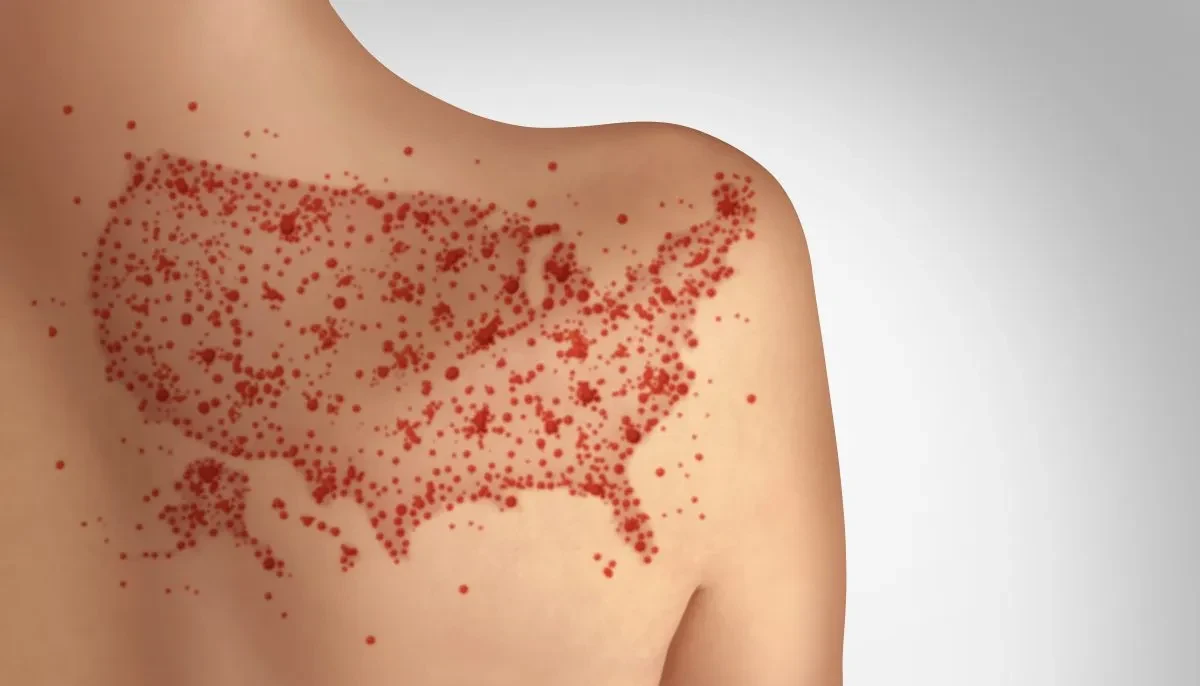
The U.S. is in its worst measles resurgence in decades. The CDC listed over 3,600 confirmed cases as of September 24, 2026, with the most recent outbreaks in Pennsylvania, Ohio and New York. Exposures have also been reported on public transit and at a sports stadium. The single best protection is being fully vaccinated.
How bad is the measles situation right now?
The CDC counted more than 3,600 confirmed U.S. cases as of September 24 and reported two deaths. There's a wrinkle: Pennsylvania's health department has counted four measles-associated deaths, and the CDC has disputed whether measles was the cause. Different agencies are drawing the line in different places, and readers should expect the numbers to keep shifting.
Over the past two weeks, Pennsylvania, Ohio and New York have seen the most cases, according to the Johns Hopkins Bloomberg School of Public Health's U.S. measles tracker.
Where have exposures happened?
That's what has people rethinking their travel plans. Public health officials have flagged a few examples:
Trains and buses. California's health department alerted people after an infected, unvaccinated passenger traveled across the country by train and bus.
Bars and a sports stadium. St. Louis health officials asked residents to watch for symptoms after a person who visited local bars and a stadium tested positive.
None of this means every crowded place is dangerous. It means a single infectious person can touch a lot of strangers before anyone knows they're sick.
Why does measles spread so easily?
Measles is one of the most contagious viruses known. It travels through the air, and it can linger in a room for up to two hours after an infected person leaves. Someone can spread it for about four days before the telltale rash appears, which is why exposure alerts often arrive after the fact.
An unvaccinated person who is exposed has a very high chance of catching it. That's why outbreaks tend to take off in communities where vaccination rates have slipped, and why they can travel: an infected traveler carries the virus into places with gaps in protection.
What are the symptoms?
Early symptoms look like a bad cold: fever, cough, runny nose and red, watery eyes. A few days later a rash usually starts on the face and spreads downward. Small white spots inside the mouth can appear earlier. Symptoms typically show up 7 to 21 days after exposure.
Most people recover, but measles can cause serious complications, including pneumonia and brain swelling. Young children, pregnant women and people with weakened immune systems are at higher risk.
How do I protect myself when traveling?
Every expert NPR spoke to gave the same first answer: make sure you're fully vaccinated. Two doses of the measles-mumps-rubella (MMR) vaccine are about 97 percent effective at preventing measles.
Some practical steps:
Check your records. If you're not sure you had two doses, ask your doctor or look up your state's immunization registry. Extra doses are generally considered safe.
Know your local alerts. Health departments post exposure notices with dates, times and places. If you were there, follow their guidance.
Watch for symptoms for three weeks after a known exposure.
Call ahead before going to a clinic if you think you have measles. Walking into a waiting room could expose other patients, including babies too young for vaccination.
Talk to your doctor before traveling with an infant. The standard first dose is given around 12 months, though doctors sometimes recommend an earlier dose before international travel.
Masks and hand-washing help with many germs, but they're weaker defenses against a virus this contagious. Vaccination does the heavy lifting.
Who should be most careful?
People who can't be vaccinated or who may not respond well to the vaccine rely on everyone around them being protected. That includes infants under 12 months, people undergoing cancer treatment, and others with compromised immune systems. If you're in one of those groups and there's an outbreak in your area, ask your doctor about specific precautions.
Why is this happening now?
It comes down to gaps in vaccine coverage. Measles was declared eliminated in the U.S. in 2000, and it stays that way only when vaccination rates are high enough to stop chains of spread. When coverage dips in pockets, the virus finds them. The current resurgence reflects that reality, though the exact drivers vary by community.
What should I take away from all this?
Stay calm, but don't shrug it off. The chance of running into measles on a given train ride is still low. The consequences of catching it, though, can be severe, and the fix is cheap and well tested. Checking your vaccine record takes five minutes.
FAQ
How many measles cases are there in the U.S. in 2026? The CDC reported more than 3,600 confirmed cases as of September 24, 2026.
Which states have the most recent cases? Pennsylvania, Ohio and New York over the past two weeks, according to the Johns Hopkins tracker.
Can you catch measles on public transit? Yes, if an infectious person is nearby. The virus is airborne and can stay in the air after they've left.
How effective is the MMR vaccine? Two doses are about 97 percent effective.
What should I do if I was exposed? Follow your local health department's instructions, check your vaccination status, and call your doctor before visiting a clinic.


Comments
Leave a Comment
Your email address will not be published. Required fields are marked *