
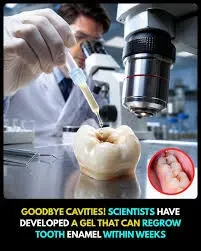
Dental visits have long been synonymous with the dreaded sound of the drill, the sting of the needle, and the permanence of fillings. For generations, humanity has accepted a fundamental biological truth: once human tooth enamel is lost to decay, trauma, or acid erosion, it is gone forever. Because mature enamel contains no living cells, the human body cannot naturally regenerate it.
That long-standing medical limitation may soon be a thing of the past. Researchers at the University of Nottingham have engineered a revolutionary protein-based dental gel capable of regrowing natural tooth enamel in a matter of weeks. This groundbreaking development promises to transform preventative dentistry and eliminate traditional invasive treatments entirely.
The Biological Barrier: Why Enamel Doesn’t Grow Back
To appreciate the scale of this breakthrough, it helps to understand why tooth decay is so difficult to treat permanently. Enamel is the hardest substance in the human body, composed almost entirely of tightly packed hydroxyapatite crystals.
When acids produced by oral bacteria erode this protective shield, tiny microscopic pits form. While fluoride toothpastes can help remineralize the surface layers of weakened enamel, they cannot rebuild lost structural depth or repair deep cavities. Once a cavity breaches the enamel and exposes the underlying dentin, dentists have no choice but to drill away the decayed material and patch the tooth with composite resin, amalgam, or ceramic crowns.
These synthetic fillings are temporary fixes. Over time, they degrade, leak, and require replacement, often leading to a repetitive cycle of larger fillings and eventual root canals.
How the Regenerative Gel Works
The new biomimetic gel developed by the Nottingham research team bypasses synthetic patches by working with the body's natural chemistry.
The Protein Scaffold: The gel acts as a specialized molecular scaffold mimicking the natural proteins responsible for biomineralization during embryonic tooth development.
Mineral Attraction: Applied directly to the damaged tooth surface, the scaffold actively attracts calcium and phosphate ions—vital minerals naturally present in human saliva.
Epitaxial Growth: The gel directs these minerals to crystallize in precise alignment with the existing underlying enamel structure, effectively "growing" new enamel crystals that seamlessly integrate with the natural tooth.
Laboratory tests indicate that within weeks of application, the newly grown enamel mimics the original biological architecture and mechanical strength of natural teeth, successfully closing microscopic cavities before they require invasive intervention.
The Future of Preventative and Restorative Dentistry
As clinical trials progress toward human application, the medical implications are profound. Preventive care could shift from simply slowing decay with fluoride to actively reversing early-stage cavities with a simple topical gel application during a routine dental check-up.
For patients, this means a future free from drills, injections, and dental anxiety. For global healthcare systems, it represents a massive reduction in the cost and frequency of restorative dental procedures, bringing long-term oral health within reach for underserved populations worldwide.
Frequently Asked Questions (FAQ)
Q: Why can't human teeth naturally regrow enamel on their own?
A: Mature tooth enamel is acellular, meaning it contains no living cells or blood vessels. Once it is destroyed by decay or acid erosion, the body lacks the biological mechanism to regenerate it.
Q: How does the new dental gel regrow enamel?
A: The gel creates a specialized protein scaffold that attracts calcium and phosphate ions from saliva, directing them to crystallize and rebuild lost enamel in alignment with the existing tooth structure.
Q: Will this gel eliminate the need for traditional fillings?
A: For early-stage cavities and surface enamel erosion, yes. By repairing microscopic damage before it requires drilling, the gel could prevent the need for traditional synthetic fillings.
Q: When will this treatment be available to the public?
A: Following successful laboratory results, the treatment is advancing through rigorous safety evaluations and human clinical trials before commercial dental approval.
Conclusion
The invention of a tooth-enamel-regrowing gel marks a monumental leap forward in regenerative medicine. By shifting the paradigm from artificial patching to true biological restoration, science is rewriting the future of dental care. Soon, the phrase "drill and fill" may become nothing more than a relic of medical history.






Comments
Leave a Comment
Your email address will not be published. Required fields are marked *