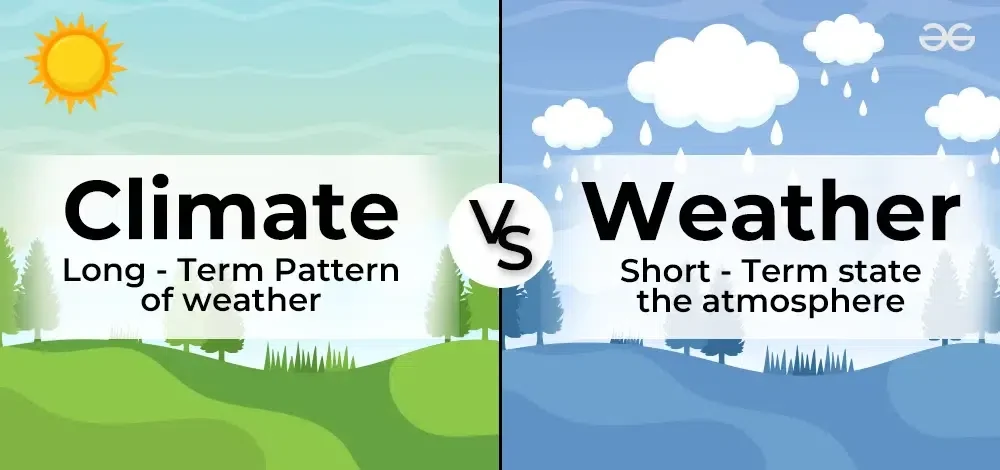
Many people confuse weather and climate, yet these terms describe distinct atmospheric phenomena. Weather reflects short-term conditions, while climate represents long-term patterns. Understanding these differences (weather vs climate) helps us grasp environmental changes and make informed decisions about our daily activities.
What Defines Weather?
Weather describes the atmosphere’s behavior at a specific moment and location. Temperature swings, rainfall patterns, and wind speeds change throughout the day. Your local weather forecast predicts conditions for the next few days based on current atmospheric data.
Understanding Climate
Climate represents the average weather patterns observed in a region over many years. Scientists analyze decades of temperature, precipitation, and atmospheric pressure data to determine an area’s climate. This long-term perspective reveals consistent patterns that shape ecosystems and human activities.
Key Differences
Weather changes rapidly, while climate shifts occur gradually over extended periods. Think of weather as your mood and climate as your personality. Your daily weather forecast might predict rain, but your climate determines if you live in a desert or rainforest.
Impact on Daily Life
Weather influences our immediate plans and clothing choices. Farmers watch weather forecasts to plan their planting and harvesting schedules. Climate shapes our architecture, agricultural practices, and cultural traditions across different regions.
Climate Zones
Earth contains distinct climate zones, from tropical rainforests to polar tundras. These zones experience unique weather patterns throughout the year. Local geography and ocean currents influence regional climate characteristics.
Weather Monitoring
Meteorologists use satellites, radar systems, and ground stations to track weather changes. They collect data about temperature, humidity, wind speed, and atmospheric pressure. These measurements help create accurate weather forecasts.
Climate Research
Climatologists study historical weather records, ice cores, and tree rings to understand climate patterns. They analyze this data to identify long-term trends and predict future changes. Their research helps communities prepare for environmental challenges.
Practical Applications
Understanding weather helps us plan outdoor activities and prepare for severe conditions. Climate knowledge guides building designs, crop selection, and infrastructure development. Both affect our daily decisions and long-term planning.
Conclusion
Weather and climate work together to shape our environment and influence our lives. Weather provides immediate atmospheric conditions, while climate offers a broader perspective. This knowledge helps us adapt to changing conditions and make informed decisions about our future.
Remember that while weather fluctuates daily, climate changes occur over decades. Understanding both helps us prepare for immediate weather events and long-term environmental changes. Together, they tell the complete story of our atmospheric environment.