
Dark Matter:
Dark matter is one of the most mysterious substances in the universe. Scientists call it the “invisible glue” that holds galaxies together. Although it cannot be seen or detected directly, dark matter makes up about 27% of the universe’s total mass-energy. This extraordinary cosmic treasure hunt attempts to uncover what dark matter really is and its role in shaping the cosmos.
Discovery:
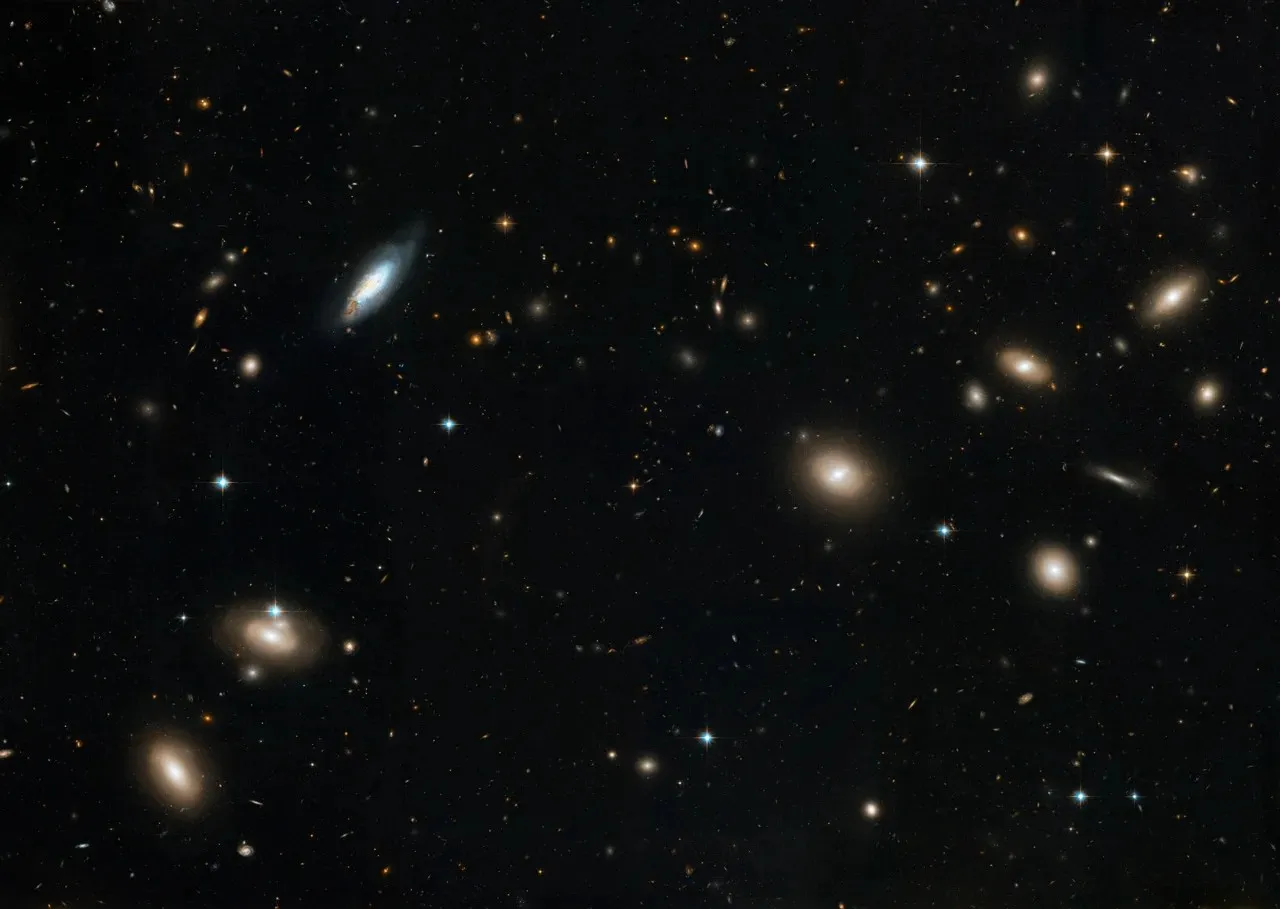
Back in 1933, Swiss astronomer Fritz Zwicky was the first to suggest that dark matter might actually exist. He observed that galaxies in the Coma cluster were zipping around way faster than what the visible matter could account for. Zwicky theorized that there was some sort of “missing mass” out there, which he dubbed dunkle Materie, or dark matter. Later on, astronomers like Vera Rubin and her colleagues backed this up by studying the rotation curves of galaxies. They found that stars located far from the centers of galaxies were orbiting at speeds that just didn’t make sense without some extra invisible mass pulling them in.
What is Dark Matter?
Dark matter is quite different from the ordinary matter that makes up stars, planets, and all living things. It doesn’t emit, absorb, or reflect light, which is why it’s completely invisible to our telescopes. But don’t be fooled—dark matter does have mass and it exerts gravity. Scientists think it creates a cosmic framework, often referred to as gravitational scaffolding, around which galaxies and clusters come together.
The Role of it in the Universe:
Without dark matter, galaxies wouldn’t be able to hold themselves together or form correctly. It plays a crucial role in shaping the large-scale structure of the universe by creating filaments and superclusters. Dark matter also has an impact on cosmic microwave background radiation and the way galaxies collide. Its gravitational influence is key to the movement of galaxies, making it vital for the evolution of the cosmos.
The Ongoing Search for Dark Matter:
Even after decades of research, scientists are still on the hunt for the true nature of dark matter. There are various theories out there, including bizarre particles like Weakly Interacting Massive Particles (WIMPs) or axions. Researchers are conducting experiments to try and detect these particles either here on Earth or through high-energy collisions in particle accelerators. New observatories and satellites are also being developed to map the distribution of dark matter with greater precision.
Why It Matters?
Grasping the concept of dark matter is essential for answering some of the universe’s biggest questions about its origin and ultimate fate. It helps us understand how unseen forces shape the visible structures we see around us. The quest to study dark matter is like a treasure hunt into the unknown, pushing the limits of what we know in physics and astronomy.
Conclusion: The Cosmic Treasure Hunt Continues
Dark matter remains one of the greatest mysteries in science. It makes up most of the universe’s matter but hides in plain sight. The quest to understand dark matter continues to drive innovation and discovery. This cosmic treasure hunt inspires scientists worldwide to unlock the secrets of our universe.