
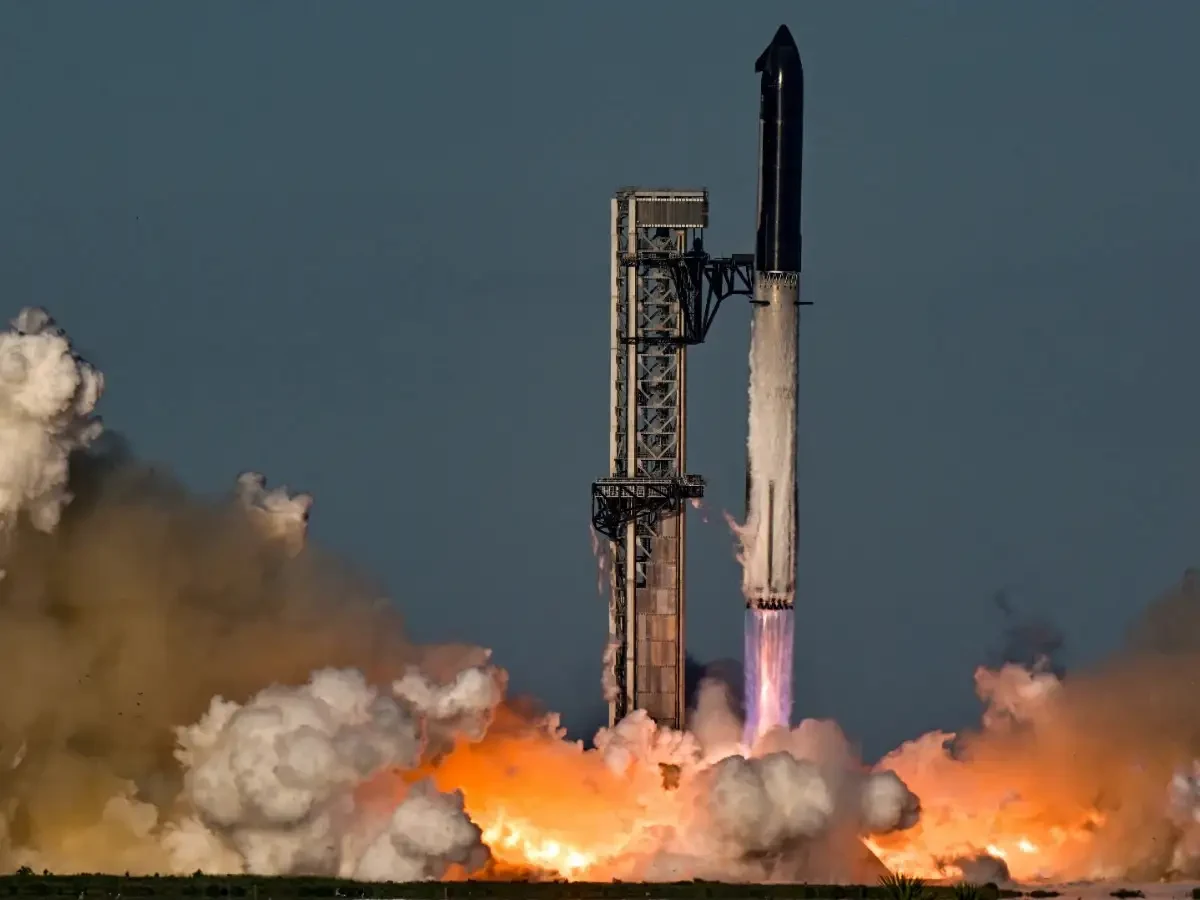
The global aerospace landscape has officially entered a bold new chapter. For decades, the pursuit of space exploration was bound by the heavy financial and logistical chains of expendable rocketry—where multi-million-dollar components were flown once and left to burn up or sink into the ocean. Today, that paradigm is fracturing. Recent breakthroughs in full-scale rocket recovery, highlighted by SpaceX's historic orbital flight tests and unprecedented mechanical catches of orbital-class spacecraft, have brought humanity to the precipice of a fully reusable future. This leap forward is not merely an incremental upgrade; it is a fundamental restructuring of how humanity plans to reach the stars, deploy massive orbital constellations, and eventually establish permanent settlements on the Moon and Mars.
The Evolution of Full and Rapid Reusability
To understand why recent milestones are transforming the aerospace industry, one must look at the traditional economics of spaceflight. Historically, even partially reusable systems required months of painstaking refurbishment, akin to rebuilding complex machinery from scratch after a single high-stress journey. The overarching design philosophy of the Starship program, however, targets airline-like turnaround times.
Recent flight campaigns have systematically pushed the boundaries of what heavy lift vehicles can endure. By mastering atmospheric reentry physics, thermal protection systems, and precise guidance algorithms, engineers have demonstrated that a towering stainless-steel spacecraft can plunge back through Earth's atmosphere from orbital velocities and land with pinpoint accuracy. This capability shifts the conversation from whether heavy spacecraft can survive the brutal thermal and mechanical loads of space to how quickly they can be prepped for their next flight.
Conquering the Upper Stage Recovery Challenge
While catching lower-stage boosters using specialized launch tower arms—colloquially known as "chopsticks"—became an iconic milestone in previous test flights, the true bottleneck of reusability always lay with the upper stage. Unlike boosters that experience suborbital trajectories, the upper ship travels much higher, faster, and farther, enduring the punishing thermal extremes of orbital insertion and interplanetary-grade re-entry.
In a monumental achievement, SpaceX successfully executed the first-ever orbital return and mechanical tower catch of a Starship upper stage. After completing multiple orbits around the Earth and deploying operational payloads, the spacecraft executed a controlled deorbit burn, guided itself through the fiery plasma of atmospheric entry, and settled gracefully into the mechanical arms of the launch tower. This feat proved that an entire orbital vehicle can be retrieved intact without the need for traditional ocean splashdowns or runway landings, preserving structural integrity and paving the way for rapid, cost-effective re-flights.
Unlocking Deep Space Logistics and Commercial Scalability
The implications of mastering full-scale reusability extend far beyond corporate milestones; they completely rewrite the logistics of deep space exploration. Transporting heavy infrastructure, such as multi-tonne modular habitats, space telescopes, and propellant depots, requires lift capacities previously thought economically unfeasible.
With a fully reusable architecture capable of carrying immense payloads into low Earth orbit—and subsequently refueling in space—the financial barrier to entry for lunar and Martian missions drops exponentially. Space agencies and commercial entities can now plan ambitious long-duration missions without being bottlenecked by the staggering costs of single-use hardware. Furthermore, regular deployment of next-generation satellite constellations demonstrates that these heavy-lift vehicles can handle commercial demands while simultaneously serving as testbeds for interplanetary transit.
Engineering Hurdles and the Road Ahead
Despite the immense jubilation surrounding recent flight successes, aerospace engineers emphasize that true operational maturity requires overcoming remaining hurdles. Rocket recovery is only the first part of the reusability equation; the second, equally challenging phase involves rapid hardware inspection, thermal tile refurbishment, and engine recertification.
Additionally, managing complex flight profiles—such as coordinating dual-stage recoveries where both the booster and upper stage must navigate variable weather conditions and automated safety abort criteria—demands continuous refinement. Future test campaigns will focus heavily on optimizing turnaround workflows, minimizing structural wear, and scaling launch infrastructure across multiple spaceports to support a high-frequency flight cadence.
Conclusion: A New Era for Humanity Beyond Earth
The recent string of triumphs by the Starship system marks a definitive turning point in human technological history. By turning science-fiction concepts like mid-air tower catches and routine orbital returns into empirical reality, the aerospace sector has unlocked a future where space is genuinely accessible. As engineering teams refine these systems for frequent commercial operations and deep-space transport, humanity stands closer than ever to becoming a multi-planetary species.
Frequently Asked Questions (FAQ)
What makes the recent SpaceX Starship achievement so significant for space travel?
For the first time in history, an orbital-class upper-stage spacecraft successfully returned from orbit and was caught directly by mechanical arms at the launch tower, proving that entire orbital rocket systems can be recovered intact for future re-flight.
Why is upper-stage rocket recovery harder than booster recovery?
The upper stage travels much higher, farther, and faster than the lower booster stage, experiencing extreme thermal loads and complex aerodynamic stresses during atmospheric re-entry from orbit.
How does full reusability change the economics of space exploration?
By eliminating the need to manufacture entirely new rockets for every mission, full and rapid reusability dramatically reduces the cost per kilogram to orbit, making large-scale commercial space stations, lunar bases, and crewed Mars missions economically viable.

Comments
Leave a Comment
Your email address will not be published. Required fields are marked *