
When people picture owls, they almost automatically conjure images of mysterious, silent hunters gliding through the absolute darkness of midnight. We think of giant, unblinking eyes optimized for starlight, facial disks that capture the faintest rustle of a mouse in the grass, and specialized wing feathers that muffle the sound of air rushing over them. Nighttime is the undisputed domain of the modern owl, a realm where they reign supreme as undisputed masters of the dark.
However, a stunning paleontological discovery is turning this long-held assumption entirely on its head. Uncovered in the famous fossil beds of Germany, an exceptionally preserved specimen is forcing scientists to rethink how and when these iconic birds transitioned into creatures of the night. This find challenges core evolutionary models and offers a vivid glimpse into a prehistoric world vastly different from our own.
The Messel Pit Marvel: A Snapshot Frozen in Time
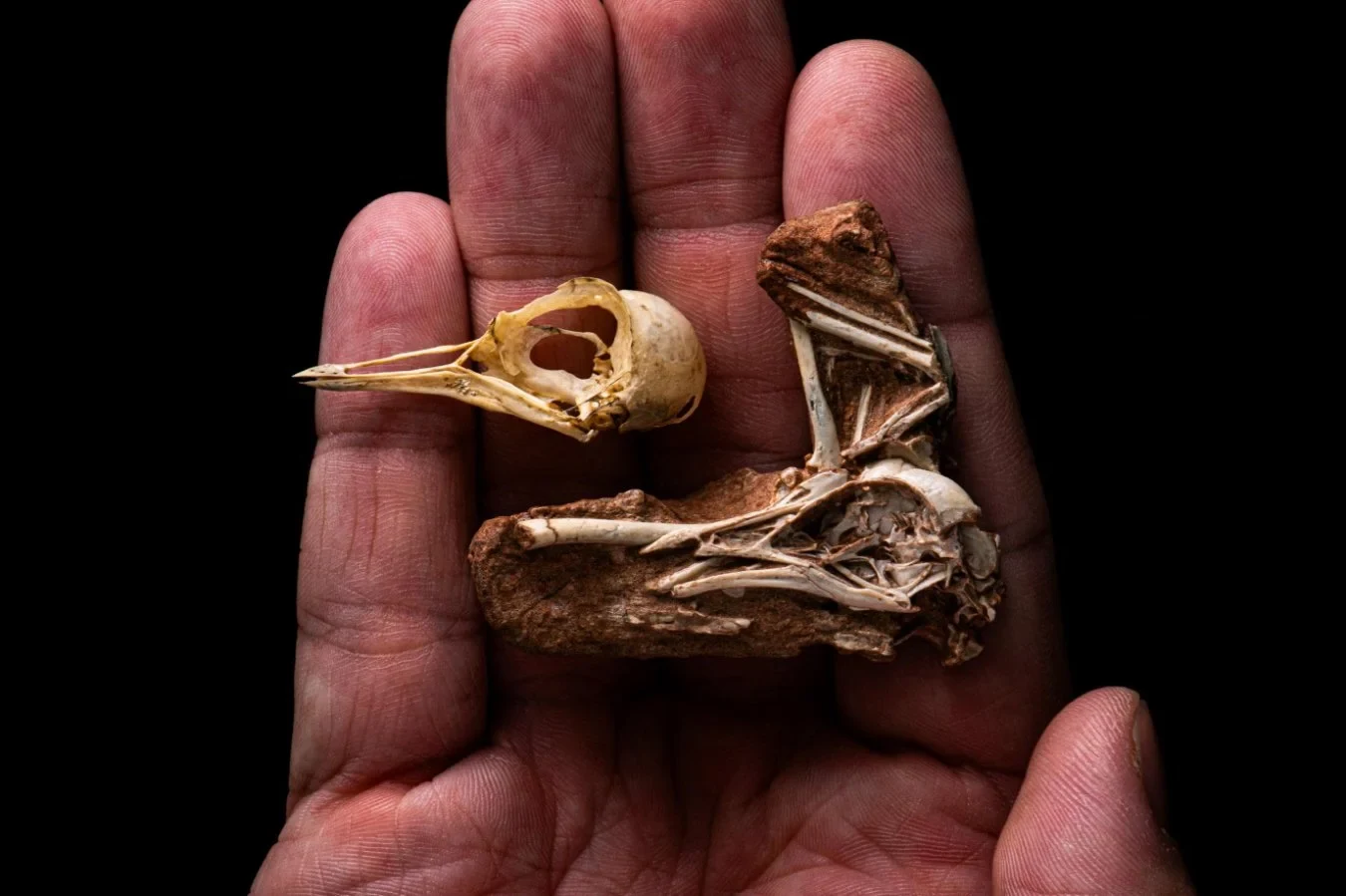
Unearthed with astonishing detail, a tiny prehistoric owl dating back roughly 47 million years has provided researchers with an unprecedented look into ancient avian behavior. Unlike most fossilized remains, which usually consist of scattered, fragmented bone shards that require years of guesswork to piece together, this specimen is remarkably complete. Measuring less than twelve centimeters in length, the tiny bird preserves not only its delicate skeletal structure but also faint traces of its soft tissues and feathers.
Even more remarkable is what scientists found locked inside its stomach: its final meal. Preserved within the abdominal cavity were the remains of an iridescent, greenish-blue cockroach. This accidental snapshot from millions of years ago has opened a fascinating window into the daily habits, diet, and ecological niche of early raptors, proving that fossilization can sometimes capture fleeting biological moments in breathtaking clarity.
Unlocking the Secret of Daytime Hunting
The presence of the insect is more than just a biological curiosity; it serves as a key behavioral clue that reframes our understanding of early avian ecology. Modern nocturnal owls feed primarily on small mammals, amphibians, and nocturnal insects caught under the cover of darkness. Crucially, anatomical analysis of this ancient specimen reveals traits that sharply differ from its modern descendants.
Stockier Wing Bones: Unlike modern nocturnal owls, which possess long, slender humeri adapted for silent, stealthy flight, this ancient species features much stockier wing bones built for different aerodynamic profiles.
Lack of Specialized Feathers: Modern owl feathers feature specialized fringe-like trailing edges that eliminate aerodynamic noise. Examination of the fossil indicates it lacked these advanced sound-dampening structures completely.
Diurnal Activity: Because its physical build was unsuited for silent nocturnal flight, researchers concluded that the tiny bird was an active daytime hunter, soaring through the prehistoric canopy under the blazing sun rather than the moon.
This evidence strongly supports the theory that early owls were not night stalkers from the beginning. Instead, nocturnal habits evolved much later as a secondary adaptation, likely driven by intense ecological competition with diurnal birds of prey like ancestral hawks and falcons that shared the daytime skies.
Frequently Asked Questions (FAQ)
Why is this ancient owl fossil considered so important?
Most prehistoric bird species are reconstructed from only a few isolated, broken bones. This newly studied fossil is exceptionally complete and preserves its last meal in the stomach, giving scientists direct physical evidence of early dietary habits and behavior.
Did all ancient owls hunt during the day?
Not necessarily, but fossil evidence increasingly suggests that early ancestors of modern owls occupied diurnal or crepuscular niches. The evolutionary shift toward strictly nocturnal hunting happened gradually over millions of years as environmental pressures shifted.
What did the fossilized owl eat?
Researchers found the remains of an iridescent, jade-like cockroach preserved inside the bird's stomach, proving that these early predators fed on active daytime insects alongside small prey rather than hunting mice in the dark.
When did owls officially become nocturnal?
Paleontologists estimate that the major behavioral and anatomical transition toward a nocturnal lifestyle occurred within a broad window between 47 and 35 million years ago, though ongoing fossil discoveries continue to refine this timeline.
Rewriting the Avian Timeline
Discoveries like this remind us that the natural world's familiar traits are the product of millions of years of evolutionary trial and error. The image of the silent, nocturnal owl is a modern specialization, born out of ancient ecological pressures, competition, and adaptation. As paleontologists continue to analyze exceptionally preserved fossils from sites like the Messel Pit, our understanding of bird evolution will continue to shift, revealing a dynamic history written in stone.


Comments
Leave a Comment
Your email address will not be published. Required fields are marked *