
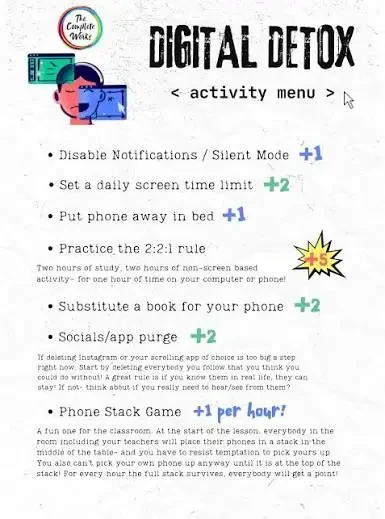
For years, the digitization of the modern classroom was hailed as an unmitigated triumph. Tablets replaced textbooks, laptops became mandatory school supplies, and cloud-based learning management systems promised a frictionless, paperless future. However, the pendulum has officially swung back. A sweeping "digital detox" revolution is underway in educational systems worldwide, as schools, parents, and policymakers confront the unintended consequences of total screen immersion.
Driven by mounting evidence of declining attention spans, cognitive fatigue, and the disruptive influx of generative artificial intelligence, school districts are aggressively rethinking their relationship with technology. The central question facing educators today is no longer how quickly they can digitize, but how they can reclaim human-centric learning before screen dependency permanently alters a generation's capacity to focus.
The Costs of Hyper-Connectivity in the Classroom
The push for a digital detox is not born out of technophobia; it is a pragmatic response to what educators and child psychologists observe daily on the ground. While devices were initially introduced to bridge educational gaps, unchecked screen time has introduced profound structural challenges:
The Fragmentation of Attention: Constant notifications, multi-tab browsing, and the algorithmic design of modern software have severely degraded students' ability to sustain focus on deep, complex reading.
The Erosion of Fundamental Skills: When every calculation, spelling check, and essay outline can be instantly outsourced to a screen or an AI chatbot, foundational cognitive milestones—such as handwriting, mental math, and independent problem-solving—suffer.
Social and Emotional Isolation: Despite being digitally hyper-connected, students are experiencing unprecedented rates of anxiety, alienation, and loneliness. Constant screen exposure during formative years frequently displaces face-to-face peer interaction, empathy-building, and unstructured play.
As data from international education summits and teacher unions highlight, the mere presence of smartphones and unmanaged digital interfaces creates an environment of perpetual distraction that actively fights against deep learning.
Moving Beyond Phone Bans: The Rise of the Analog Rebound
While early resistance focused heavily on "bell-to-bell" smartphone bans, the current digital detox movement goes much deeper. Schools are looking critically at school-issued laptops, administrative tablets, and the premature rush to integrate generative AI into elementary and secondary curriculums.
Governments and independent school boards are beginning to mandate structural adjustments:
Returning to Analog Foundations: A growing number of districts are reintroducing physical textbooks, pen-and-paper writing assessments, and traditional notebooks to protect fine motor development and reading comprehension.
Purging Unregulated AI: Policymakers are increasingly restricting the use of generative AI tools in primary classrooms and high-stakes assessments, arguing that cognitive scaffolding must happen inside the human mind before it is outsourced to a machine.
Intentional Tech Integration: Rather than treating technology as an all-or-nothing utility, forward-thinking schools are defining strict boundaries—utilizing screens strictly when they elevate a hands-on lesson rather than replacing the teacher entirely.
Frequently Asked Questions (FAQ)
Q: What is the "digital detox" movement in schools?
A: It is a growing educational shift where schools actively reduce screen time, restrict personal devices, and limit premature AI integration to restore focus, improve literacy, and encourage face-to-face interaction.
Q: Why are educators concerned about AI and screens in classrooms?
A: Critics argue that excessive screen reliance and automated AI tools shorten attention spans, diminish critical thinking, foster academic dishonesty, and stunt foundational skills like handwriting and independent problem-solving.
Q: Are schools completely banning all technology?
A: No. Most digital detox programs do not aim to eliminate technology entirely; instead, they seek a sustainable balance by removing unnecessary distractions and returning to analog methods (like paper books and handwriting) for core developmental tasks.
Q: How are students reacting to screen-free and phone-free policies?
A: While initial transitions can involve boredom or resistance, surveys frequently show that after adjusting, a significant percentage of students report feeling more present, less anxious, and better able to focus on their work and social interactions.
Conclusion
The digital detox revolution represents a mature realization that not all technological innovation serves human development. By carving out sacred, screen-free spaces within the school day, educators are providing students with something invaluable: the room to think, imagine, and connect authentically. As this movement gains momentum, it is proving that preparing children for a high-tech future doesn't require immersing them in screens from kindergarten onward—it requires building strong, resilient minds that can thrive both online and off.







Comments
Leave a Comment
Your email address will not be published. Required fields are marked *