
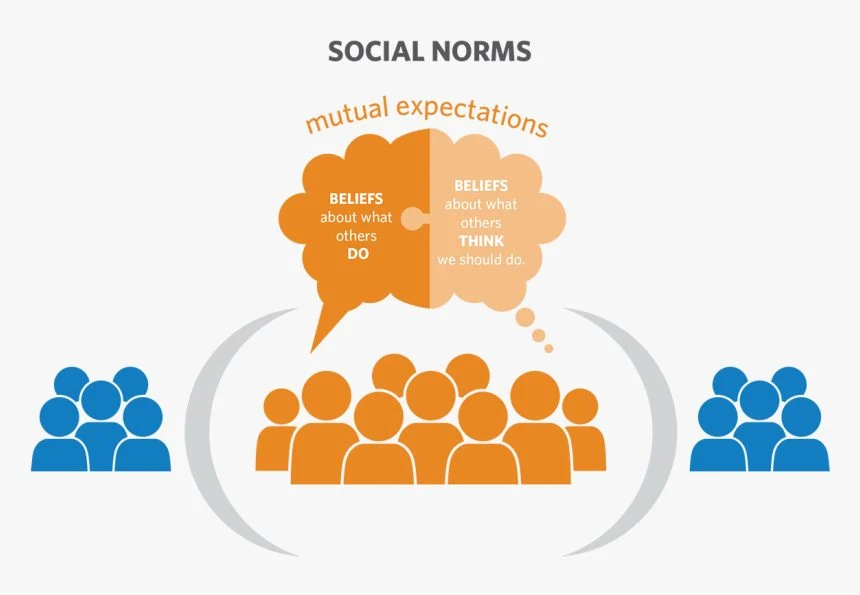
Explore how shared expectations influence behavior, why norms differ between groups, and how observation and communication can change them.
A norm is a shared expectation
Social norms are informal expectations about behavior within a group or setting. They can influence how people speak, dress, cooperate, queue, share space, or respond to disagreement. A norm is not automatically a law, a personal preference, or a universal moral rule.
People learn norms through signals
Some expectations are taught directly, while others are learned by watching what receives approval, correction, or silence. Because these signals can be ambiguous, people sometimes follow a practice because they believe everyone else supports it, even when private opinions are mixed.
Context changes what is expected
Behavior accepted among close friends may not fit a workplace, classroom, place of worship, or public service. Norms also differ across communities and generations. Understanding context does not require treating every custom as fixed or beyond respectful discussion.
Norms can support or exclude
Shared expectations can make cooperation easier, but they may also place unfair pressure on people who are new, different, or less powerful. Asking who benefits, who carries the cost, and whether participation is genuinely voluntary helps reveal effects that familiarity can hide.
Change needs visible alternatives
A norm becomes easier to reconsider when people can see that others support a different behavior. Clear communication, consistent examples, and changes in incentives or rules may all contribute. Sustainable change is more likely when a group understands the purpose of the alternative rather than merely receiving a slogan.
A practical next step
Use these ideas as a starting framework, then verify the details that depend on location, access, products, weather, regulations, or personal circumstances. A useful plan stays specific to the real setting and changes when better information becomes available.