
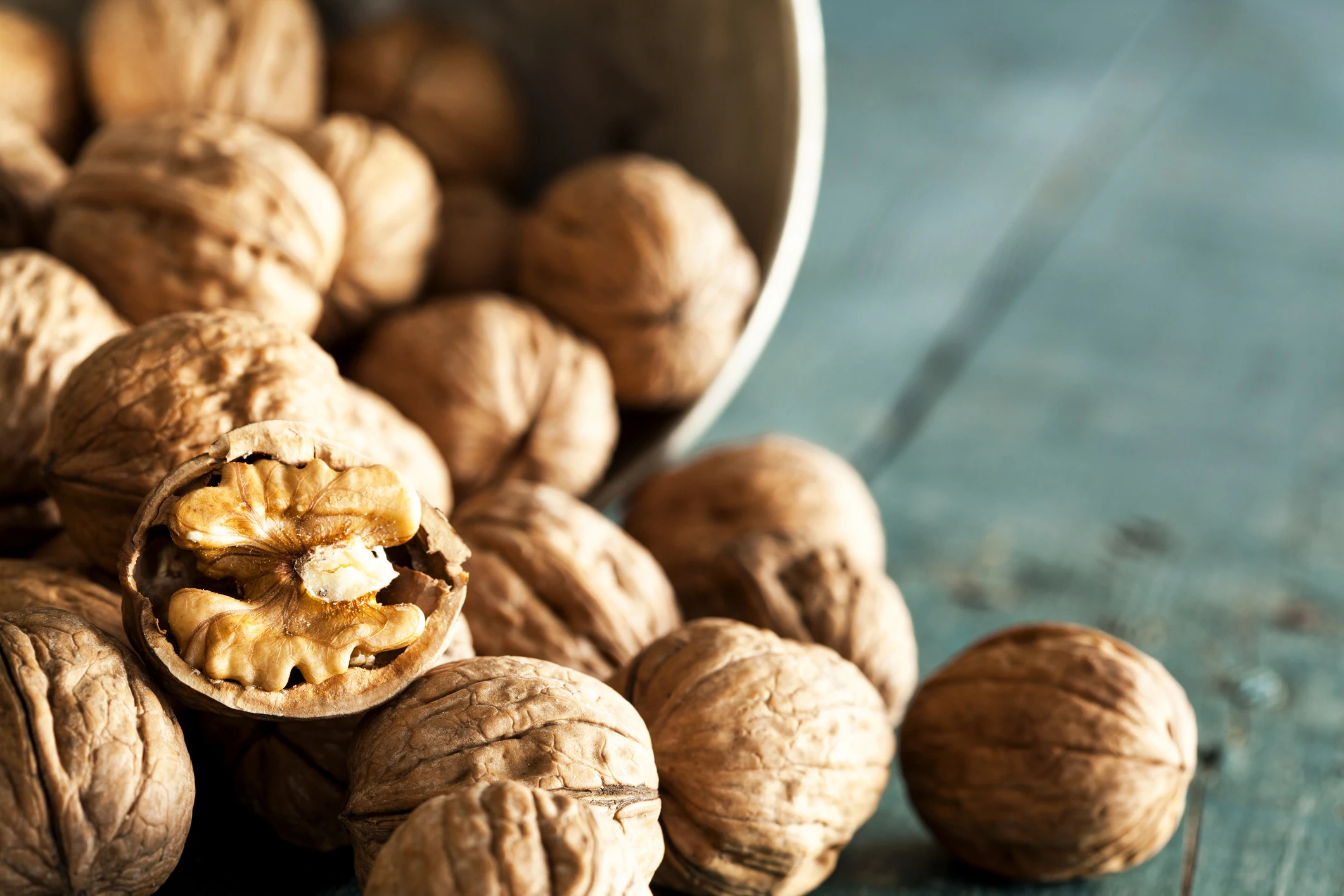
Walnuts are nutrient-dense foods that provide unsaturated fats, protein, fibre and several vitamins and minerals. They can form part of a varied diet when suitable for the individual.
What walnuts provide
Walnuts contain polyunsaturated fats, including alpha-linolenic acid, a plant-based omega-3 fatty acid. They also provide protein, fibre and micronutrients.
Because nuts are energy-dense, portion size may matter for people monitoring total energy intake. People with a walnut or tree-nut allergy must avoid the relevant nuts.
Walnuts are food, not an antidote
Traditional remedies sometimes make claims about applying walnuts, onions, oils or other foods to illnesses and injuries. Such claims should not be confused with medically established treatment.
Walnuts and onions cannot remove rabies virus or “poison” from a dog bite. A bite from a potentially rabid animal requires prompt wound cleaning and urgent professional assessment for rabies post-exposure treatment where indicated.
Do not replace medical treatment
There is not adequate evidence to recommend walnut preparations as treatments for haemorrhoids, paralysis, infections, persistent cough, acne or other diseases.
Likewise, applying homemade mixtures to wounds or damaged skin can introduce irritation or contamination rather than treat the underlying problem.
Using walnuts safely
Walnuts can be eaten as part of meals or snacks and used in dishes such as salads, cereals and baked foods. They should be stored appropriately because their oils can become rancid over time.
The strongest reason to include walnuts is their nutritional value as food. Symptoms, injuries and diagnosed diseases should be managed using appropriate evidence-based healthcare rather than unsupported home remedies.







Comments
Leave a Comment
Your email address will not be published. Required fields are marked *