Metabolic Alkalosis: Causes, Symptoms, and Treatment
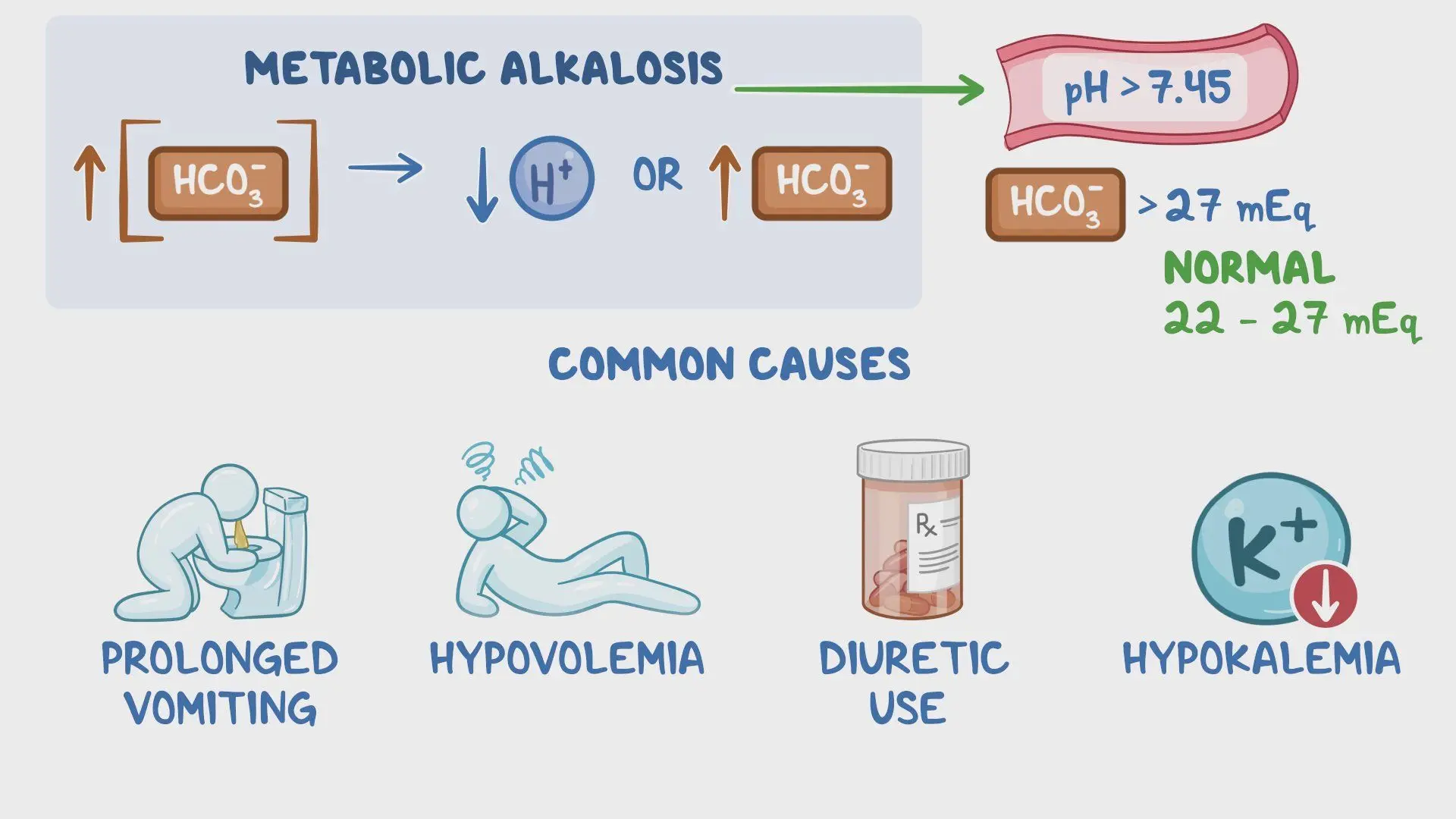
Metabolic alkalosis is a condition where the body’s pH rises above normal due to increased bicarbonate or loss of acid. This disturbance affects the acid-base balance and can impact vital organ functions.
Causes:
The most common cause is loss of stomach acid, typically from prolonged vomiting or gastric suction. Excessive vomiting removes hydrochloric acid, increasing blood alkalinity. Other causes include:
- Overuse of diuretics leading to acid loss through urine
- Hypokalemia (low potassium levels) shifting hydrogen ions into cells
- Excessive intake of alkaline substances like antacids
- Conditions causing volume depletion reducing kidneys’ acid excretion ability
- Rare genetic disorders such as Bartter or Gitelman syndrome
Symptoms and Effects:
Symptoms reflect the increased blood pH and electrolyte imbalances. They include:
- Muscle twitching, cramps, and weakness
- Confusion, dizziness, and headache
- Reduced blood flow causing fatigue
- Irregular heartbeats and increased heart rate
- Tetany (involuntary muscle contractions) due to low calcium availability
How it Affects the Body?
When blood pH levels rise, it can lead to a decrease in the availability of calcium ions, which in turn can cause neuromuscular irritability. This condition can also reduce blood flow and oxygen delivery, negatively impacting organ function. The kidneys attempt to balance things out by adjusting how much bicarbonate they excrete, but this process can be hindered by issues related to volume and electrolyte imbalances.
Diagnosis:
To confirm a diagnosis of metabolic alkalosis, doctors typically rely on blood tests that measure pH and bicarbonate levels. They also look at electrolyte levels and kidney function tests to pinpoint any underlying issues. It’s essential to consider the patient’s history, including factors like vomiting or the use of diuretics.
Treatment Approaches:
The treatment plan focuses on addressing the underlying cause. For instance, if alkalosis is triggered by vomiting, managing nausea and ensuring proper hydration can help restore balance. If diuretics are contributing to the problem, they may need to be adjusted or discontinued. Potassium supplements can be used to correct low potassium levels. In more severe cases, intravenous fluids containing sodium chloride might be necessary to restore volume and support kidney function.
Management:
Keeping a close eye on acid-base status and electrolyte levels is crucial for recovery. Making lifestyle changes and effectively managing any underlying conditions can help prevent a recurrence. Regular follow-ups with a healthcare provider are important for maintaining long-term health.
Conclusion:
Metabolic alkalosis occurs when there’s an increase in blood bicarbonate or a loss of acid, leading to elevated blood pH levels. Common triggers include vomiting, the use of diuretics, and electrolyte imbalances. Symptoms can impact the muscles, heart, and brain. Diagnosis is based on blood tests and the patient’s medical history. By treating the root cause and correcting electrolyte levels, balance can be restored.