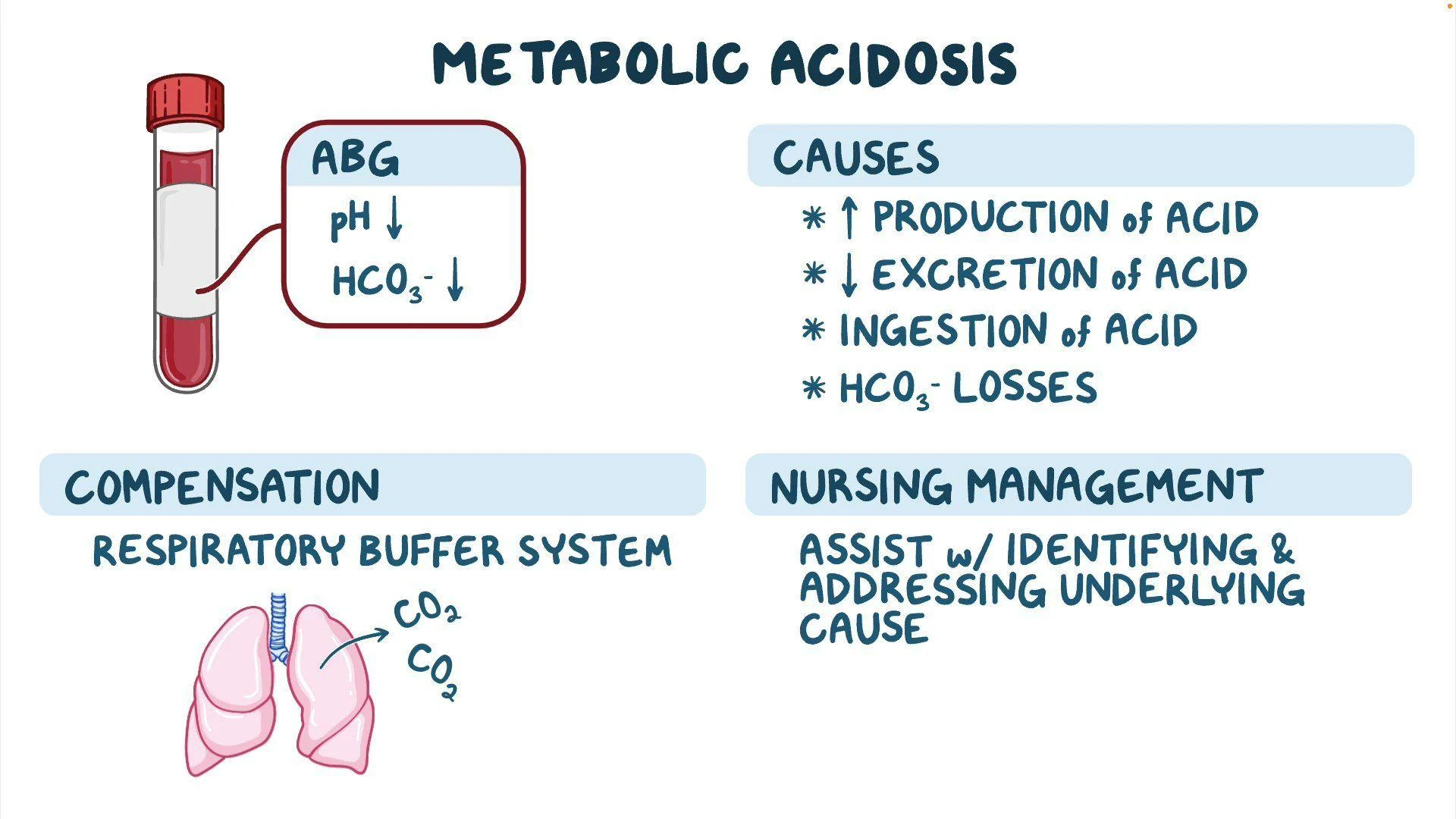
Metabolic acidosis occurs when too much acid accumulates in body fluids, too much bicarbonate is lost, or the kidneys cannot remove acid effectively. It ranges from a chronic laboratory abnormality to a life-threatening emergency.
Common causes
The National Library of Medicine lists diabetic ketoacidosis, lactic acidosis, severe diarrhoea, kidney disease, severe dehydration and certain poisonings among possible causes. The mechanism and urgency differ, so the label alone does not determine treatment.
Symptoms and diagnosis
Rapid, deep breathing, fatigue, nausea, confusion or reduced alertness can occur, although symptoms often come from the underlying illness. Clinicians use blood gases, electrolytes, kidney tests, glucose, ketones, lactate and other targeted investigations. The anion gap can help narrow the cause but is not a diagnosis by itself.
Treatment
Treatment addresses the underlying problem. Diabetic ketoacidosis requires monitored fluids, insulin and electrolyte management. Sepsis, shock, kidney failure, diarrhoea and toxic exposures need different approaches. Bicarbonate is appropriate only in selected situations and can cause harm if used without assessment.
Deep rapid breathing, severe dehydration, confusion, suspected poisoning or serious illness requires urgent medical care. Do not attempt to correct blood pH with baking soda or supplements at home.