
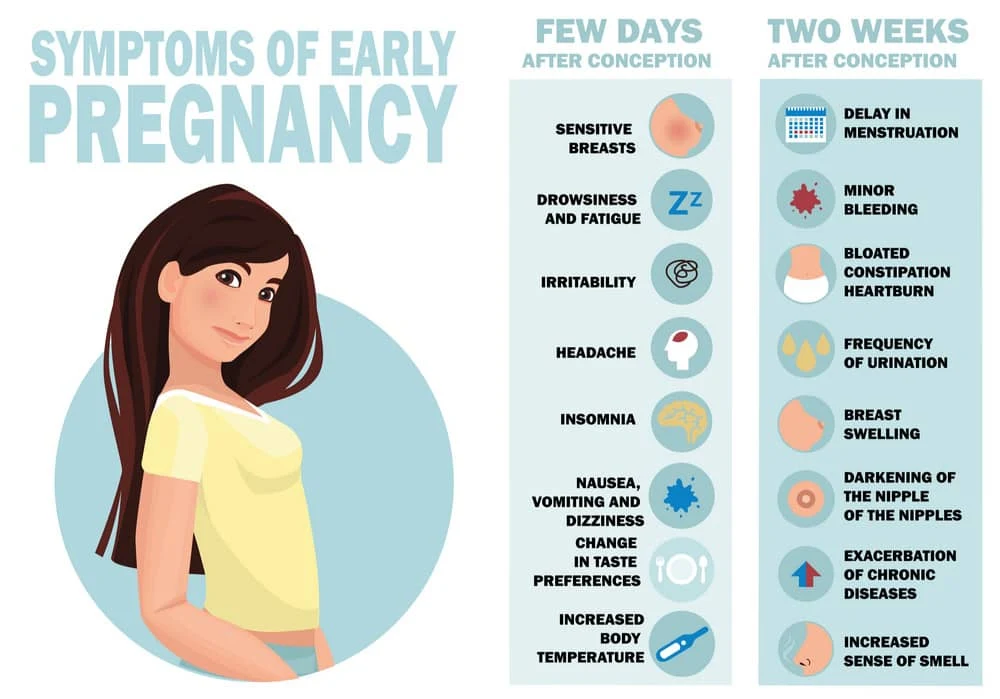
Early pregnancy can feel different from one person to another. Symptoms alone cannot confirm a pregnancy because many of them can also occur with stress, hormonal changes or other health conditions. A pregnancy test is the appropriate way to check.
Common early signs
According to the U.S. National Library of Medicine’s pregnancy-test guidance, a missed period is a common early sign. Other possible signs include breast tenderness, fatigue, urinating more often, nausea, vomiting and bloating. Some pregnant people have few or no early symptoms.
How pregnancy tests work
Pregnancy tests look for human chorionic gonadotropin, or hCG, in urine or blood. Home urine tests should be used exactly as the manufacturer directs. Testing too early can produce a false-negative result because hCG may not yet be high enough to detect.
If a home test is negative but pregnancy is still possible, repeat the test according to its instructions or contact a healthcare professional. A positive home result should be followed by appropriate prenatal care.
When to seek urgent care
Severe abdominal or pelvic pain, heavy bleeding, fainting, breathing difficulty, chest pain or other rapidly worsening symptoms need prompt medical assessment. The CDC maintains an official list of urgent maternal warning signs for pregnancy and the period after birth.
This article provides general education and is not a diagnosis or a substitute for individual medical advice.





Comments
Leave a Comment
Your email address will not be published. Required fields are marked *