
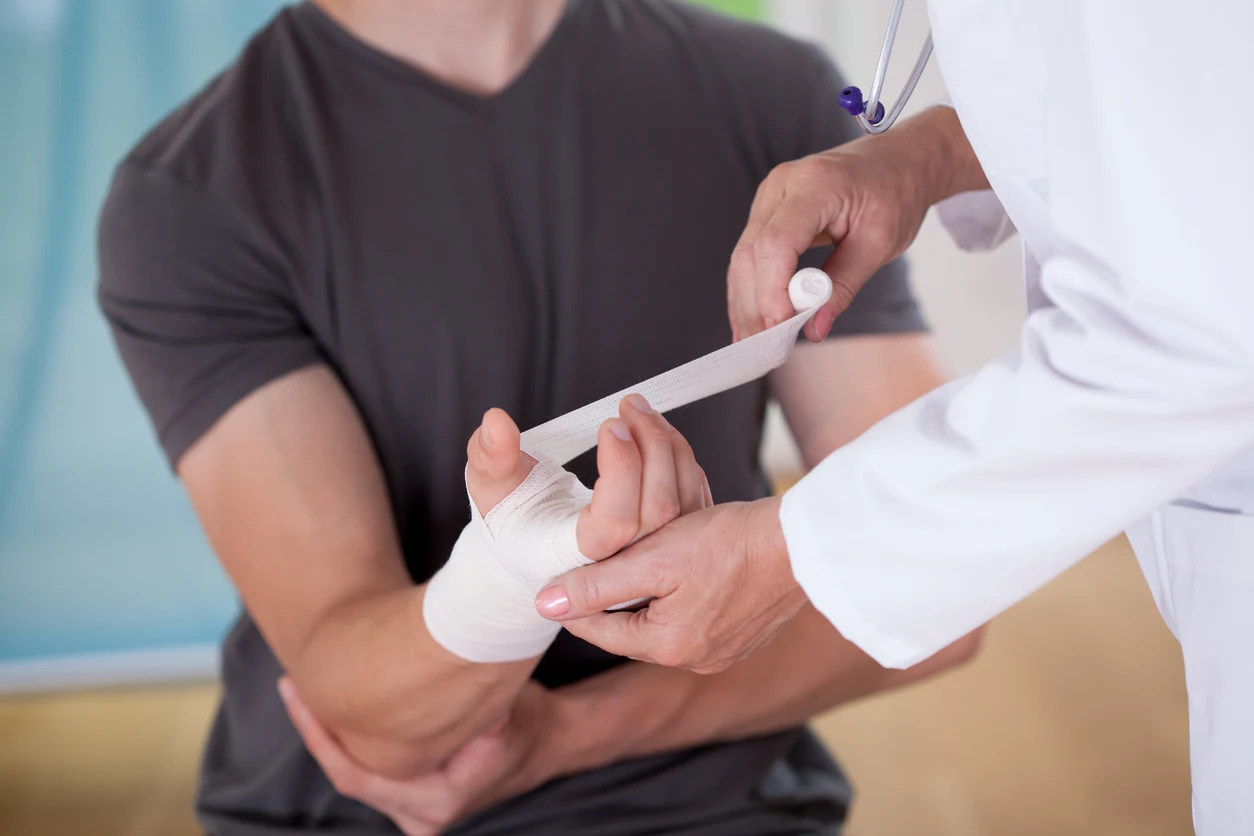
A fall, direct blow or other injury can fracture bones in the wrist, hand or fingers. Pain, swelling, bruising, deformity and difficulty moving the injured area can occur, but an X-ray or other professional assessment may be needed to confirm a fracture.
Protect the injured area
Keep the injured hand, wrist or finger as still as reasonably possible. Support it in a comfortable position and avoid unnecessary movement.
Do not try to straighten a visibly deformed limb or push a protruding bone back into place.
Remove restrictive jewellery when possible
Swelling may develop after an injury. Rings, watches or other restrictive items can become difficult to remove. If they can be removed gently without forcing the injured area, do so early.
Cold packs and elevation
A cold pack wrapped in cloth may help reduce pain and swelling. Do not place ice directly on the skin. Elevating the injured hand when practical may also help with swelling.
When urgent help is needed
Seek urgent medical care for an open fracture, severe deformity, uncontrolled bleeding, loss of feeling, increasing numbness, or fingers that become pale, blue or unusually cold.
A significant injury should also be assessed promptly when pain or swelling is severe or normal use of the hand is not possible.
Do not delay assessment
Some fractures can look similar to sprains, and certain wrist fractures may initially appear less severe than they are. Appropriate diagnosis helps determine whether a splint, cast, reduction, surgery or other treatment is required.
This information is general first-aid guidance and does not replace professional assessment of an injured hand or wrist.






Comments
Leave a Comment
Your email address will not be published. Required fields are marked *