Understanding the Distinction between Equality and Equity:
In contemporary conversations about social justice, the terms equality and equity frequently come up. While these words may appear similar, they carry distinct definitions. Grasping the difference is essential for building a just society.
Exploring the Definitions of Equality and Equity:
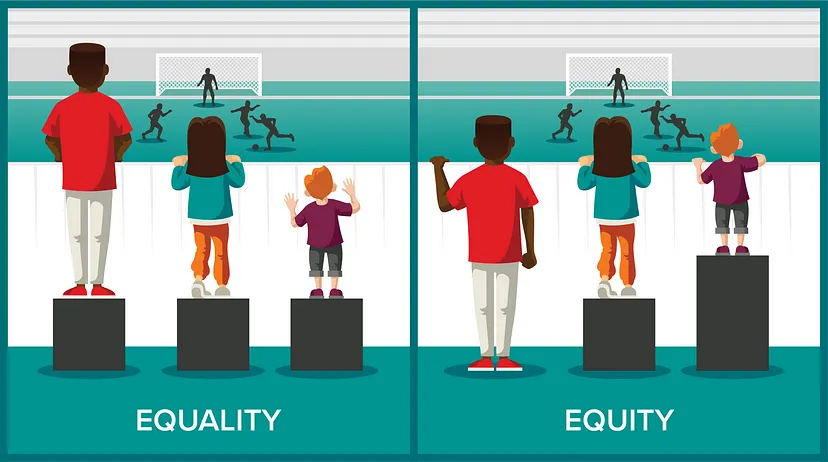
Equality is about treating everyone uniformly, providing them with the same resources or chances. For example, imagine distributing identical textbooks to all students, no matter their reading abilities.
Equity, however, involves acknowledging that different individuals have different requirements. It’s about supplying individuals with the necessary tools for success. In the same setting, equity might mean offering some students additional support or different materials.
The Role of Context in Differentiating Equality and Equity:
Context is crucial in distinguishing between equality and equity. Equality might be effective in scenarios where everyone begins from an equal starting point. Yet, in reality, individuals encounter various obstacles and challenges. Take healthcare as an example. Offering the same medical treatments to everyone (equality) might seem equitable. However, some patients might require more specialized care due to pre-existing conditions (equity). Therefore, treating everyone in the same manner might not result in equitable outcomes.
Real-Life Applications of Equality and Equity:
Education: Equality means each student receives the same resources. Equity involves providing extra assistance to those who need it. This could include additional tutoring or specialized programs for students with learning challenges.
Workplace: Equality ensures all employees have equal opportunities. Equity recognizes that some employees might need special arrangements or flexible schedules due to disabilities.
Public Services: Equality provides uniform services to everyone. Equity modifies services to meet the specific needs of the community. For example, urban areas might require more public transportation than rural ones.
Advantages of Emphasizing Equity:
Adopting an equity-focused approach contributes to a more just society. By addressing individual needs, we eliminate obstacles to achievement. This strategy promotes a more welcoming environment where everyone has the chance to succeed.
Conclusion:
In conclusion, both equality and equity are significant principles. However, they serve different functions. Equality treats everyone uniformly, whereas equity caters to individual needs. Understanding and implementing these principles correctly can lead to a more inclusive and just society. By concentrating on equity, we ensure that everyone has the opportunity to succeed. This benefits not only individuals but also the community at large. Ultimately, a just society is one that acknowledges and meets the diverse needs of its members.