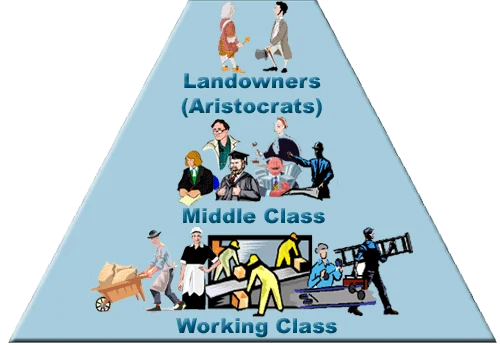
Social stratification is all about how society is divided into different layers, each with its own rank and status. This division is influenced by a variety of factors like wealth, income, education, job type, social standing, and power. These layers play a significant role in shaping people’s opportunities, lifestyles, and the way they interact with one another. Essentially, stratification affects how resources and privileges are shared throughout society, often giving an edge to those at the top.
Types of Social Stratification
There are four main types of social stratification systems:
- Slavery System: The most extreme form where individuals are owned as property. Slaves lack legal rights and often face harsh treatment. Historically, examples include ancient Greece and Roman societies. Although outlawed, modern slavery persists in forced labor and trafficking.
- Estate System: Common in medieval Europe, it divides society into clergy, nobility, and commoners. This system is hereditary, providing privileges mainly to the upper classes.
- Caste System: Found predominantly in India, caste assigns social status at birth. Individuals cannot change their caste, leading to rigid social boundaries and limited social mobility.
- Class System: Based on economic positions, this system allows some social mobility. Classes include the upper, middle, and working classes. Wealth, education, and occupation largely determine one’s class. Modern capitalist societies often adopt this form of stratification.
Factors
It depends on multiple variables factors such as:
- Economic status: Income and wealth play a crucial role.
- Occupation: Certain jobs grant more prestige and power.
- Education: Higher education often leads to better social standing.
- Race and ethnicity: These can reinforce inequalities and discrimination.
- Gender: Patriarchal societies often privilege men over women.
The Effects
Stratification plays a significant role in determining life chances, impacting areas like health, education, and job opportunities. Those in privileged groups tend to have access to better resources and opportunities, while those in lower strata often encounter discrimination and poverty. This system can hinder social mobility, making it difficult for individuals to move up the social ladder. Additionally, stratification influences social interactions, shaping cultural norms and power dynamics within society.
Social Stratification in Today’s World
In contemporary society, we typically see a class-based stratification system, but we also grapple with issues like racial and gender inequality. Social justice movements are working hard to bridge these gaps. Through education and policy reforms, we can enhance social mobility and foster greater inclusion.
Conclusion
It organizes society into different layers based on factors like wealth, occupation, and education. It manifests in various forms, including slavery, estate systems, caste systems, and class divisions. This structure not only affects access to resources but also significantly influences individuals’ life outcomes.