
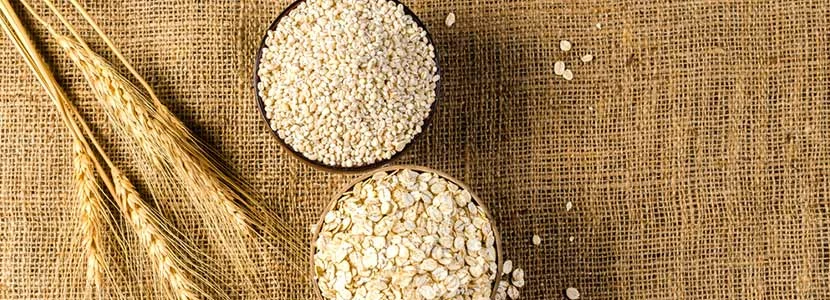
Barley is an ancient cereal grain used in foods including soups, breads and grain dishes. Whole-grain barley can contribute fibre, vitamins and minerals to a balanced diet.
Barley is a source of fibre
Barley is notable for its fibre content, including beta-glucan, a type of soluble fibre. Dietary fibre supports normal digestive function and can contribute to healthy cholesterol and blood-glucose management as part of an appropriate overall diet.
The amount of fibre varies according to how barley is processed. Hulled barley retains more of the whole grain than heavily polished pearled barley.
Vitamins and minerals
Barley supplies nutrients including several B vitamins and minerals such as manganese and selenium. The exact amounts depend on the type of barley and serving size.
Barley versus rice
There is no single grain that is best for everyone. Brown rice and barley have different nutritional profiles, and both can fit into a varied diet.
One important difference is gluten: barley contains gluten, while plain rice is naturally gluten-free. People with coeliac disease or those medically required to avoid gluten should therefore not use barley as a substitute for rice.
Using barley in meals
Barley can be added to soups, stews, salads and other dishes. Choosing a variety of whole grains rather than depending on one food can help provide a broader range of nutrients.
Barley is nutritious, but it should not be presented as a cure or guaranteed way to prevent disease. Its benefits should be considered as part of the overall dietary pattern.








Comments
Leave a Comment
Your email address will not be published. Required fields are marked *