
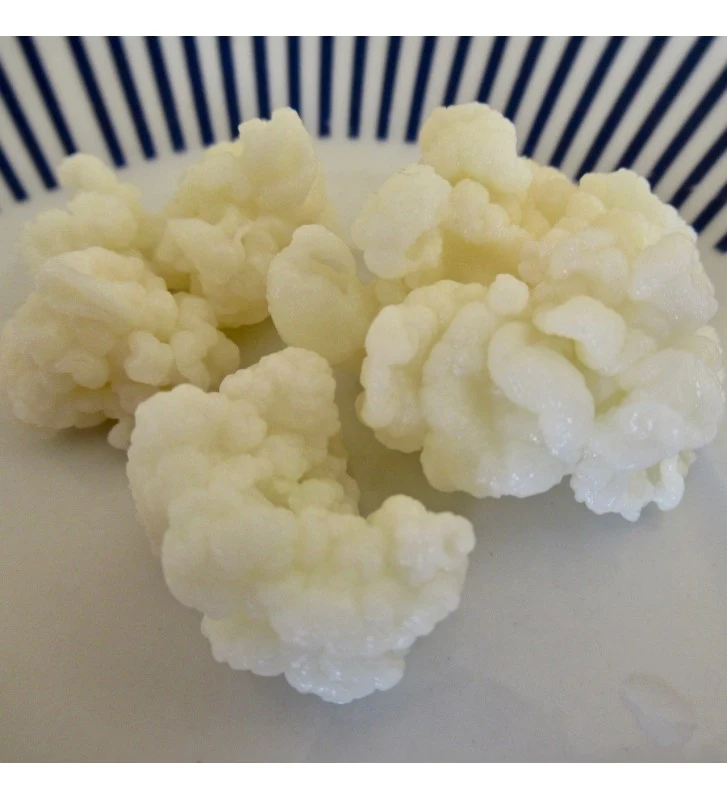
Kefir is a fermented beverage traditionally produced by adding kefir grains, which contain communities of bacteria and yeasts, to milk. Water kefir is made differently and should not automatically be assumed to have the same nutritional composition or health effects.
Kefir and fermentation
During fermentation, microorganisms use some of the sugars in the starting liquid and produce acids and other compounds. Milk kefir still contains nutrients from milk, while its exact microbial composition varies according to the grains and production process.
Lactose digestion
Fermentation reduces some lactose, and limited human research suggests kefir may be better tolerated than ordinary milk by some people with lactose maldigestion. Individual tolerance still varies.
What about probiotics?
Kefir can contain live microorganisms, but the organisms and amounts are not identical in every product. A food containing live cultures should not automatically be assumed to treat a medical condition.
Evidence for other health claims
Researchers have studied kefir in relation to blood glucose, cholesterol, inflammation, oral health and digestive conditions. Some findings are promising, but human studies remain limited and differ in design and quality.
Current evidence does not justify presenting kefir as a proven treatment for diabetes, infections, inflammation, weight problems or other diseases.
Food safety matters
Commercial and homemade kefir should be prepared and stored safely. People who are pregnant, immunocompromised or otherwise at higher risk from foodborne illness may need specific advice about unpasteurised fermented products.
Kefir can be part of a varied diet for people who tolerate it, but it should complement rather than replace appropriate medical treatment.







Comments
Leave a Comment
Your email address will not be published. Required fields are marked *