

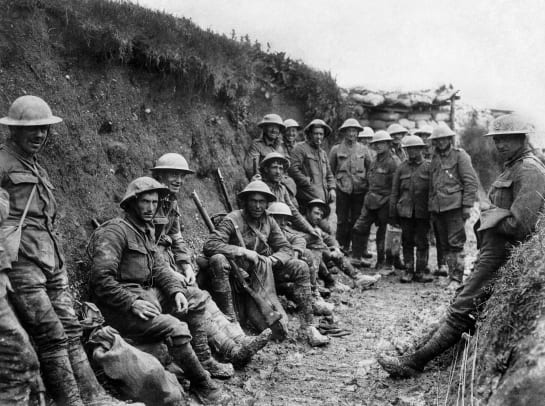
World War 1
Summary of Main Events. Between 1914 and 1918, World War I raged. Despite the fact that the conflict originated in Europe, it eventually spread to the United States and Japan. The English-speaking world referred to it as the “Great War” at the time the phrase.
Historians continue to debate over the war’s core causes. Therefore, the months preceding up to the war were a tangle of diplomacy and political intrigue. The numerous countries debating plans and alliances until the very last minute. The first few weeks of the fight were similarly chaotic and perplexing. Historians, on the other hand, are practically unified in their assessment of the war’s consequences. World War I paved the World War II. It slew of other significant events in the twentieth century.
World War 1: Summary of Main Events
Around 9 million troops died in battle. Many of them defending entrenched front lines that rarely moved. And more than a few yards in each direction. An additional 13 million civilians died as a result of the war. Epidemics of influenza and other diseases, which were either created or exacerbated by the war, resulted in an extra 20 million deaths. Counting battle casualties, civilian deaths, and disease victims, the global death toll topped 40 million.
Twentieth-century Europe
In early twentieth-century Europe, political tensions were at an all-time high. In other words, parts of the world, Europe’s great nations were increasingly at odds over the purchase of new colonies. As the number of unclaimed regions on the planet dwindled. The rush to claim them became increasingly cutthroat. At the same time, the Ottoman Empire, which had existed for hundreds of years and was dominated by Turks, was slowly crumbling.
Greece, Bulgaria, Romania, Serbia, and other former Ottoman provinces in southern Europe gained independence. Shifting Europe’s power balance. Inspired by these emerging southern European republics. Austria-diverse Hungary’s ethnic groups began to push for their own independence.
Technological and Industrial progress
At the same time, technological and industrial progress in Europe was accelerating at a breakneck pace. Indeed, World War I served as a showcase for new technology that would alter the character, speed, and efficiency of fighting in the following century. Tanks, aero planes, and submarines revolutionized warfighting.
Guns of all types, from handguns to heavy artillery, increased tremendously in precision and range of fire. Allowing armies to fire on each other across vast distances and in some circumstances without even seeing each other. The machine gun allowed a single soldier to successfully engage many opponents at the same time.
End of the War
By the end of the war, the map of Europe resembled the one we know today. The empires of Germany and Austria-Hungary ceased to exist. Hungary, Poland, Lithuania, Latvia, Estonia, and Finland became independent countries after much of eastern Europe was redivided along ethnolinguistic lines. Yugoslavia and Czechoslovakia were formed by the amalgamation of several other nations. Following the battle, a massive rearrangement of the Near and Middle East took place, establishing the forerunners of today’s Armenia, Turkey, Syria, Lebanon, Saudi Arabia, and Iraq.
The Aftermath of World War I
In the aftermath of World War I, monarchy on the continent and European colonialism throughout the rest of the world came to an end. Most European countries began to rely more heavily on parliamentary governments, and socialism grew in favour. The ferocity of the conflict, as well as the massive loss of human life, prompted a fresh commitment among nations to use diplomacy to end future conflicts. This determination was essential in the formation of the League of Nations.