
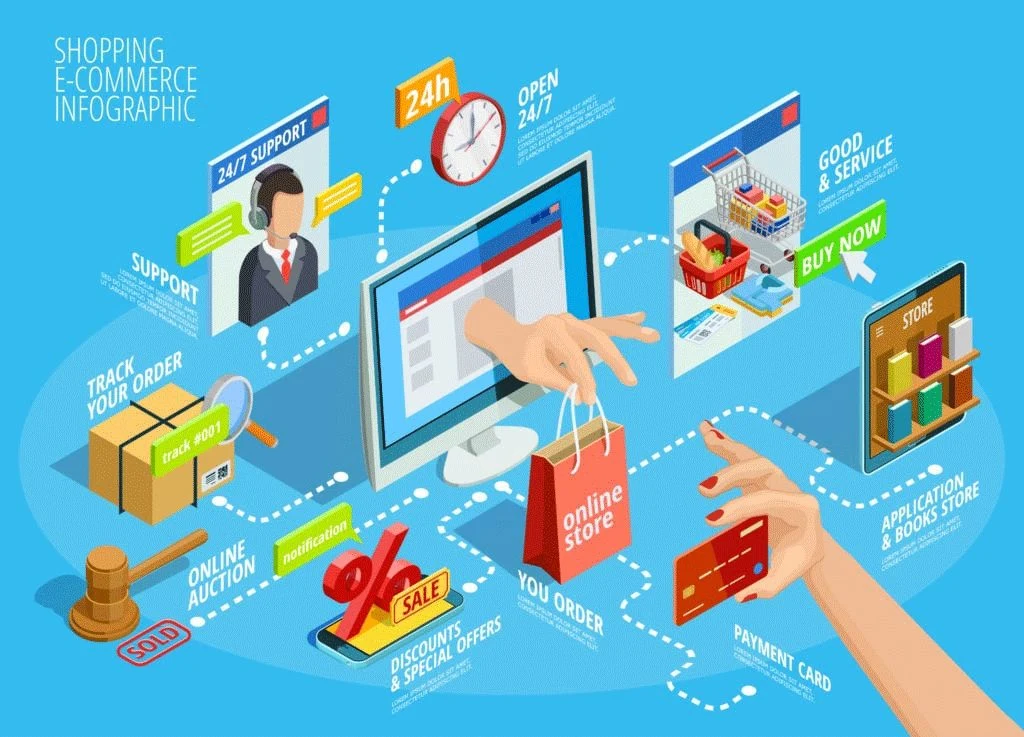
E-commerce, also known as electronic commerce, refers to the process of purchasing and selling products and services via the internet. It leverages digital technologies to facilitate transactions, providing a contemporary alternative to traditional face-to-face shopping experiences. This online marketplace encompasses a wide range of activities, including retail sales, auctions, financial transactions, and virtual services.
Types of E-Commerce Models
E-commerce functions through several primary models:
Business-to-Consumer (B2C): This model features businesses selling directly to individual consumers. Major companies like Amazon and Walmart utilize B2C strategies to connect with a worldwide customer base. It enables shoppers to explore, compare, and buy products online with ease.
Business-to-Business (B2B): In the B2B e-commerce model, transactions take place between businesses. Platforms such as Alibaba and ThomasNet facilitate bulk orders and wholesale dealings. This model enhances procurement processes and optimizes supply chain management.
Consumer-to-Consumer (C2C): Websites like eBay and Craigslist allow individuals to sell directly to other consumers. C2C creates a peer-to-peer marketplace, often focusing on second-hand or unique items that might not be available in traditional retail settings.
Consumer-to-Business (C2B): This model empowers individuals to provide products or services to businesses. Examples include freelance marketplaces like Upwork and Fiverr, which connect skilled professionals with companies seeking specific talents or expertise.
How E-Commerce Works
E-commerce platforms function through various technological components:
Websites and Applications: Users can access online stores via websites or mobile applications. These platforms showcase products, manage orders, and facilitate customer interactions seamlessly.
Payment Gateways: Secure payment systems are essential for processing transactions and safeguarding sensitive financial data. Common payment options include credit cards, digital wallets, and online banking services.
Inventory and Logistics: It relies heavily on effective inventory management and logistics systems. These systems monitor stock levels, oversee order fulfillment, and coordinate shipping and delivery processes.
Advantages
Convenience: Shoppers can purchase products at any time and from any location, free from the limitations of physical store hours. This 24/7 availability significantly increases the overall shopping experience.
Variety: Online retailers typically offer a wider array of products compared to brick-and-mortar stores. Consumers can explore a global selection of goods, often finding items that are not available locally.
Personalization: E-commerce platforms utilize data analytics to provide personalized product recommendations and targeted marketing efforts. This level of customization enriches the shopping experience for consumers.
Challenges
Despite its many benefits, it also encounters several challenges:
Security: Safeguarding customer information and preventing fraudulent activities are paramount concerns. E-commerce businesses must adopt robust cybersecurity measures to protect sensitive data.
Logistics: Effectively managing inventory, shipping, and returns can be a complex undertaking. E-commerce companies require dependable logistics solutions to meet customer expectations and ensure timely deliveries.
Conclusion
No doubt, it has revolutionized the way we shop and conduct business transactions. By harnessing digital technologies, it provides convenience, variety, and personalized experiences, while also presenting challenges related to security and logistics. As technology continues to advance, it is likely to grow and innovate further, reshaping the global marketplace in the process. Remember that the coming era is of e-commerce.