Diabetes Insipidus: Understanding the Rare Water Balance Disorder

0
186
Diabetes Insipidus: Understanding the Rare Water Balance Disorder

Diabetes Insipidus:

Diabetes insipidus (DI) is a rare condition causing the body to lose too much water. This causes extreme thirst and frequent urination. DI disrupts the body’s ability to regulate fluid balance.

What Causes Diabetes Insipidus?

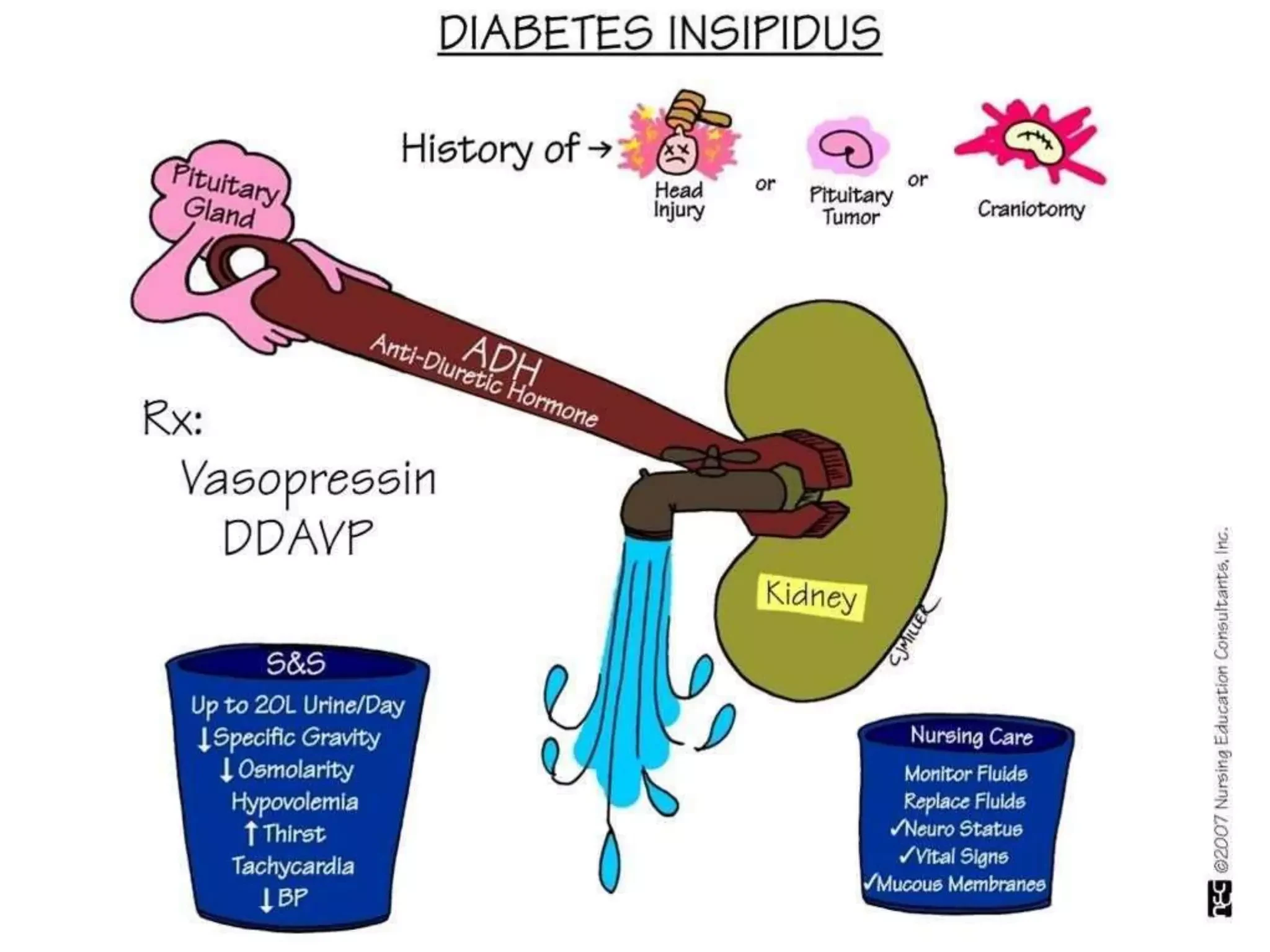
DI occurs when antidiuretic hormone (ADH) production or response is abnormal. ADH, also called vasopressin, controls kidney water retention. There are three main types of diabetes insipidus:

  • Central DI: Caused by damage to the hypothalamus or pituitary gland affecting ADH production.
  • Nephrogenic DI: Kidneys don’t respond properly to ADH.
  • Gestational DI: A rare form occurring in pregnancy when the placenta breaks down ADH.

Symptoms:

The main symptoms include:

  • Excessive thirst, often for cold water
  • Producing large amounts of pale, dilute urine
  • Frequent urination, including waking at night to urinate

In infants, symptoms also involve irritability, dehydration, and poor growth.

How Does It Affect the Body?

When there isn’t enough ADH or the kidneys don’t respond properly, they end up filtering out too much water. This can lead to dehydration if the person isn’t drinking enough fluids. Losing large amounts of urine puts a strain on the body’s fluid balance and overall health.

Diagnosis and Tests:

To diagnose DI, doctors perform urine tests to measure both volume and concentration. They may also use blood tests and water deprivation tests to figure out the specific type. Additionally, MRI scans can be conducted to check for any damage to the pituitary gland or hypothalamus in cases of central DI.

Treatment Options:

Treatment depends on the DI type:

  • Central DI often responds well to desmopressin, an ADH replacement.
  • Nephrogenic DI treatment focuses on controlling symptoms with diet and medications to reduce urine output.
  • Gestational DI usually resolves after childbirth but may need temporary treatment.

Management:

People with DI must monitor fluid intake carefully to avoid dehydration. Wearing medical alert identification and regular medical follow-ups keep the condition controlled. Early diagnosis and treatment prevent complications like seizures or brain damage.

Conclusion:

Diabetes insipidus is a rare disorder that disrupts water balance due to ADH issues. Its main signs include extreme thirst and large urine volumes. Diagnosis involves urine, blood tests, and imaging. Treatments focus on replacing ADH or managing kidney responses. With proper care, people with DI lead healthy lives.