Dalton’s Law is a fundamental principle in chemistry that helps us understand how different gases mix and behave. Named after the scientist John Dalton, this law is crucial for a variety of fields, from weather forecasting to medicine. Let’s take a closer look and assess how this can be utilized in practical situations.
What is Dalton’s Law?
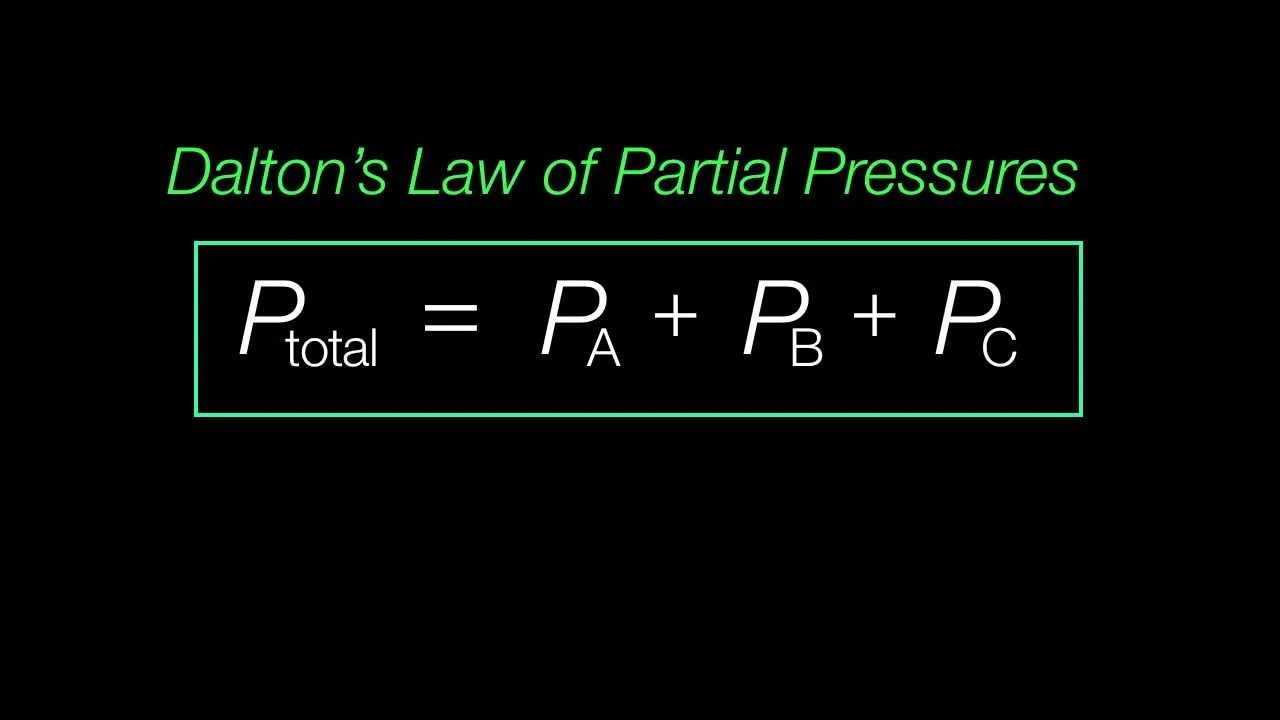
At its core, Dalton’s Law states that in a mixture of gases, each gas exerts its own pressure independently of the others. The total pressure of the mixture is simply the sum of the partial pressures of each gas. Imagine a party where every guest has their own voice. The noise level in the room is the sum of all those voices, but each one stands out on its own. That’s how gases behave in a mix.
The Formula Behind the Law
The mathematical expression of Dalton’s Law looks like this:
[ P_{total} = P_1 + P_2 + P_3 + … + P_n ]
Here, ( P_{total} ) is the total pressure, while ( P_1, P_2, P_3, ) and so on represent the partial pressures of individual gases. You can think of it like adding up the heights of several stacked blocks to find the total height. Each block represents a different gas, and together they make the total pressure.
Why is Dalton’s Law Important?
Understanding Dalton’s Law helps us in numerous ways. For instance, it plays a big role in understanding how our atmosphere works. It also has practical applications in various industries including:
1. Weather Prediction
Meteorologists rely on Dalton’s Law to predict weather patterns. Different gases in the atmosphere, like oxygen and nitrogen, have distinct pressures that influence how weather systems form. By measuring these pressures, meteorologists can better understand when storms are likely to occur.
2. Medicine and Diving
In medicine, particularly in anesthesiology, knowing how different gases work helps doctors administer anesthesia safely. For divers, Dalton’s Law is critical too. As you go deeper into the water, the pressure intensifies, affecting the dynamics of gases such as nitrogen in your body. This knowledge helps prevent decompression sickness, which can be dangerous for divers who ascend too quickly.
3. Industrial Applications
In industries that deal with gas mixtures, like chemical manufacturing, understanding how gases interact can improve safety and efficiency. By calculating partial pressures, companies can create processes that ensure the right chemical reactions happen under controlled conditions.
Real-Life Examples of Dalton’s Law in Action
You can see Dalton’s Law in action in everyday life. For example, think about opening a soda can. The gas inside is under pressure. When you pop the can open, that gas escapes rapidly, and the pressure inside drops. The carbon dioxide in the soda mixes with the air, and the sounds of fizzing are the different gases interacting.
Another example is the balloons we fill with helium. Helium has a much lower density than the air around it. When you fill a balloon, the helium’s pressure contributes to the total pressure in the balloon, allowing it to float.
Conclusion
Dalton’s Law isn’t just a piece of jargon in physics or chemistry. It’s a crucial principle that helps us navigate the complexities of gases in the world around us. From weather forecasting to diving safety, its applications are vast and vital. Understanding this law opens up a clearer view of how gases behave and interact, making it a key concept in science and daily life alike. So next time you breathe in fresh air or pop open a fizzy drink, remember the invisible forces at play!