
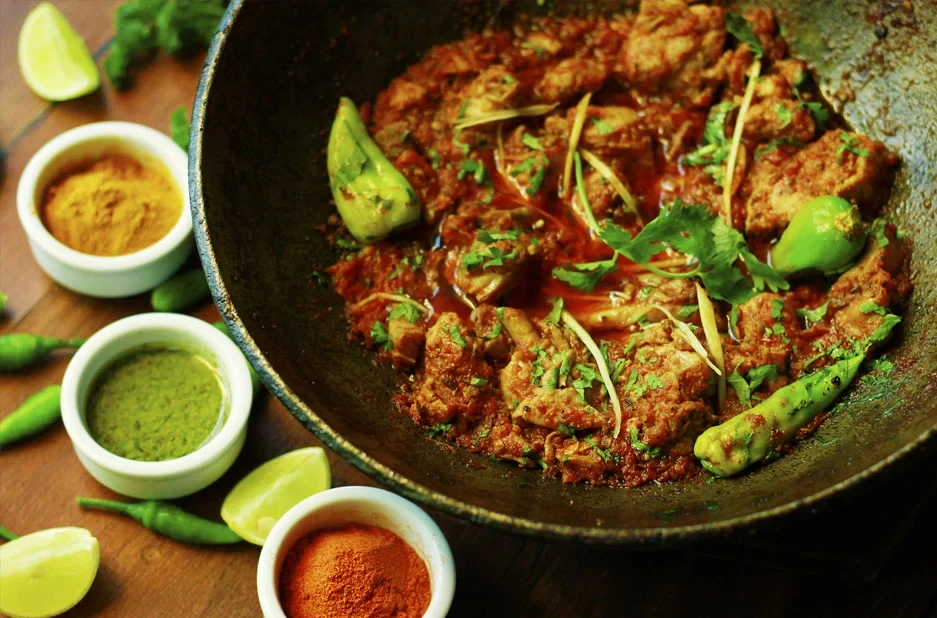
There is something profoundly magical about the aroma of a freshly made Peshawari Chicken Karahi sizzling away in a heavy cast-iron wok. Originating from the historic city of Peshawar near the Afghan border, this iconic dish stands apart from its Punjabi and Lahori counterparts. While other variations rely heavily on heavy cream, yogurt, onions, and blended tomato pastes, authentic Peshawari style keeps things remarkably pure. It celebrates the robust, unmasked flavors of fresh tomatoes, ginger, green chilies, and black pepper, cooked over an open flame in pure ghee or butter.
If you have ever wanted to recreate the smoky, restaurant-quality taste of traditional Peshawari cuisine in your own kitchen, this comprehensive guide will walk you through every step, secret, and nuance.
The Philosophy of Authentic Peshawari Karahi
To understand why this recipe tastes so distinct, you have to understand its philosophy. Traditional street-side cooks in Khyber Pakhtunkhwa do not measure ingredients with spoons; they measure with instinct, timing, and heat control.
The bedrock of a true Peshawari Karahi is minimalism. You will not find any sliced onions or thick gravy bases here. Instead, a generous amount of ripe, juicy tomatoes provides the natural moisture and slight acidity required to tenderize the meat. As the tomatoes break down under high heat, their juices meld with the fats, creating a rich, glossy coating that clings intimately to every piece of chicken. Coupled with freshly crushed black peppercorns and julienned ginger, the dish delivers a warming, sharp spice profile that clears the senses without relying on heavy red chili powder.
Ingredients You Will Need
Gathering the right ingredients is half the battle won. Because this recipe uses very few components, the quality of each item matters immensely.
Chicken: 1 kg, bone-in (preferably cut into smaller pieces, as bone-in meat releases gelatin and imparts a much richer flavor than chicken breast).
Tomatoes: 6 to 7 large, ripe red tomatoes (cut vertically in half).
Ghee or Cooking Oil: 1/2 cup (authentic versions use pure desi ghee or animal fat for that signature richness, but high-smoke cooking oil works too).
Ginger and Garlic Paste: 1 tablespoon freshly pounded.
Green Chilies: 4 to 5 whole or slit green chilies (plus extra for garnish).
Black Pepper: 1 to 1.5 teaspoons, freshly cracked (avoid pre-ground pepper for the best aroma).
Coriander Powder: 1 teaspoon.
Cumin Seeds: 1 teaspoon (lightly dry-roasted and coarsely crushed).
Salt: To taste.
Fresh Cilantro (Coriander): A generous handful, chopped, for garnish.
Fresh Ginger: A small thumb-sized piece, cut into fine matchsticks (julienne) for finishing.
Step-by-Step Cooking Instructions
Step 1: Sear the Chicken and Build the Base
Place your traditional wok (karahi) or a heavy-bottomed deep skillet over medium-high heat. Add the ghee or oil and let it heat up. Once shimmering, add the chicken pieces along with a pinch of salt. Sauté the chicken vigorously for 6 to 8 minutes until the pink color completely disappears and the exterior turns a light golden brown. This initial sear locks in the natural juices so the meat remains tender on the inside.
Step 2: Incorporate the Garlic, Ginger, and Tomatoes
Lower the heat slightly and stir in the freshly pounded ginger and garlic paste. Sauté for about a minute until the raw aroma vanishes. Next, take your halved tomatoes and place them cut-side down across the entire surface of the chicken, completely covering the meat.
Step 3: Steam and Soften
Cover the karahi with a tight-fitting lid and let it simmer on medium heat for about 10 minutes. The moisture from the chicken combined with the escaping juices from the tomatoes will create a steamy environment. Once the time is up, remove the lid. You will notice that the tomato skins have loosened significantly. Take a pair of kitchen tongs and gently peel away and discard those curled tomato skins.
Step 4: Bhuna (High-Heat Reduction and Roasting)
Now comes the most important technique in South Asian cooking: bhuna. Turn the heat up to high. Using a wooden spatula, vigorously mash the softened tomato pulp into the chicken juices. Stir and fry the mixture continuously. You want the excess water to evaporate rapidly while the ghee separates from the tomato paste and floats to the edges of the pan. This process takes roughly 8 to 10 minutes.
Step 5: Season and Finish
Once the oil separates and you have a thick, glossy masala coating the chicken, sprinkle in the freshly cracked black pepper, crushed cumin seeds, and coriander powder. Toss everything together vigorously for another 2 minutes. Finally, drop in the slit green chilies and half of the fresh ginger juliennes, allowing their aromatic oils to infuse into the dish.
Step 6: Garnish and Serve
Turn off the heat. Garnish the piping hot karahi with the remaining fresh ginger matchsticks and a generous handful of freshly chopped cilantro. Serve it straight from the wok alongside hot, buttery tandoori naan or traditional Afghan flatbread.
Expert Tips for Restaurant-Quality Results
Never Skip Fresh Pepper: Pre-ground black pepper loses its volatile oils quickly. Grinding whole peppercorns in a mortar and pestle right before cooking gives this dish its characteristic bite.
Control the Heat: The bhuna stage requires your undivided attention. Stir constantly so the spices and tomato paste do not stick to the bottom of the iron wok.
Choose Bone-In Meat: Boneless chicken dries out much faster under high heat. Bone-in thighs and drumsticks stay succulent and contribute deep flavor to the sauce.
Frequently Asked Questions (FAQ)
What makes Peshawari Karahi different from Lahori or Punjabi Karahi?
Peshawari Karahi strictly avoids onions, yogurt, and heavy cream. Its authentic base is built exclusively from fresh tomatoes, ginger, green chilies, and black pepper, cooked in ghee, making it lighter yet intensely flavorful.
Can I substitute chicken with mutton or beef?
Yes, absolutely. Mutton and beef are actually very popular choices in Peshawar. However, because red meat takes significantly longer to cook, you will need to pressure cook or simmer the meat with water and tomatoes until tender before performing the high-heat bhuna step.
Should I use red chili powder in this recipe?
Traditional Peshawari Karahi relies almost entirely on green chilies and freshly cracked black pepper for heat rather than red chili powder, which gives the dish its unique clean flavor and earthy color.





Comments
Leave a Comment
Your email address will not be published. Required fields are marked *