
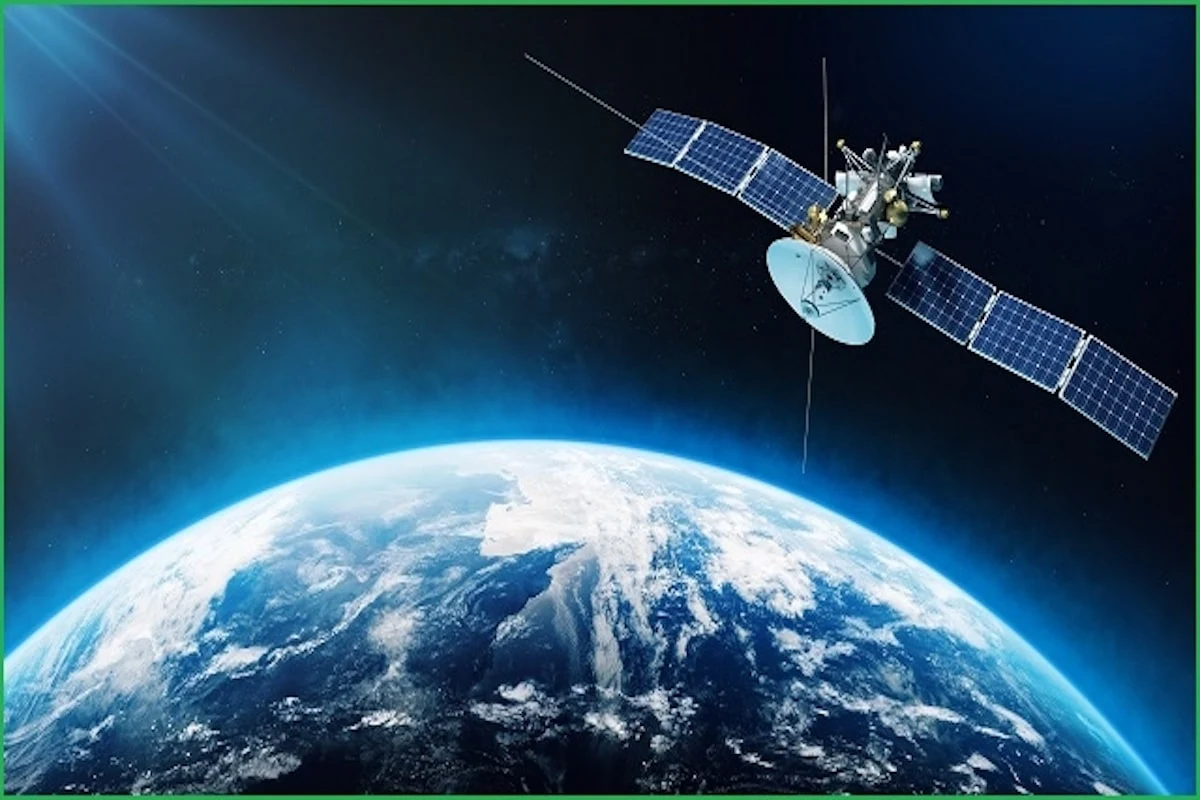
A satellite is an object that moves in orbit around another body. Satellites can be natural, such as moons, or artificial objects placed into space by humans.
Natural satellites
A natural satellite is a naturally occurring body that orbits a larger body. Earth's Moon is a familiar example. Other planets have their own moons, including Jupiter's Ganymede and Callisto and Saturn's Titan and Rhea.
Planets themselves orbit the Sun, but in ordinary astronomical terminology they are called planets rather than natural satellites of the Sun.
Artificial satellites
Artificial satellites are human-made spacecraft intentionally placed into orbit. They may orbit Earth, the Moon, the Sun or other bodies depending on the mission.
Communication satellites
Communication satellites relay signals used for services such as television, telecommunications and data transmission.
Weather satellites
Meteorological satellites observe clouds, storms, atmospheric conditions and other information used in weather forecasting and climate research.
Navigation satellites
Satellite-navigation systems use constellations of spacecraft to provide positioning and timing information to compatible receivers.
Earth-observation satellites
These spacecraft collect information about Earth's surface, oceans and atmosphere. Their data can support mapping, agriculture, environmental monitoring and disaster response.
Scientific satellites
Space telescopes and other scientific spacecraft observe Earth, the Sun, distant astronomical objects or the space environment.
Different kinds of orbit
Artificial satellites can operate in low Earth orbit, medium Earth orbit, geostationary orbit and other trajectories. The appropriate orbit depends on the satellite's purpose.
The International Space Station is a large crewed artificial satellite in low Earth orbit and serves as a laboratory for research and technology demonstrations.





Comments
Leave a Comment
Your email address will not be published. Required fields are marked *