
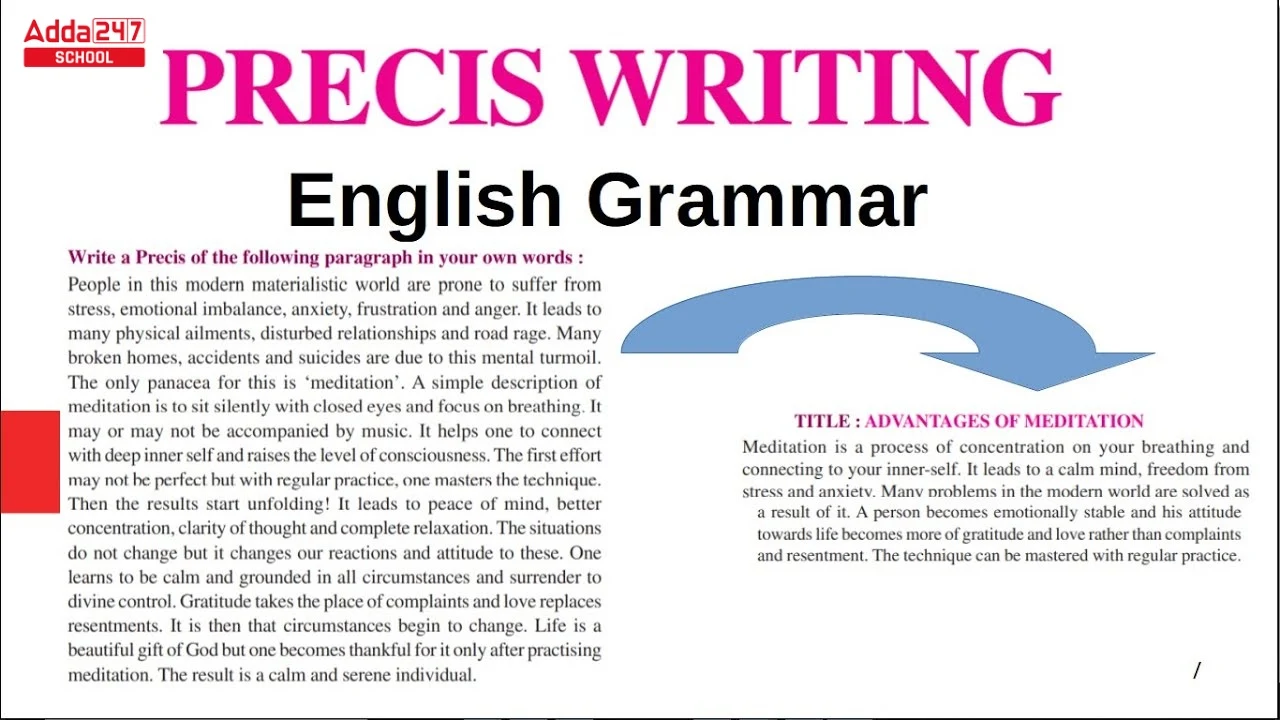
Precis writing is the practice of condensing a longer source while preserving its central meaning, logical development, and overall tone. It requires more than deleting sentences. The writer must understand the source, decide which ideas are essential, and express them accurately in a shorter form.
What Is a Precis?
A precis restates the main argument or message of a passage, speech, or document in your own words. It leaves out repetition, extended examples, and minor detail, but it keeps the relationship between the source's main points. A precis is objective: it reports what the source says rather than evaluating whether the source is correct.
A precis is often compared with a summary, but the forms have different expectations. Our guide to precis versus summary writing explains how purpose and structure distinguish them.
Core Qualities of a Good Precis
Accuracy
The condensed version must represent the source fairly. Do not exaggerate a claim, remove an important qualification, or introduce an idea the original author did not make.
Clarity
Use direct sentences and precise words. A shorter text is not useful if its meaning is vague. Clear sentence structure helps the reader follow the argument without consulting the source at every step.
Brevity with Proportion
Remove repetition and supporting detail while giving appropriate space to every major point. Some tasks set a specific word count or ratio; follow that requirement when it is provided. Do not force every precis into a single formula when no length has been specified.
Logical Order
Keep the source's main progression intact. If the original moves from a problem to its causes and then to a proposed response, the precis should not rearrange those parts in a way that changes the reasoning.
Objectivity
Personal reactions, criticism, and new examples do not belong in a precis. Neutral language helps separate the author's message from the writer's opinion.
How to Write a Precis
- Read the complete source. Identify its purpose, audience, and central idea before taking detailed notes.
- Outline the argument. Record the main point of each section and note how the sections connect.
- Remove secondary material. Set aside repetition, illustrations, and minor examples unless they are essential to the reasoning.
- Draft in your own words. Preserve necessary technical terms, but avoid copying the source's sentences.
- Compare and revise. Check the draft against the original for accuracy, balance, and logical order.
- Edit the final version. Correct grammar, remove unnecessary wording, and confirm the required length.
Skills used in clear expository writing are valuable here because both forms depend on logical organisation. These essay writing tips also offer a useful revision checklist.
Common Mistakes to Avoid
Do not copy whole sentences and call the result a precis. Avoid listing disconnected points, changing the source's position, or cutting so much that the argument no longer makes sense. A good final check is to ask whether a reader can understand the source's central message and progression from the precis alone.
Conclusion
Effective precis writing combines close reading with disciplined editing. Accuracy comes first, followed by clarity and economy. With a careful outline, an objective draft, and a comparison against the original source, a writer can produce a concise version that remains faithful to the meaning it represents.







Comments
Leave a Comment
Your email address will not be published. Required fields are marked *