
 affects how individuals perceive colors. The most common type is red-green..)
Seeing the World Differently: Understanding Color Blindness
Color blindness isn’t just about seeing fewer colors; it’s about experiencing the world in a unique way. Imagine walking through a garden. While most see vibrant reds, yellows, and greens, someone with color blindness might see shades of gray or muddied tones. Understanding color blindness helps us embrace these different perspectives.
What is Color Blindness?
Color blindness, or color vision deficiency, (a genetic disorder) affects how individuals perceive colors. It’s often genetic and can impact daily life in unexpected ways. The most common type is red-green color blindness. This means individuals have trouble distinguishing between red and green hues. But it’s not one-size-fits-all; some might struggle with blue-yellow colors or see the world in shades of gray.
The Science Behind Color Vision:
Our eyes contain special cells called cones, which help us see colors. There are three types of cones, each sensitive to different wavelengths of light. When someone has this disorder, one or more types of these cones don’t work as they should. It’s like trying to listen to music with broken speakers—it just doesn’t sound right!
Signs of Color Blindness:
How can you tell if someone has this problem? Often, they may not realize it at first. They might confuse colors in everyday situations, like interpreting a stoplight or selecting ripe fruit. Common signs include:
- Difficulty matching clothes
- Trouble identifying colors in books or art
- Asking others for help when picking out colors
If any of this sounds familiar, it might be worth exploring further.
Types of Color Blindness:
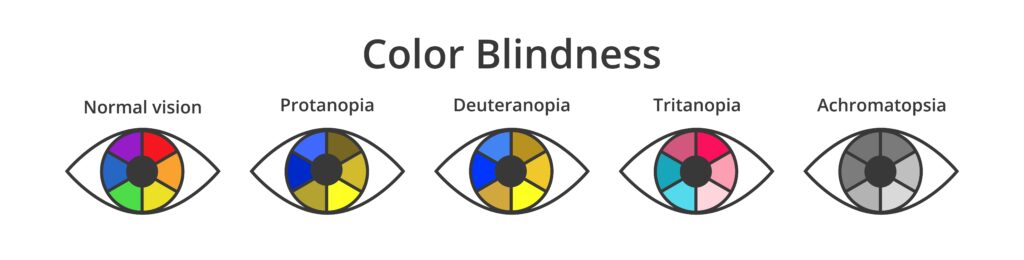
This isn’t just a single condition. Here are some key types:
-
Red-Green Color Blindness:
This is the most common form, and it comes in two flavors: protanopia and deuteranopia. People with protanopia can’t see reds well, while those with deuteranopia struggle with greens.
-
Blue-Yellow Color Blindness:
Known as tritanopia, this type makes it hard to distinguish between blues and yellows. It’s less common but can be just as impactful.
3. Total Color Blindness:
This is a rare condition, where individuals see everything in shades of gray. Imagine flipping a black-and-white TV—this is what total color blindness can feel like.
Living with Color Blindness:
Navigating a color-blind world can present its challenges. From selecting paint colors for the home to finding the right clothes, it’s not always smooth sailing. Imagine trying to play a game where you can’t see important moves—frustrating, right?
However, technology is making strides. Apps that identify colors and specialized glasses can assist those with color blindness in their daily lives. Plus, an increased awareness in society means more conversations about accommodating different perspectives.
Support and Resources:
If you or someone you know has this disorder, resources are available. Schools and workplaces are becoming more aware of this condition. There are also supportive communities and forums online where experiences and tips are shared.
Embracing Different Perspectives:
Understanding color blindness goes beyond just knowing the facts. It opens the door to empathy and connection. Everyone experiences the world differently, and this is just one example of that richness. So next time you appreciate a sunset, remember that not everyone sees those colors in the same way.
In the end, understanding this topic is like adding a new color to your palette. It broadens your viewpoint and helps everyone appreciate the fascinating and unique ways we see the world.