Start a manageable family vegetable garden by choosing a safe site, simple crops, shared routines, and observation-led care.
Start with a small, visible area
A compact bed or a few suitable containers are easier to learn from than a large plot. Choose a place the household sees regularly so watering and observation become part of the routine. Check local light, drainage, and access to water before planting.
Choose plants for local conditions
Growing seasons, heat, frost, humidity, and pests vary by location. Use current local gardening guidance when selecting crops and timing. A few plants that suit the site teach more than a long list chosen only from pictures.
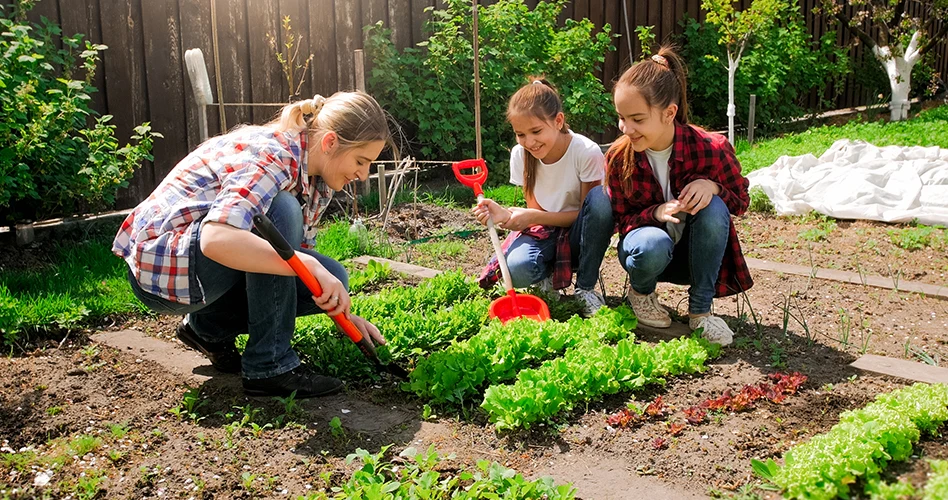
Give everyone a real task
Children can help label plants, check soil moisture, count new leaves, or harvest with supervision. Match tools and responsibilities to age and ability. The garden becomes more engaging when participation affects an actual shared result rather than serving as a staged activity.
Observe before reacting
Leaves, soil, weather, and growth patterns provide clues, but one unusual mark does not always identify a problem. Record changes and seek reliable local advice before applying treatments. Store tools and garden products safely and follow their instructions.
Celebrate use, not perfection
Harvesting a few herbs or vegetables can connect effort with food even when the garden is modest. Cook or share what grows, compost appropriate plant material where practical, and use setbacks as information for the next season. A family garden succeeds when it remains manageable enough to continue.
A practical next step
Use these ideas as a starting framework, then verify the details that depend on location, access, products, weather, regulations, or personal circumstances. A useful plan stays specific to the real setting and changes when better information becomes available.