
Across different cultures, dramatic landscapes and religious sites have sometimes been described as entrances to hell, purgatory or an underworld. These stories belong to folklore, religious tradition or popular culture; there is no scientific evidence that the locations are literal portals to another realm.
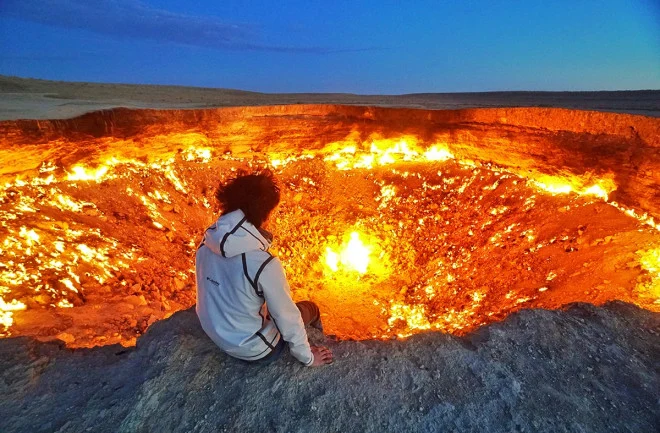
Darvaza gas crater, Turkmenistan
The burning gas crater in Turkmenistan's Karakum Desert is widely nicknamed the “Door to Hell.” Its flames come from natural gas rather than a supernatural phenomenon. Accounts of exactly how and when the crater began burning have varied, so the frequently repeated 1971 origin story should not be treated as certain.
Mount Osore, Japan
Mount Osore in northern Japan is a volcanic landscape with strong religious associations. Buddhist tradition connects the area with the boundary between the worlds of the living and the dead, and the nearby landscape has become part of Japanese pilgrimage traditions.
Hell's Gate National Park, Kenya
Hell's Gate National Park is a real protected area in Kenya's Great Rift Valley. Its name and dramatic cliffs, gorges and geothermal activity give the landscape its striking reputation, but the site is a natural geological environment.
St Patrick's Purgatory, Ireland
St Patrick's Purgatory at Lough Derg in County Donegal is a historic Christian pilgrimage site. Medieval traditions connected the location with a vision or entrance to purgatory associated with Saint Patrick.
Other underworld legends
Stories linking places in Hawaii, Pennsylvania and Louisiana with entrances to an underworld circulate in folklore and popular accounts. Details vary considerably between traditions and retellings.
These locations are best understood by separating their physical geography from the myths and religious traditions associated with them. The legends are culturally interesting without needing to be interpreted as evidence of literal gateways.





Comments
Leave a Comment
Your email address will not be published. Required fields are marked *