
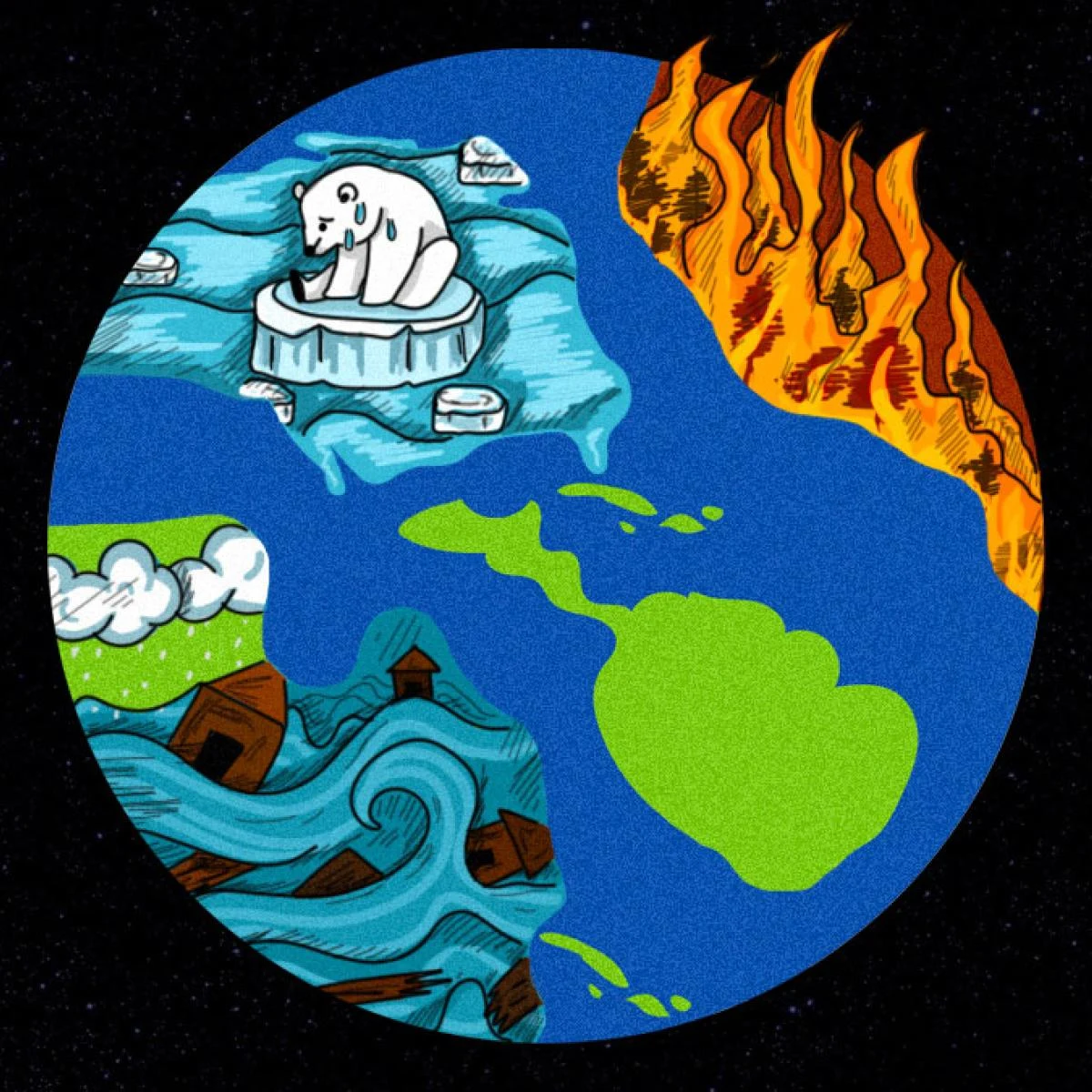
Climate change refers to long-term changes in average temperatures and other characteristics of Earth's climate. Weather describes short-term atmospheric conditions, while climate concerns patterns measured over longer periods.
What is causing current global warming?
The primary cause of current global warming is human activity that increases greenhouse-gas concentrations in the atmosphere. Major sources include burning coal, oil and natural gas, along with land-use change, agriculture and some industrial processes.
The greenhouse effect
Greenhouse gases such as carbon dioxide, methane and nitrous oxide absorb and re-emit infrared radiation. The natural greenhouse effect makes Earth habitable, but increasing greenhouse-gas concentrations strengthen that effect and warm the climate system.
Observed and expected effects
Climate change is associated with rising average temperatures, changes in precipitation, loss of glaciers and ice sheets, sea-level rise and changes in the frequency or intensity of some extreme weather events.
Melting glaciers and rising seas are consequences of warming, not primary causes of the current warming trend.
Weather and individual events
No single storm, heatwave or flood by itself proves or disproves climate change. Scientists use long-term observations and attribution methods to evaluate how climate change affects the likelihood or intensity of particular types of events.
Mitigation
Mitigation aims to limit future climate change by reducing greenhouse-gas emissions or increasing removal of carbon dioxide from the atmosphere. Approaches include cleaner energy, efficiency, electrification and changes in land management.
Adaptation
Adaptation addresses impacts that are already occurring or expected. Examples include heat planning, water management, resilient infrastructure and measures to reduce coastal and flood risks.
Climate policy involves economic and social choices, but the physical finding that recent global warming is primarily caused by human greenhouse-gas emissions is supported by extensive scientific evidence.







Comments
Leave a Comment
Your email address will not be published. Required fields are marked *