
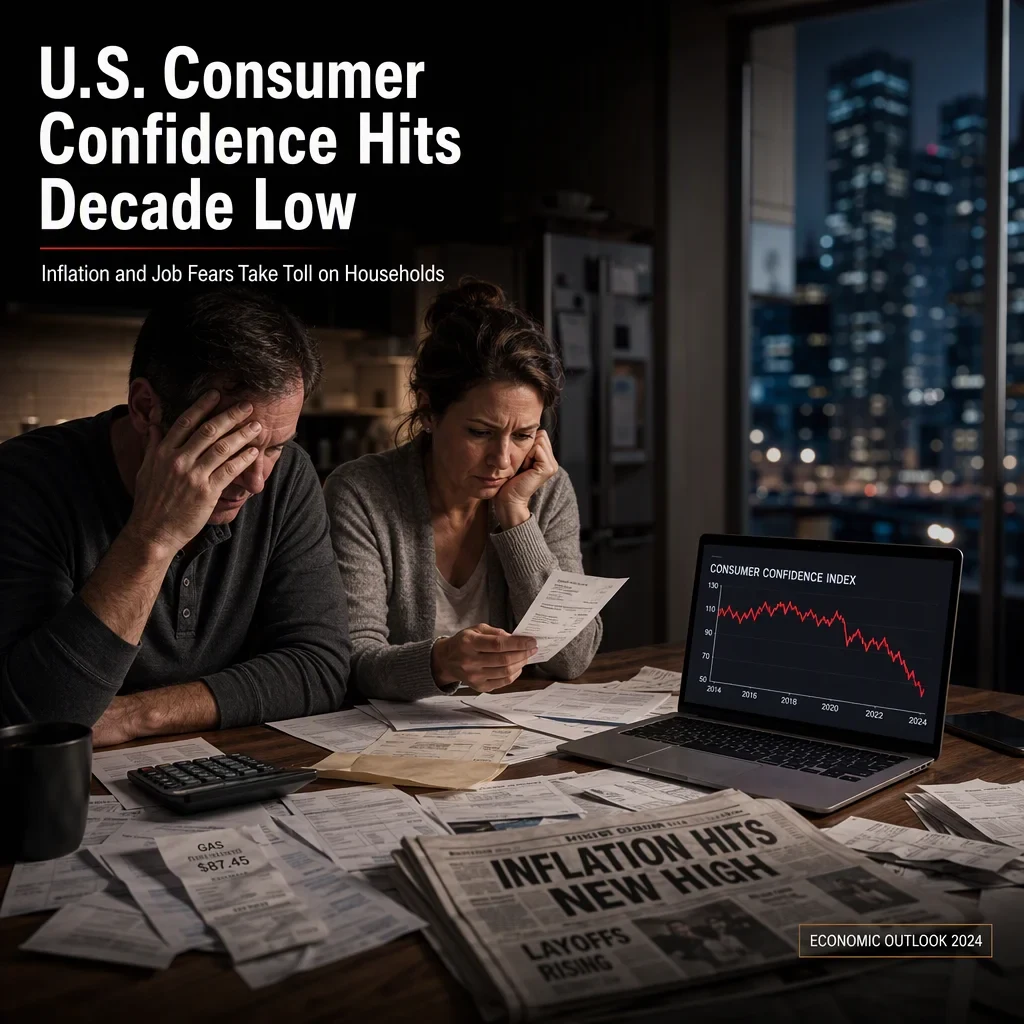
The Conference Board's Consumer Confidence Index dropped to 81.9 in September 2026, down from 88.6 in August and well below the roughly 89 economists expected. It's the weakest reading since 2014. Job openings also fell short of forecasts, setting a nervous tone ahead of Friday's jobs report.
What did the consumer confidence report say?
The Conference Board's index fell 6.7 points in September, to 81.9. Economists had expected something near 89. August's figure was also revised down, from 89.4 to 88.6, so the slide started earlier than first reported.
Dana Peterson, the Conference Board's chief economist, said the index deteriorated notably after two prior months of softening. She added that consumers' views of current business conditions turned negative for the first time since September 2024, and that perceptions of the current labor market got worse, though they stayed in positive territory.
How did people feel about their own money?
That's one of the most telling details. More Americans now describe their finances as bad than good, for the first time in four years, according to coverage of the report. Households also expect conditions to get worse over the next six months.
Confidence surveys aren't perfect forecasters. People often say they're gloomy and keep spending. But when both current conditions and expectations drop together, economists pay attention, because it can signal that spending will cool.
What happened with job openings?
Openings fell to about 7.1 million in August, below the 7.23 million economists forecast and below July's revised 7.34 million. It's a modest miss, not a collapse. Still, fewer openings suggest employers are becoming more cautious about hiring.
One reassuring note: the labor market isn't broken. Weekly jobless claims are forecast to hold near 200,000, which is low by historical standards. The picture is one of cooling rather than crisis.
Why are people so gloomy?
The report points to several pressures piling up:
Higher borrowing costs. Long-term Treasury yields are at multiyear highs, and the average 30-year mortgage rate has climbed to about 7.58 percent.
Persistent inflation worries, driven partly by high energy prices.
Worries about AI and what it means for jobs.
General uncertainty, from tariffs to politics to global events.
No single cause explains it. It's the pile-up that hurts.
Did the survey capture the latest bond selloff?
Not entirely. The survey closed on September 23, before the 10-year Treasury yield made its latest climb to its highest level since 2007. If yields stay elevated, some analysts think sentiment could weaken further, though that's a forecast, not a fact.
Why does consumer confidence matter?
Consumer spending drives roughly two-thirds of the U.S. economy. If people feel poorer or worry about their jobs, they tend to postpone big purchases like cars, appliances and home improvements. That slows growth. A confidence reading this low doesn't guarantee a recession, but it raises the odds that spending softens.
Why did stocks barely react?
Markets have been focused on the AI boom and on bond yields. The Dow held a level near 51,100 that analysts describe as support, and it has held three times in September. That's a reminder that Wall Street and Main Street can feel very different. Stock prices reflect expectations about corporate profits, while the confidence index reflects how ordinary households feel about their own situations.
What's coming up this week?
Three data points could shift the mood:
PCE inflation data on Wednesday. This is the Fed's preferred inflation gauge.
Weekly jobless claims on Thursday.
The September jobs report on Friday. Weak hiring would confirm the cooling story. A strong report might ease recession worries but keep pressure on rates.
What can households do?
None of this is advice tailored to you, but common sense applies:
Build or protect an emergency fund if you can. Three to six months of expenses is the usual rule of thumb.
Look at variable-rate debt, which becomes more expensive when rates rise.
Compare savings rates. Higher yields have lifted returns on many savings accounts and CDs.
Delay big, discretionary purchases if your job feels shaky, but don't panic-sell long-term investments based on one survey.
For personal decisions, a licensed financial advisor can help.
The confidence numbers say Americans feel squeezed, and the labor data shows hiring easing. Neither proves a downturn is here. But together with rising interest rates, they paint a picture of an economy where households are getting more cautious, and Friday's jobs report will show whether that caution is starting to hit paychecks.
FAQ
What is the Consumer Confidence Index? A monthly survey from the Conference Board measuring how Americans feel about business conditions, jobs and their own finances.
How low did it fall? To 81.9 in September 2026, the lowest since 2014, down from 88.6 in August.
Does low confidence mean a recession is coming? Not automatically. It's a warning sign that spending could slow, but it isn't a guarantee.
When is the next jobs report? Friday, October 2, 2026.







Comments
Leave a Comment
Your email address will not be published. Required fields are marked *