
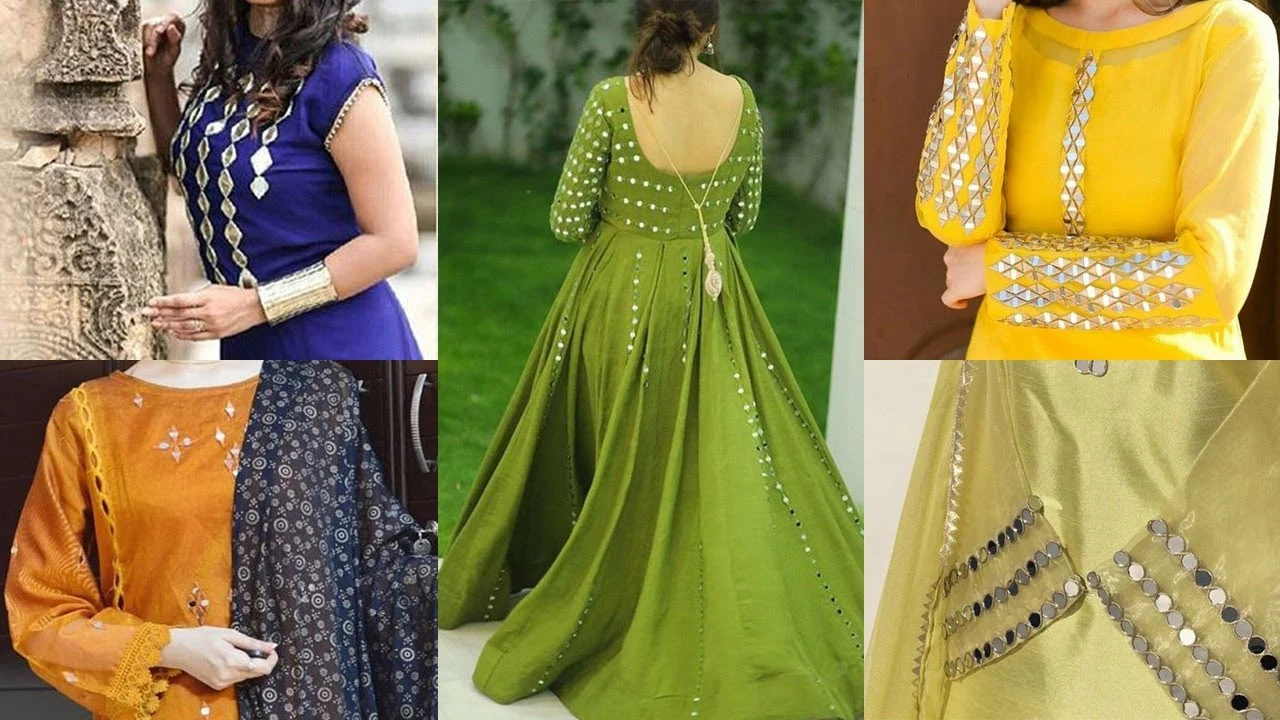
Mirror work uses small reflective pieces as decorative elements in embroidery and clothing. It appears in a range of South Asian textile traditions and is used on kurtis, dresses, frocks, dupattas and festive clothing.
Mirror-work kurtis
A kurti with limited mirror detailing around the neckline, sleeves or border can provide decoration without covering the entire garment. Neutral trousers can keep attention on the embroidery.
Frocks and dresses
Mirror work can be incorporated into both shorter and longer dresses. The amount of decoration can range from a few accents to dense embroidery depending on the occasion and fabric.
Traditional influences
Reflective embroidery has a long association with regional craft traditions in parts of South Asia. Techniques, patterns and terminology vary between communities, so it is more accurate to recognise multiple traditions than assign the entire craft to one single origin.
Choosing fabric and decoration
Light decoration can suit everyday garments, while more elaborate work is often used for weddings and festive events. The weight of embellishment should suit the underlying fabric so that it hangs comfortably.
Care
Decorative pieces and embroidery can be damaged by rough washing or snagging. Follow the garment's care label and use gentle handling where appropriate.
Mirror work remains versatile because it can be incorporated into both traditional and contemporary clothing without requiring one fixed style.








Comments
Leave a Comment
Your email address will not be published. Required fields are marked *