
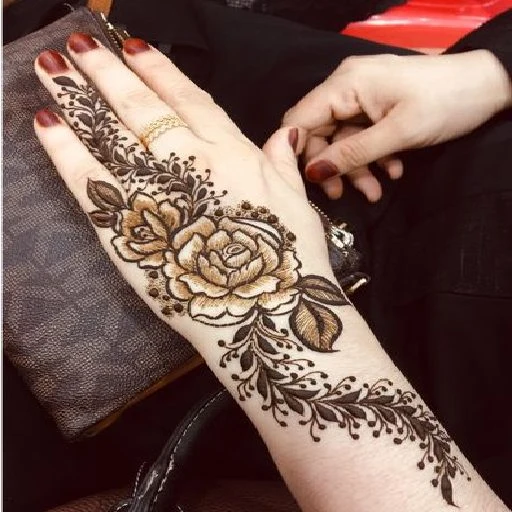
Henna has a long association with weddings, Eid celebrations and other festive occasions in many communities. Designs vary widely, from simple patterns on the hands to detailed work extending along the arms or feet.
Henna Around Eid
In Pakistan and parts of South Asia, applying henna is particularly associated with the celebrations around Chand Raat, the night before Eid. Friends and relatives may apply designs at home, while salons and henna artists often offer special services during the festive period.
Different Design Styles
People often describe henna designs using regional labels such as Arabic, Indian or Pakistani styles. In practice, artists continually combine traditional motifs with newer geometric, floral and minimalist ideas. A phone image or sketch can be useful when explaining a preferred design to an artist.
Before Applying Henna
Natural henna typically produces an orange-to-reddish-brown stain that deepens after application. Results vary with the product, skin and application method.
Be cautious with products marketed as “black henna.” Some may contain ingredients such as para-phenylenediamine (PPD), which can cause serious skin reactions. Stop using a product and seek medical advice if significant swelling, blistering or another severe reaction develops.
A Personal Tradition
There is no requirement to choose a particular pattern or cover a particular amount of skin. For many people, the value of Eid henna lies as much in the shared preparation and celebration as in the finished design.




Comments
Leave a Comment
Your email address will not be published. Required fields are marked *