
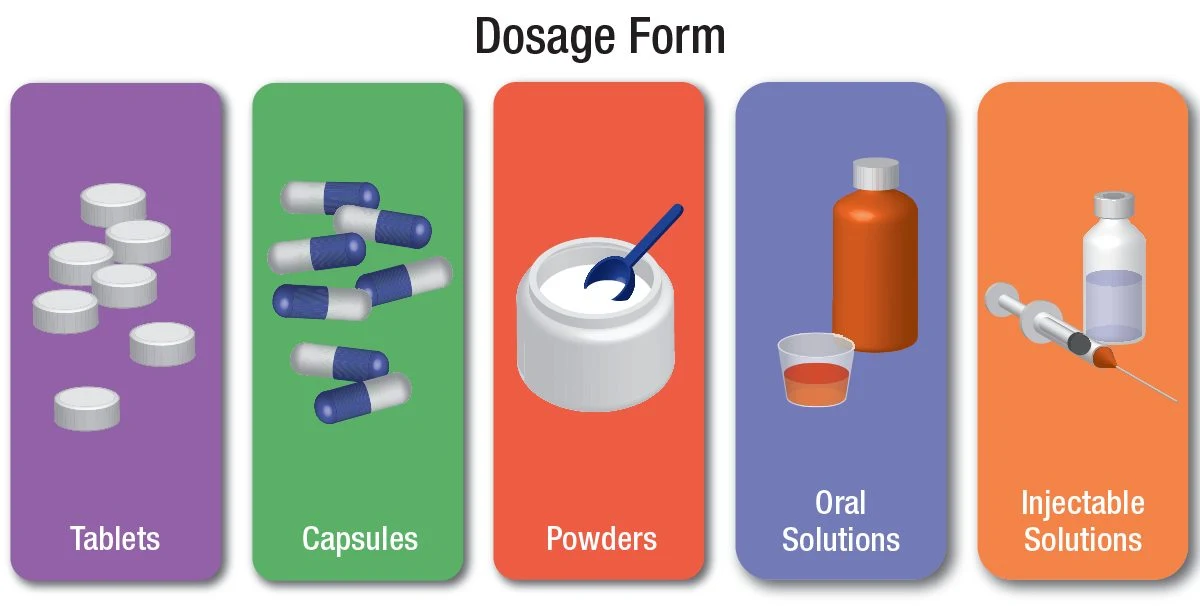
A dosage form is the physical form in which a medicine is prepared and delivered, such as a tablet, liquid, cream or injection.
Oral forms
Tablets and capsules are convenient and can be designed for immediate or modified release. Liquids may be useful when swallowing solid medicine is difficult, but accurate measurement matters. Crushing or opening a product can change how it works, so the product instructions should be followed.
Other routes
Creams and ointments apply medicine to the skin, inhaled products deliver it through the airways, and injections place it into tissue or the bloodstream. Suppositories, patches and eye drops serve other specific purposes. Each route has benefits and limitations.
Why formulation matters
The dosage form affects stability, absorption, convenience and safe use. Two products containing the same active ingredient may not be interchangeable when their release design or route differs. This overview is educational and does not replace prescribing guidance. See disease and syndrome terminology and AI in healthcare for related health-education topics.
Release design and correct administration
Formulation can control where and how quickly an ingredient becomes available. Enteric coatings may delay release until a tablet passes through the stomach, while extended-release products spread delivery over time. Topical products differ in thickness and the way they remain on skin. Inhalers depend on device technique, and drops require careful handling to avoid contamination. Storage conditions can also matter because heat, moisture or light may affect stability. Patients should use the supplied measuring device for liquid medicine and ask a pharmacist before splitting, crushing or combining products when the instructions are unclear.