
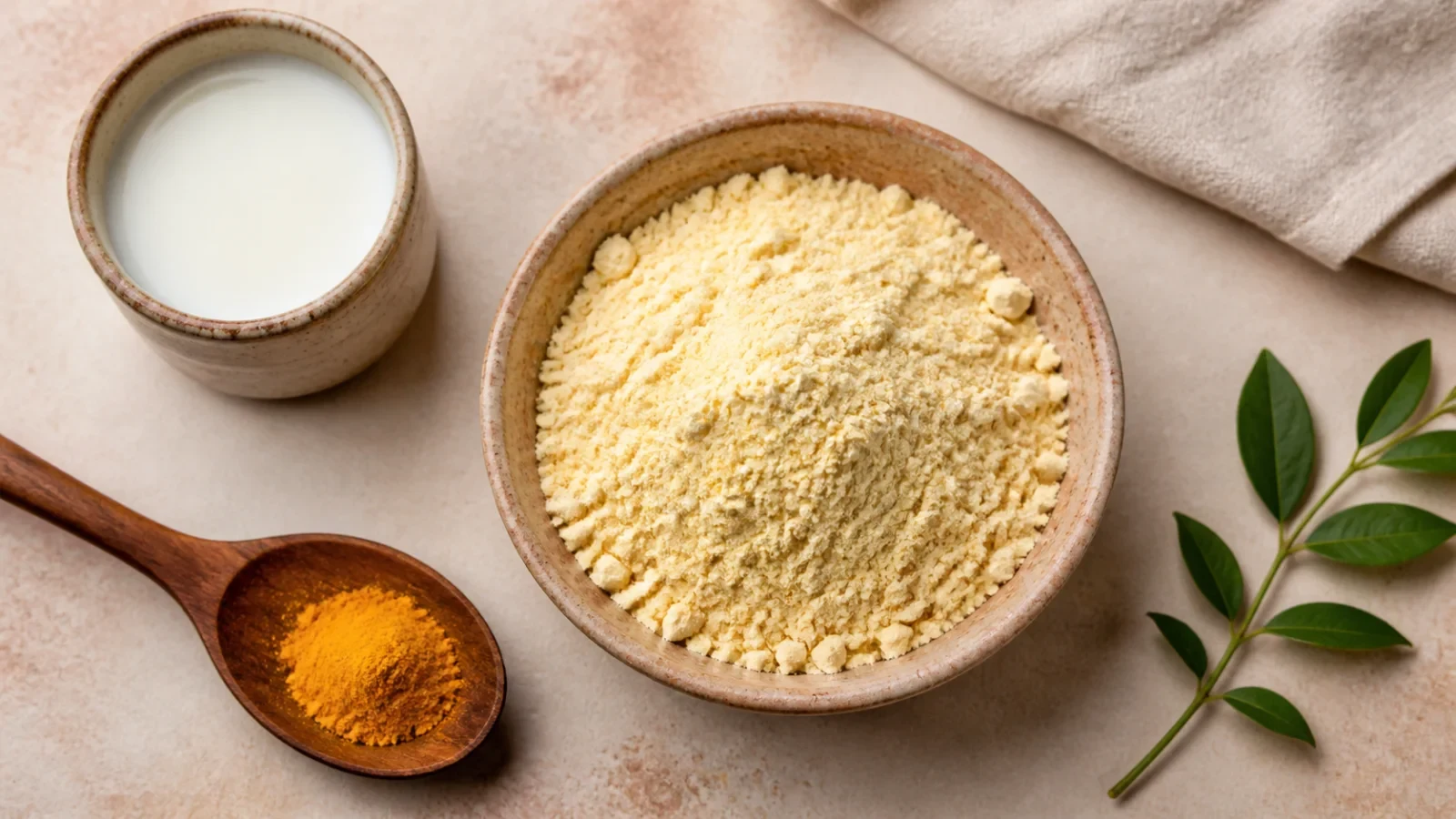
Gram flour, also called besan, has long been used in homemade cosmetic preparations across South Asia. It is commonly mixed with water or other mild ingredients to create a paste that can be rinsed from the skin. Its role is mainly practical: the fine powder gives a mask texture and can help lift surface oil and residue during gentle washing.
Traditional use does not mean that every mixture suits every person. Skin type, allergies and existing irritation all matter. Gram flour should be treated as an optional cosmetic ingredient, not as a cure for acne, pigmentation, sun damage or any skin condition.
Start with a simple mixture
A basic preparation needs only fresh gram flour and enough clean water to form a smooth, spreadable paste. Apply a thin layer without rubbing harshly, allow it to sit briefly without becoming uncomfortably tight, and rinse with lukewarm water. Pat the skin dry rather than scrubbing it with a towel.
Using a simple formula first makes it easier to tell whether the skin tolerates the ingredient. Adding several products at once can make irritation harder to trace. Fresh, dry gram flour should be stored in a sealed container and discarded if its smell, colour or texture changes.
Adjust for comfort, not promises
People with oilier skin may prefer a thinner paste and a short contact time. Those with dry or easily irritated skin may find any powder-based mask drying and may choose to skip it. A familiar, fragrance-free moisturiser can be used after rinsing if the skin feels tight.
Traditional recipes often include lemon juice, essential oils, spices or scented waters. These additions are not necessary, and some can sting or irritate sensitive skin. Avoid experimenting on broken, inflamed or sunburned skin. Do not use the mixture close to the eyes, and stop immediately if it causes burning, swelling or persistent redness.
Patch testing and gentle technique
Before putting a new mixture across the face, test a small amount on a limited area and wait to see how the skin responds. A patch test cannot guarantee that a reaction will never occur, but it can reveal obvious sensitivity before wider use.
More pressure and more frequent application do not produce better results. Vigorous rubbing can make skin feel sore, while repeated masks may worsen dryness. Occasional, gentle use is a more cautious approach than treating the paste as a daily exfoliant.
Know when home skincare is not enough
A cosmetic mask cannot diagnose or treat persistent acne, eczema, infection, unexplained discoloration or other medical concerns. If a skin problem is painful, spreading, recurring or causing distress, advice from a qualified healthcare professional is more appropriate than adding new home remedies.
A realistic place in a routine
Gram flour can remain part of a simple personal-care tradition when it feels comfortable and is used with realistic expectations. The safest version is uncomplicated: a clean ingredient, a gentle application, careful rinsing and attention to how the skin responds. Its value lies in a modest cleansing ritual, not in guaranteed transformation.








Comments
Leave a Comment
Your email address will not be published. Required fields are marked *