
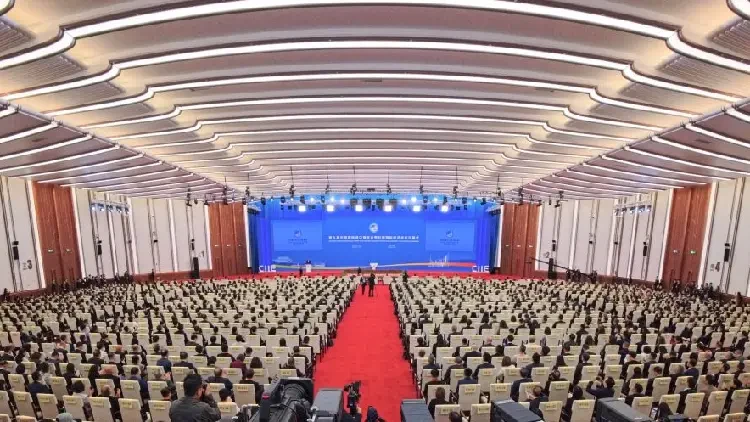
Every November, the sprawling National Exhibition and Convention Center in Shanghai transforms into the beating heart of international commerce and cross-border exchange. As the world’s first national-level exhibition specifically dedicated to imports, the China International Import Expo (CIIE) has fundamentally redefined how global enterprises approach the vast, highly competitive, and dynamic Chinese consumer market.
Rather than focusing on exporting domestic goods to the rest of the world—the traditional economic growth blueprint utilized by manufacturing powerhouses for decades—this massive annual showcase completely flips the script. It actively invites international brands, boutique producers, small-and-medium enterprises, and towering multinational corporations to display their finest products, cutting-edge technologies, and specialized services directly to hundreds of thousands of domestic buyers, provincial trade delegations, and major retail distributors.
Bridging Global Markets: The Unique Vision of the CIIE
Since its high-profile inception, the expo has served as a powerful economic bridge connecting international suppliers with the immense purchasing power of the domestic Chinese market. In an era marked by shifting geopolitical landscapes, complex supply chain reconfigurations, and ongoing global economic uncertainties, platforms that facilitate face-to-face cross-border trade, dialogue, and partnership are more critical than ever.
The event is meticulously structured around multiple specialized exhibition zones designed to cater to every facet of modern commerce. Whether dealing in advanced industrial automation, high-precision medical devices, or sustainable agricultural goods, the expo provides a streamlined, highly efficient ecosystem where foreign companies can bypass traditional market entry barriers, network with key industry stakeholders, and secure massive procurement contracts. By bringing together thousands of global exhibitors from well over a hundred countries and regions, the showcase emphasizes open trade, collaborative economic development, and direct access to one of the world's most lucrative consumer bases.
The Core Sectors Driving Innovation and Trade
To accommodate the staggering diversity of global commerce and technology, the massive exhibition floor is divided into distinct, highly specialized industry clusters. Each sector highlights the latest technological breakthroughs, shifting consumer trends, and industrial capabilities from around the globe:
Intelligent Industry and Information Technology: This heavily visited zone features industrial automation, advanced robotics, artificial intelligence software applications, and digital cloud solutions, showcasing how smart manufacturing and digital transformation are revolutionizing factories worldwide.
Medical Equipment and Healthcare Products: A crucial, highly regulated space for global pharmaceutical leaders, biotechnology innovators, and medical device manufacturers to introduce breakthrough treatments, advanced diagnostic tools, and preventive health solutions.
Food and Agricultural Products: From specialty dairy, organic wines, and gourmet goods to advanced agricultural tech, this bustling, sensory-rich area connects global farmers, winemakers, and food producers directly with major Chinese supermarket chains and digital e-commerce distributors.
Consumer Goods and Smart Mobility: Highlighting lifestyle products, luxury fashion, cosmetics, home appliances, and the latest electric and autonomous vehicles, this vibrant pavilion targets the sophisticated, evolving preferences of China's expanding urban middle class.
Empowering Small Businesses and Global Startups
While major multinational conglomerates often capture media headlines with massive, elaborate pavilions and high-profile product launches, one of the most compelling and socially impactful aspects of the Shanghai import showcase is its deep dedication to smaller participants. Through specialized innovation incubation sections, subsidized booth spaces, and targeted trade matchmaking programs, developing nations and small-and-medium enterprises (SMEs) are given a prominent global platform to showcase niche products that might otherwise struggle to find international exposure.
For regional artisans, boutique agricultural producers, and tech startups, gaining direct access to major Chinese importers, cross-border e-commerce giants, and nationwide retail buyers can alter a company's commercial trajectory overnight. This democratization of global trade ensures that the economic benefits of the expo extend far beyond massive corporate giants, fostering inclusive growth, cultural exchange, and economic resilience across international supply chains.
Frequently Asked Questions (FAQ)
1. What is the primary purpose of the China International Import Expo (CIIE)?
The CIIE is the world's first national-level exposition dedicated entirely to imports. Its main goal is to give foreign enterprises, international brands, and global exporters direct access to the Chinese domestic market, promoting balanced international trade, bilateral cooperation, and economic globalization.
2. Where is this major trade showcase held annually?
The landmark event takes place every November at the massive National Exhibition and Convention Center located in Shanghai, China.
3. What major industries and sectors are represented at the expo?
The expansive exhibition features multiple core zones, including Food and Agricultural Products, Automobiles, Intelligent Industry and Information Technology, Consumer Goods, Medical Equipment and Healthcare Products, and Trade in Services.
4. How does the expo benefit small and medium-sized enterprises (SMEs)?
The expo provides dedicated innovation incubation spaces and structured trade matchmaking services that allow smaller international businesses and startups from developing nations to present their products directly to key buyers, regional distributors, and strategic investors.






Comments
Leave a Comment
Your email address will not be published. Required fields are marked *